 By:
By: Ferrari stunned everyone in the final test session in Bahrain. To say that the SF-26 and Charles Leclerc are heading towards the Australian GP as favourites is perhaps too optimistic, at least for now. Maranello's team, however, is not as bad as previously believed on the eve of the World Cup. All the conditions are there to witness a beautiful and interesting season.
What has amazed most, however, are the innovations introduced on the track in the last week. Both because of the introduction of Flick Tail Mode (FTM), an idea that no one will be able to easily copy (because it was reasoned with all the disorder of the rear elements in mind), and because the Macarena Wing (the mobile flap, so called by the Italian team, capable of rotating backwards by about 270° functions).
The risks of having to talk about a self-harming decision
Ferrari's decision to use the mobile wing, however, is creating mixed reviews: the italian team, after testing the solution for a handful of laps on Thursday morning (during the last session of test), according to rumours circulating in Sakhir, has temporarily decided to shelve the solution without revealing the event in which it will debut. And this despite the winger having already received FIA approval.
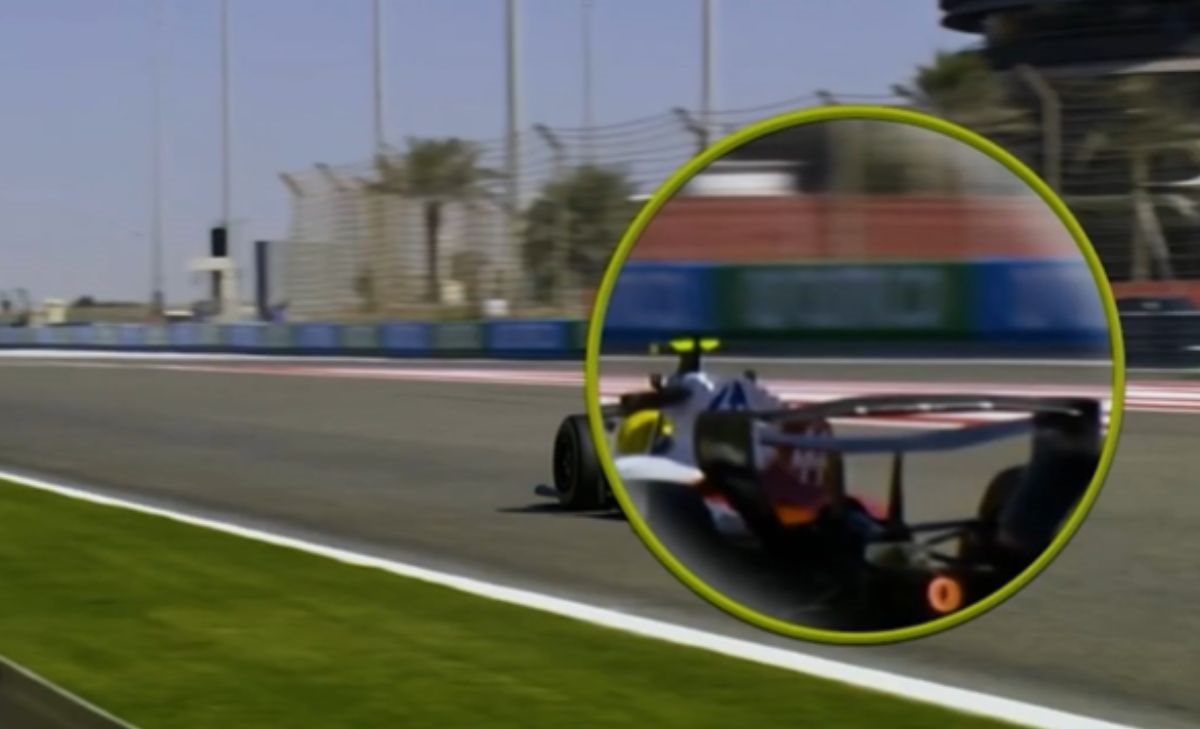
The decision obviously created a division within our editorial staff as well. On the one hand, there are those who believe it was logical to do a test before Melbourne. This certainly allowed us to analyze the data, verify that the solution was also mechanically robust, and then calmly reason about the location of the debut.
Others, however, argue that presenting a similar innovation, proposed by everyone (including us, read here) as a smart solution capable of offering a significant advantage on the straight, and then not yet being ready to make it available to drivers, could represent a huge misstep in the world. It could simply allow opponents to implement and improve the solution on their cars as well, essentially losing an advantage in the early rounds of the world championship.
When Mercedes introduced the DAS in 2020, the Stuttgart-based manufacturer was immediately ready to have it in the car and, incidentally, would also have time to think about how Ferrari is doing that year. On that occasion, rival teams spoke of the need for six months of study just to define a prototype to be brought to the track. In the case of the Macarena Wing, the timing is very different. While the advantages may be negligible in Melbourne due to the short straight sections, having or not having the car fitted to the car could already make a difference in China.
There are still 3 weeks to go in Shanghai and also 5 to go to the Japanese GP. Could it be long enough to see the Macarena Wing appear on other cars as well? Probably yes. At that point what advantage would Ferrari have had in presenting him in the Bahrain tests? Virtually none, on the contrary… In that case we could even speak of a rather self-destructive decision.
At this point he would have done better to test her in free practice in Melbourne. Eventually, given how much he used it in testing (5 laps), he would find time to test it during the championship as well.
Cover photo: Ferrari, Internal photo from that video: X, F1
Read also in italian language: Dubbi sull’innovazione Ferrari: la scelta che divide