 By:
By: In these days, the FIA has organised meetings with teams and producers to resolve some safety and entertainment issues arising from the new 2026 regulation. Although it was quickly realized that it was not possible to witness qualifying where drivers used super-clipping to recover energy on the straight, the accident between Bearman and Colapinto in Japan required rapid intervention by the Federation since it is no longer just the spectacularization of events that is at stake, but also the safety of the drivers themselves.
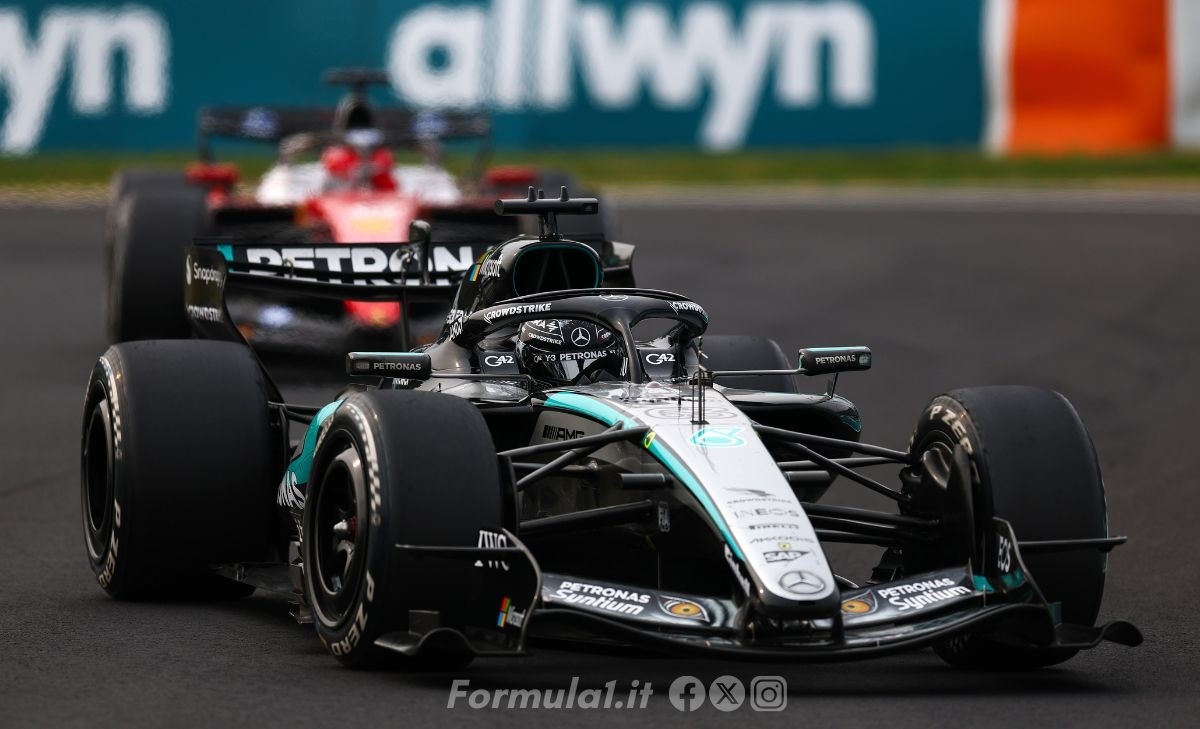
Contacted by the media during the Pirelli tests, Mercedes driver George Russell, as well as one of the directors of the GPDA (Grand Prix Drivers’ Association), was invited to express his opinion on the conduct of these meetings.
The FIA appears to have found a solution to super-clipping
According to the first rumors that emerge, one of the possible interventions to avoid such massive use of super-clipping on straights is to intervene on the minimum charge value, currently set at 250 kW, with the maximum value, defined by the project as 350 kW. The idea is to eliminate the minimum limit, allowing drivers to also enjoy "small" amounts of energy to be used in charging mode anywhere on the circuit.
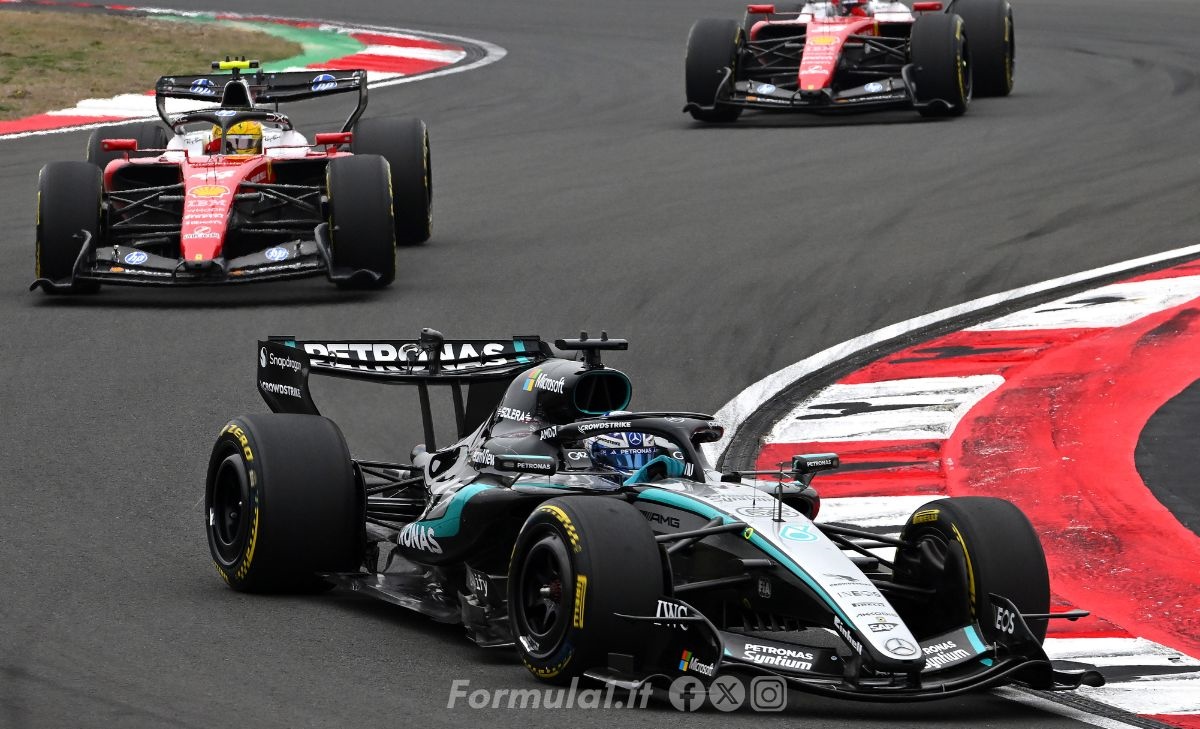
According to Russell, this would be a pretty obvious “Choice. This alone would avoid many problems during the energy recovery phase on the straight with consequent reduction in speed. There are other small parts of the regulation that state how to use engine power to recover energy at certain speeds. At the moment, on a very short straight, with the minimum charging limit set, there has not been enough time to go from the maximum power output of 350 kW to a super-peak. If the straight is short there is no time to do it”, reports the ‘BBC’.
Essentially, with no lower charging limits, drivers can recover energy anywhere on the track. They would always give up a little’ of top speed, but this would allow them to recover energy safely. You could have deltas of more similar speed to last year with the opening of the DRS, quantifiable at 10-15 km/h, without having deltas too abrupt even at 40-50 km/h as we saw in Japan.
Russell looks to the future with confidence
“With the right small, appropriate changes, significant improvements in the overall driving experience can be achieved”, Russell continued, concluding his thought. “The FIA is taking very good advantage of this break, it has sought and received a lot of feedback from the drivers”.
The GPDA appears to approve the intervention plan that the Federation will make official at the end of all scheduled meetings with teams, drivers and manufacturers. According to Russell, other changes are also needed, but at least it seems to be going in the right direction.
Foto: Mercedes
Read also in italian language: Super-clipping, la FIA vuole eliminare il limite minimo di ricarica. La GPDA approva

