 By:
Ferrari suffered a tyre disaster in Brazil. The Prancing Horse endured one of its worst Grands Prix of the season at Interlagos, but there is a logical explanation for what happened. The SF-26 particularly struggled in the low temperatures, and difficulties bringing both the Intermediates and the Soft C5s quickly into their operating window prevented it from matching the other top teams and delivering a performance worthy of Ferrari for its fans.
The reason why Hamilton and Leclerc struggled to break into the top 10 is easy to identify, but understanding how to avoid these conditions is far more complex. It is a shame, especially as both had a new engine under the bonnet and a strong race was expected from the Maranello pair.
The illusion before the wake-up call
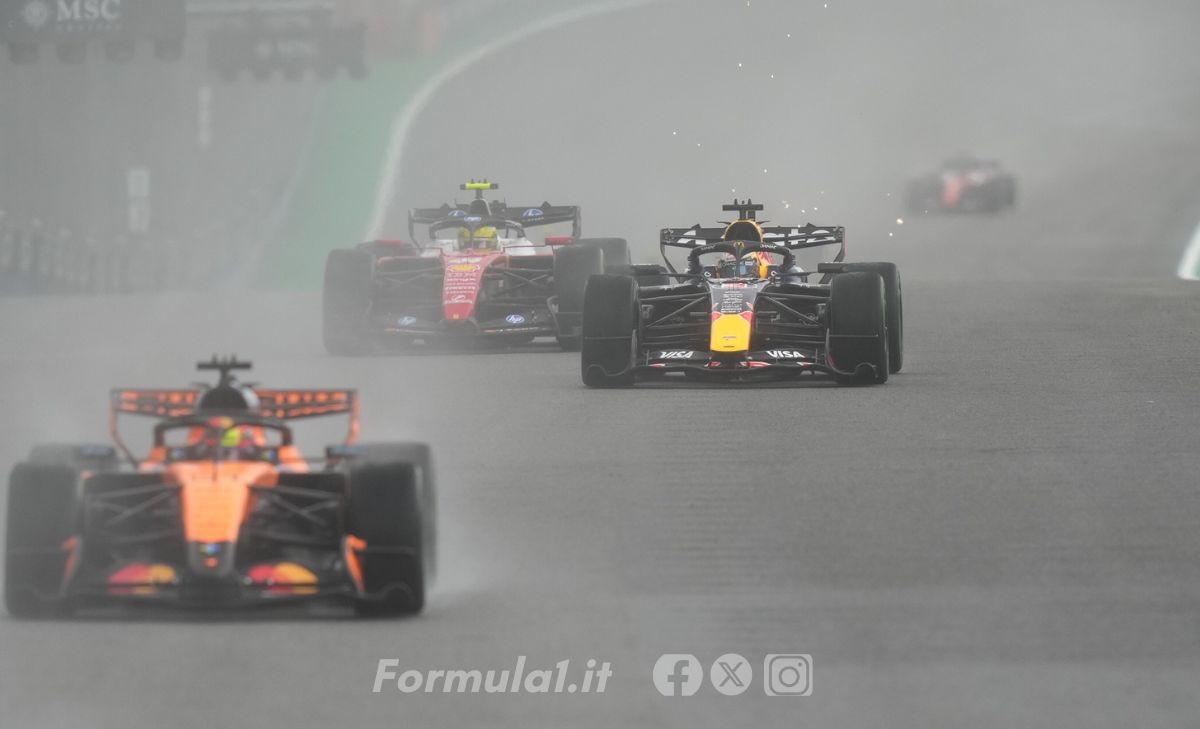
Once the lights went out, those expectations appeared to be met. Hamilton, starting from P19, was ninth after just a few corners. The second lap of the race began with Lewis in P9, Verstappen in P13 and Leclerc in P15. Given that Max finished second, what went wrong? Tyre temperature.

The seven-time world champion made an irresistible start, but the 26°C track temperature then began to affect his Intermediates, as well as Charles's. From the third lap onwards, Hamilton began to run significantly slower than the drivers behind him, to the point that he was even overtaken by his team-mate during the first stint. Looking at the times of Norris, the driver who would go on to win the GP, and considering only the first stint, Leclerc lost 26 seconds, while Hamilton lost more than 28.
The switch to slicks did not go any better. Ferrari was unable to bring the tyres up to temperature with the track at 24°C. Hamilton and Leclerc needed around 10 laps to get their tyres into the right window and show pace comparable to the drivers at the front of the race. During that period, Charles lost a further 22 seconds, while Hamilton managed to remain around 10 seconds behind thanks to the undercut.

Ferrari must focus its efforts on understanding the tyres
The opening 27 laps effectively ruined the race for both Ferraris. Without those laps, we would probably have seen a very different race. Of course, time lost in traffic must also be taken into account alongside the tyre problems, but it can be said with little doubt that the first 27 laps cost Hamilton around 40 seconds and Leclerc nearly 50 seconds.
It is not the first time Ferrari has encountered this type of problem during the season, and it must find a solution ahead of the 2027 championship. Tyres are one of the most important aspects to consider in motorsport. The Brazilian GP was, unfortunately, a clear example of that.
Cover and in-article photos by Finlay Williams / WHYOUT Images
Lap-time data: FIA
All the news, photos, weather, session times and times from the Brazilian GP 2026