 By:
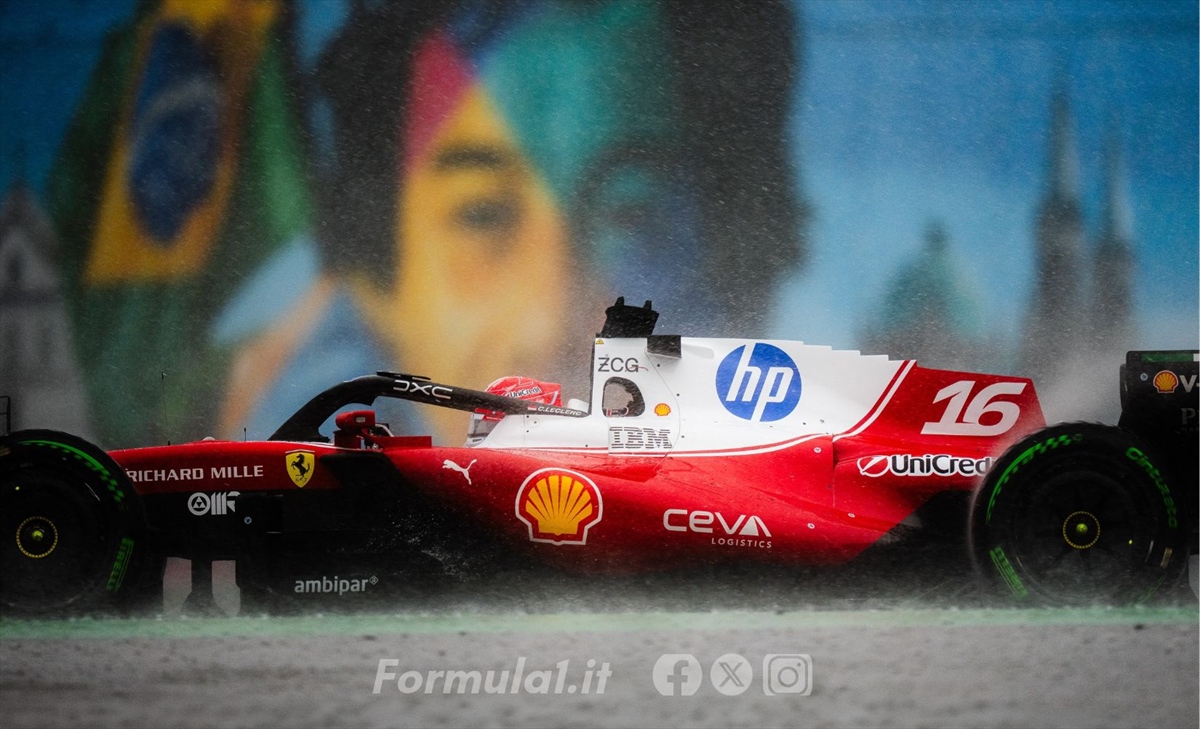
With qualifying in Sao Paulo, Brazil, Formula 1 has also silenced all the criticism about racing in the wet. Enough with saying that the cars cannot run in wet conditions. Whether racing takes place depends essentially on visibility and the need to guarantee driver safety. Nobody wants the drivers to get hurt. Therefore, if circumstances allow, the FIA will permit the drivers to race; otherwise, it will not.
Given the great action and unpredictability of qualifying, we obviously hope to see an entertaining race, particularly if rain returns to soak the Interlagos track, as it did yesterday in qualifying.
Pirelli's strategy advice – Autodromo José Carlos Pace – 71 laps
Formula 1 drivers and engineers are heading into a race that will probably be shaped by considerable weather uncertainty. Pirelli's motorsport director attempted to assess all possible options: “There is a 60% chance that it could rain during the race as well. We therefore cannot rule out a repeat of the conditions seen in qualifying. If the race is held in dry conditions, the data collected during Friday's FP2 will become significant again.”
“We found something different from what we expected from the simulations,” said Dario Marrafuschi. “Wear was higher than expected, with a more pronounced loss of performance over the course of the stints. We therefore expect two stops to be the most widely used strategy: two stints on Softs and one on Mediums. This combination offers an advantage of around three seconds over strategies involving all three compounds. Strategies such as H-S-S and their permutations entail a further increase in overall race time.”
“The cooler temperatures expected on Sunday will encourage the use of the softer compounds. They will offer more grip, reaching their operating window sooner. A one-stop is an option, but it appears less competitive. Total race time is estimated to be 10 seconds slower than the two-stop strategy. The undercut could prove crucial in gaining track position, especially for those switching to a softer compound,” the Italian manager concluded in comments to Pirelli.
Similarities between Mexico and Brazil, but the layout changes everything
Honestly, we do not see many differences compared with the Mexico GP in terms of tyre degradation and performance. At least based on Friday's long-run observations (read here). However, one point must be made. Why did drivers opt for a one-stop strategy last week, while they could make two stops in Brazil? At Mexico City, overtaking is genuinely difficult, so maintaining track position matters greatly and, moreover, the red flag denied us the chance to see the strategies develop. Perhaps both Verstappen and Leclerc should have made another stop in order to finish the race at competitive pace.

So yes, we agree with Pirelli again today. If the race takes place in dry conditions, the C5 Soft and C4 Medium will once again be the most widely used compounds. Given what Antonelli was able to do on the Softs in Mexico, he could attempt a one-stop strategy here in Brazil too. However, with only Norris as a potential rival, given that Verstappen, Leclerc, Hamilton and Russell will start from the back due to engine changes, he will certainly opt for a strategy that is quick but also allows him to control the situation without overdoing it.
Then again, it is unclear: it also depends on how the duel with Norris develops and on his intentions. With the World Championship title already in the bag, Antonelli could also decide to ease off and simply do what is required. With the Ferraris starting outside the top ten, Kimi and George would only need to finish the race, ensuring they retain their positions ahead of the two SF-26s, to hand the constructors' title to Mercedes. The Stuttgart marque only needs to score three more points than the Prancing Horse to have mathematical certainty of the title.
Cover and interior photos by Finlay Williams / WHYOUT Images
All the news, photos, weather, session times and times from the Brazilian GP 2026