 By:
By: The Spanish race at the Madring was interesting, but not thrilling. Every overtake we witnessed stemmed from strategy and, above all, was dictated by the Virtual Safety Car, triggered by Lance Stroll's (Aston Martin) accident on lap 15. Many have blamed the timing of race control's VSC deployment for Lando Norris' defeat, and it certainly had an impact on the McLaren's race. However unpleasant the incident may have been, we believe the decision was made in the interests of safety and, at the end of the day, that is what matters most.
The race had three potential winners. Each of them had every chance of winning, but one important factor was missing for any driver to rise from the ashes and become the undisputed star of the event: the C3 Medium tyre. Today, the drivers effectively raced with only one tyre compound.
All the race strategies
The Madrid GP proved to be a one-stop race, thanks to the excellent performance of the C2 Hard. Had the drivers been forced to rely on the C3 and C4, even two stops would not have been enough.
There was a wide variety of compound choices at the start of the GP, but when the VSC arrived on lap 15, as we had predicted before the race, the most rewarding strategy was to start on the Soft tyre (on a par with the Mediums) before switching to the Hard for the remainder of the race (read here). Our briefing was half right. We identified the right starting compound and the uncertainty between one and two stops, but we believed more strongly in a two-stop strategy than a one-stop race. The C2 Hard displayed remarkable consistency, especially with Leclerc, who completed 48 laps on it to finish fourth (Gasly managed 55, but finished 12th).

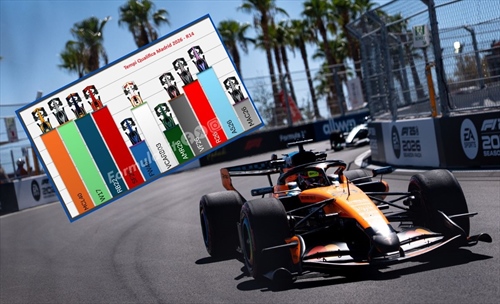
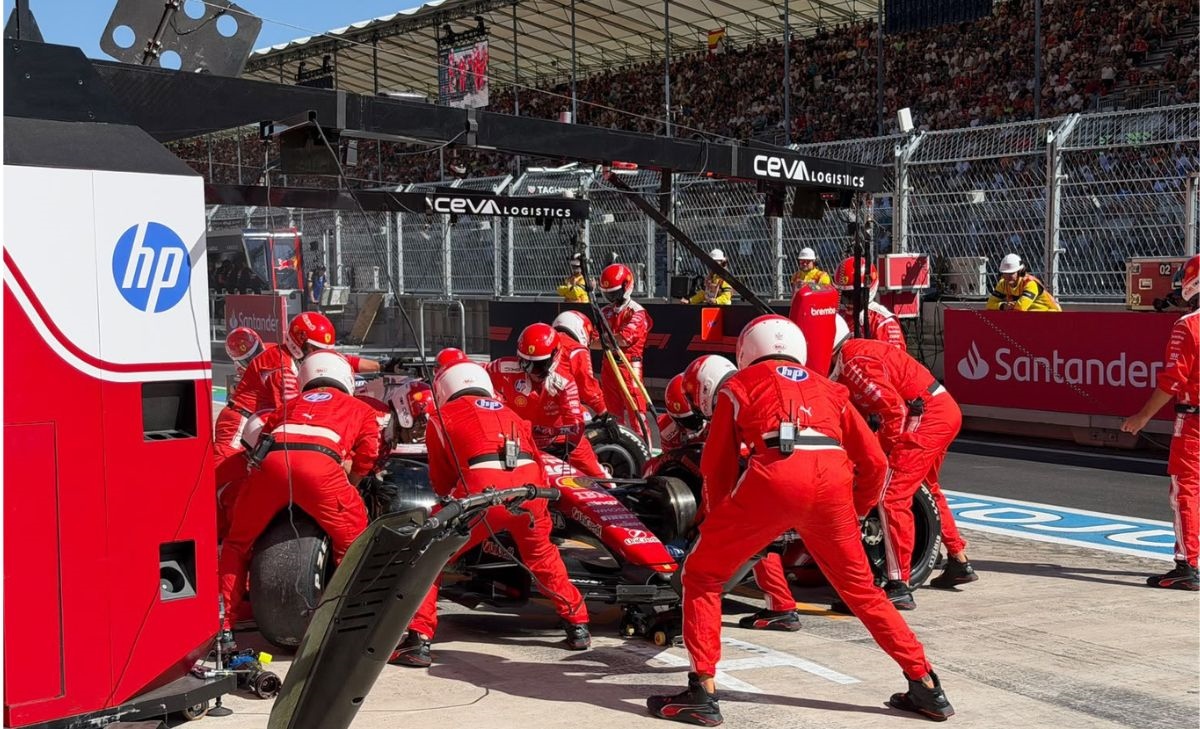
Antonelli won the race on a Medium-Hard strategy, making his pit stop behind the Safety Car. The impressive Colapinto, Lindblad, Ocon and Albon did the same. Norris adopted the same strategy, pitting a lap later. Starting on Softs and pitting under the VSC to fit Hards were Verstappen and Hulkenberg. Most of those who started on Hards then chose to follow Leclerc's path, ignoring the Virtual Safety Car period and staying out for as long as possible. Those who adopted this approach made just one stop. Leclerc, Gasly and Bortoleto used a Hard-Soft strategy, while Lawson, Piastri and Tsunoda opted for Hard-Medium.
Russell, who chose to pit under the VSC despite being on Hard tyres, found himself committed to a two-stop race with a dramatic surprise: a lack of pace on the C3 Mediums. His H-M-H strategy put him P5, behind Leclerc. Haas's Bearman followed a similar strategy, making his first stop on lap 33; Alonso went Hard-Soft-Hard and Bottas Hard-Hard-Soft. Retirements: Sainz, Perez, Stroll and Hamilton.
The race's moral winners: Norris and Leclerc
Had there been no Virtual Safety Car, we would have seen Lando Norris take his third McLaren victory of the year. His pace was good enough to win the race without any difficulty. The fact that he recovered to P3 and caught Verstappen, despite being unable to take advantage of the VSC for his pit stop, demonstrates his potential: race control displayed the panels after Lando crossed the line on lap 15 and withdrew the VSC shortly before the Briton reached the pit lane, preventing him from racing on equal terms with those ahead.
In our view, the race control decision was appropriate to its remit. The stewards must not distort the outcome of the GP, but act according to the danger on track. If they also began to consider car positions before deploying a red flag, VSC or Safety Car, the risk of influencing the race outcome would be greater.

By choosing not to pit immediately like his rivals, Leclerc led the race from lap 16 to lap 48: 32 laps out of 57, almost two-thirds of the GP. His pace matched the position he occupied. On many occasions he was also the fastest driver on track, and he managed the C2 compound impressively. Antonelli, of course, was not pushing flat-out knowing that Charles still had to make his stop, but the Monegasque nevertheless delivered an exceptional race. Had there been a late Safety Car or red flag, he would have been favourite for victory.
This is why we speak of three winners: Norris, Leclerc and, of course, Antonelli. Although fortune was on his side, this time he managed the car and tyres perfectly, pushing as hard as required in every phase of the GP without overdoing it. The Italian is showing impressive maturity and, even though he has the best car in the championship, there is no doubt that he deserves to lead the standings.
The tyres require careful analysis for the future
Unfortunately, the tyres were lacking in Madrid. For the Spanish round, Pirelli selected the C2 Hard, C3 Medium and C4 Soft. Throughout the weekend, we reported on teams struggling to use the C3, but we never imagined it could affect so many cars. The longest stint on this compound was 14 laps, both for those who started on it and for Russell, who fitted it midway through the race.
We believed it could be a handicap for Ferrari, but in the end it affected everyone. The Prancing Horse team knew it would have problems and tried to delay its stop to avoid it. The lack of pace on the C4 Soft was, however, a surprise.

These difficulties open up a rather strange scenario. Drivers were able to complete the event's 57 laps without trouble on just one set of C2s. Therefore, considering bringing the C1 in 2027 would be ultra-conservative and serve no purpose. Charles, however, needed a more consistent C3 to show himself to be competitive and strong enough to trouble his rivals at the end. Had he had a Medium that was up to the task, one that did not lose performance so quickly, also because of graining, he could have considered pitting with around 20 laps remaining to attempt a recovery. Today, however, Leclerc and Ferrari had no choice. The pit wall could do nothing but place its race in the hands of fate, hoping for a Safety Car.
Pirelli's comment
As usual, the thoughts of Pirelli's motorsport director at the end of the event: “The teams' approach was different from what had been simulated on Friday. The VSC allowed the drivers to focus more on managing pace and tyre degradation, extending their stints and completing the race with just one pit stop. The Hard was the major protagonist, with stints of more than 45 laps without showing any significant drop-off in performance.”
Despite high temperatures of around 52°C: “The Medium and Soft proved to be valid options. The C4 in particular completed stints almost at the level of the C3 Medium. Graining mainly affected the front-left, but it was fairly limited,” concluded Dario Marrafuschi.
Cover photo: X, Ferrari; internal graphics Pirelli; internal photo: X, Ferrari
All the news, photos, weather, session times and times from the Spain GP 2026