 By:
The Brazilian GP was fairly straightforward from a strategic perspective. Engineers and drivers closely followed the evolution of the track surface when making their pit stops, switching from wet tyres to slicks in the early stages and from dry tyres to Intermediates at the end. As usual, however, there was one team that, aided by a few radio misunderstandings, once again left points on the table. That team was Scuderia Ferrari.
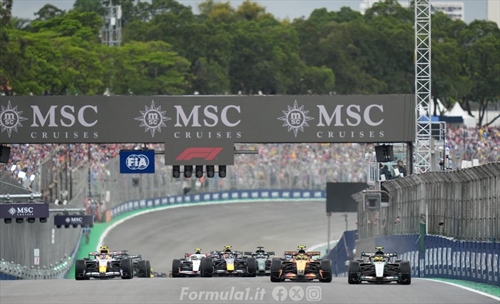
Before recapping the strategies, which were more or less the same, we must first congratulate Lando Norris on his victory, secured thanks to an excellent stint on the Softs fitted immediately after the Intermediates. Lando lost out to Antonelli at the start, but by getting the slicks up to temperature much sooner than Kimi, he took the lead and never relinquished it.
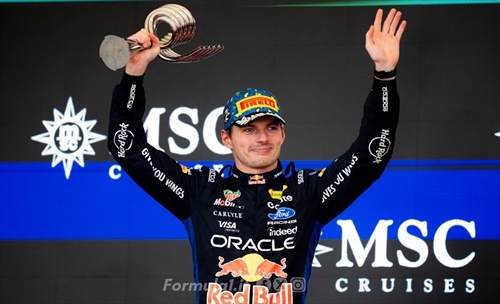
Verstappen produced yet another masterpiece, maximising every stint of the race. He made an incredible start, almost on a par with Lewis Hamilton’s. While the Briton struggled badly to manage the Intermediates, the Dutchman was instead able to switch them on very effectively and continued his recovery, closing in on the Top 3 after just around 20 laps.

A solid race from Hadjar, Lawson and Piastri, while Russell beat Antonelli despite a spin in the pit lane after his first pit stop. Ferrari struggled enormously with tyre management and, as if that were not enough, were also not up to standard when it came to pit-wall calls. Eighth and ninth for Leclerc and Hamilton perfectly reflect the team’s current downturn.
Strategy recap
The race was run entirely on just two compounds: Intermediates and the C5 Soft. The most popular strategy was a three-stop Intermediate-Soft-Soft-Intermediate, although some drivers skipped one pit stop by running Intermediate-Soft-Intermediate. Only three drivers managed to avoid a stop: Russell, Leclerc and Perez. Everyone else made a pit stop, more or less around the middle phase of the race, to reach the finish on fresher tyres.

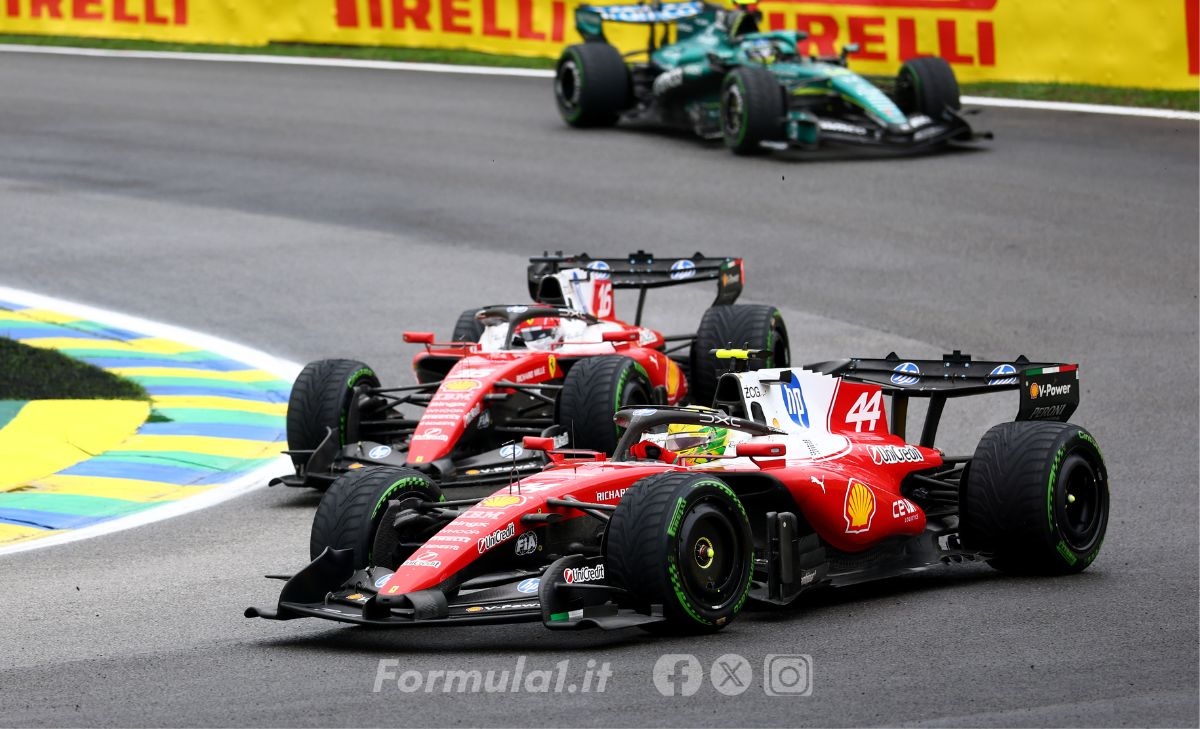
Given the arrival of rain at the end, the quickest strategy was certainly Intermediate-Soft-Intermediate. Using this approach, Russell beat Antonelli despite his pit-lane spin, while Leclerc not only got the better of Hamilton — although Ferrari were more to blame in this case — but also had the chance to take the position from Lawson in the closing stages. Unfortunately, contact with Liam ruined the result, but he still managed to finish eighth, following the five-second penalty imposed by the FIA, ahead of his team-mate.
That damned lack of trust
Call it what you like, but it is now a fact: Hamilton does not trust the pit wall. Ferrari’s GP was marred by major difficulty in getting the C5 tyres up to temperature and, in Hamilton’s case, the Intermediates as well. However, we can say that had the Briton listened to the pit wall and followed the instruction to switch from Softs to Intermediates, he would have had the opportunity to fight with Lawson.
He certainly would not have been able to secure anything better than seventh, but by ignoring that call he effectively ended all his chances, leaving himself to finish ninth. Among the top teams, only Lewis makes a decision like that, desperately trying to reach the pits on slicks at a time when the track was already completely wet.
Such a struggle on the Softs! Ferrari and Mercedes’ problems
Ferrari’s GP was certainly not decided by the final stint on Intermediates. No, absolutely not. Ultimately, eighth and ninth reflected the true potential the team showed at Interlagos. Positions that could scarcely have been improved. The two Ferrari drivers might have beaten Liam Lawson, but no more than that.
The race was in fact shaped by other incidents. Hamilton made a superb start, moving from P19 to P9 in just a few corners. Lewis and Max Verstappen decided to give their fellow drivers a fine lesson in starting. To his great regret, however, Hamilton was forced to surrender after just one or two laps. The pace was not there and performance collapsed. Things improved on the Softs, but recovering became difficult, especially because the team then opted for a second pit stop and another set of C5s.

Leclerc, meanwhile, after a mediocre start, maximised the potential of the Intermediates before encountering major issues managing the C5 Soft. Both Leclerc and Hamilton struggled to bring the compound up to temperature. Lewis’s problems lasted only a few laps, while Charles’s situation was more complicated than expected. The Monegasque had climbed into the top ten on the Intermediates, but after a few laps on the Softs found himself thrown back into the pack, around P13-P14 — the position from which he had started the race. Fortunately, it was only a temperature issue. As soon as the tyre came in, Charles was able to manage the compound, but by then the race had been compromised.
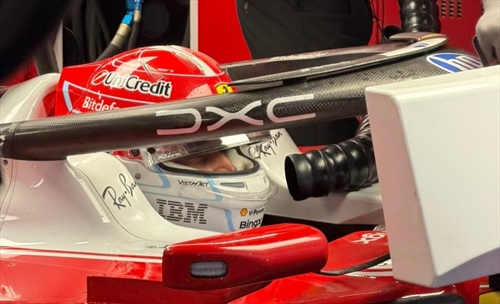
Andrea Kimi Antonelli experienced the same situation as Charles Leclerc. For him, the start of his first stint on Softs after replacing the Intermediates was extremely difficult. Two mistakes at Turn 1 cost him the race lead and contact with the front. Not to mention Russell, who lost control of the car on pit-lane exit.
Understanding and being able to manage the tyre makes a huge difference in a race. Mercedes have often demonstrated that this year, almost humiliating their rivals. Brazil marked their first misstep in that respect. McLaren and Red Bull are showing that they have excellent potential to develop over the winter. Antonelli and Mercedes may have won the world titles in their respective championships, but the 2027 challenge has already begun, and the path to defending the two trophies appears, at present, slightly more complicated than it was in 2026.
Pirelli’s comment
Dario Marrafuschi spoke after the GP: "Weather conditions had a decisive impact on strategy. The rain that fell before the start created very different grip levels around the circuit. The Intermediate was a mandatory choice for the first stint. In these transition conditions from wet to dry, the Intermediate tyre delivered consistent performance and, as the track evolved, the tyres approached the crossover time for slicks. We observed degradation that was mainly thermal in nature. We also recorded graining phenomena due to the drying surface, especially on the right-hand side".
"When conditions allowed the switch to slicks, the Soft confirmed itself as the perfect choice. The relatively low air and track temperatures helped keep degradation at a limited level. Some teams considered the possibility of completing the race without further stops, but the return of rain at the end once again reshuffled the cards. Overall, both the Intermediates and the Softs lived up to expectations", concluded the Pirelli motorsport director.