 By:
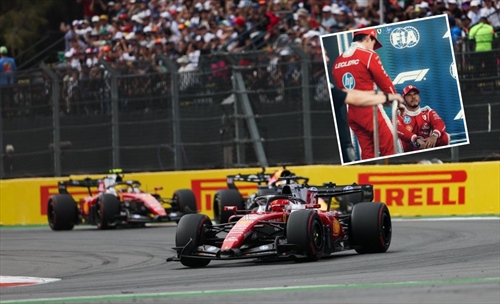
The events involving Ferrari at the Mexican Grand Prix have brought a thorny issue back into focus: driver management, which has been debated repeatedly this season and in many previous campaigns.
While this writer's view is very clear and can be summed up by the principle that you do not win the world championship with two equal number ones, it must be acknowledged that Maranello has chosen a different approach, and the following considerations must be based on that.
Post-race comments out of control

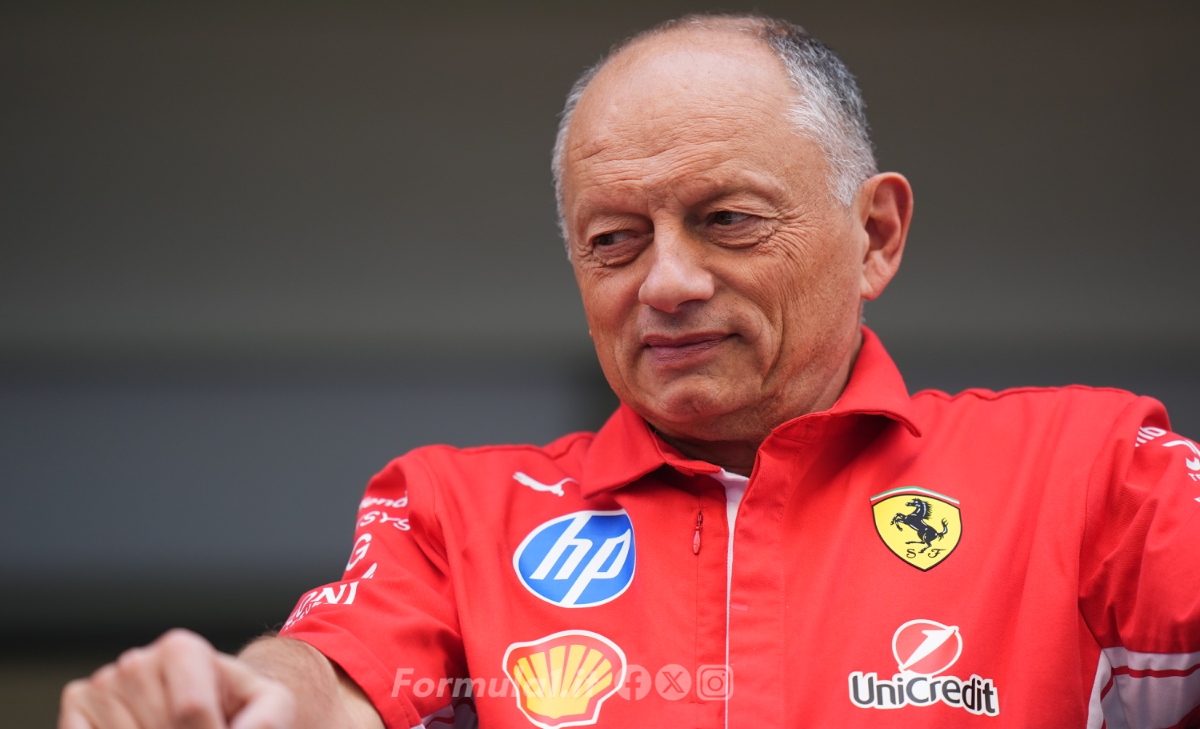
Vasseur's comments after the Mexican race were extremely strong (read here).
They were echoed by Lewis Hamilton, who aligned himself with the French team principal's position.
Leclerc, for his part, sees things differently, although he does not deny his share of responsibility.
The question we must now ask is this:
Within the team, who is responsible for establishing rules of engagement between the drivers in a case such as the race that has just concluded?
Before the start, were those rules clearly established, or were the drivers simply told to "race cleanly"?
Let us assume the drivers were left free to race.
If that was the case, the team must be prepared to accept that what happened on Sunday can occur in motorsport, because every one of the 20 drivers on the grid has been raised to, lives and breathes to get the better of the others, and must try everything to win: it is in their nature.
If Hamilton and Leclerc were free to race, then the team principal who made that decision — or worse, failed to make one — should face the media and simply say it as it is: "The drivers were free, these things happen in motorsport and we accept the risk."
If, on the other hand, rules had been established, they should ideally be clear. For example: "After the first corner, if we are running first and second, the positions are locked."
It is not enough to tell two drivers such as Hamilton and Leclerc to drive cleanly. If the principle of respect for the team is to apply, absolute clarity is required.
If those rules had not been respected, the team principal could have made it clear to the press who had failed to follow the guidelines and how, limiting the current controversy that is dividing the Ferrari environment and its fans in two — if that were still necessary.
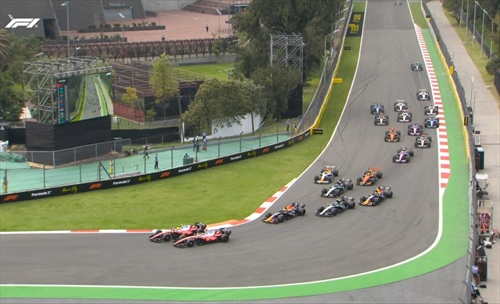
Even after the incident, once it was clear that Verstappen had moved between the two cars, Ferrari could have intervened decisively, telling Leclerc not to give the position back and instead attempting to build the gap needed to mitigate the five-second penalty.
At the same time, it could have prevented Hamilton from becoming furious by communicating the decision to him and telling him that, if possible, Leclerc would later return the position at the most appropriate moment.
Instead, the Ferrari pit wall chose to do nothing.
Driver management is completely absent
It does not matter who was right or wrong in the events at the start of the Grand Prix: the responsibility lies with those tasked with managing the drivers.
There is little value in the words Vasseur gave to the media, almost as though he were not an active part of the decisions made by Ferrari.
It is the team principal's job to manage the two drivers; it is his job to decide whether rules of engagement exist or not; it is his job to ensure those rules are clear and, where necessary, to intervene when race conditions change in order to adapt to the circumstances.
If those rules were not set out clearly, on what basis will the discussion Vasseur and the drivers are due to have shortly be structured?
How can he remove the excuses, even justified ones, that the drivers will bring to the table in their defence?
The meeting will serve no purpose, just like those held in the recent past.
Vasseur cannot evade, as he has done, his responsibilities. By acting in this way, he has left the door open to a series of controversies and bad blood that genuinely harm the team, the people who work there and the fans.
All the news, photos, weather, session times and times from the Mexican GP 2026