 By:
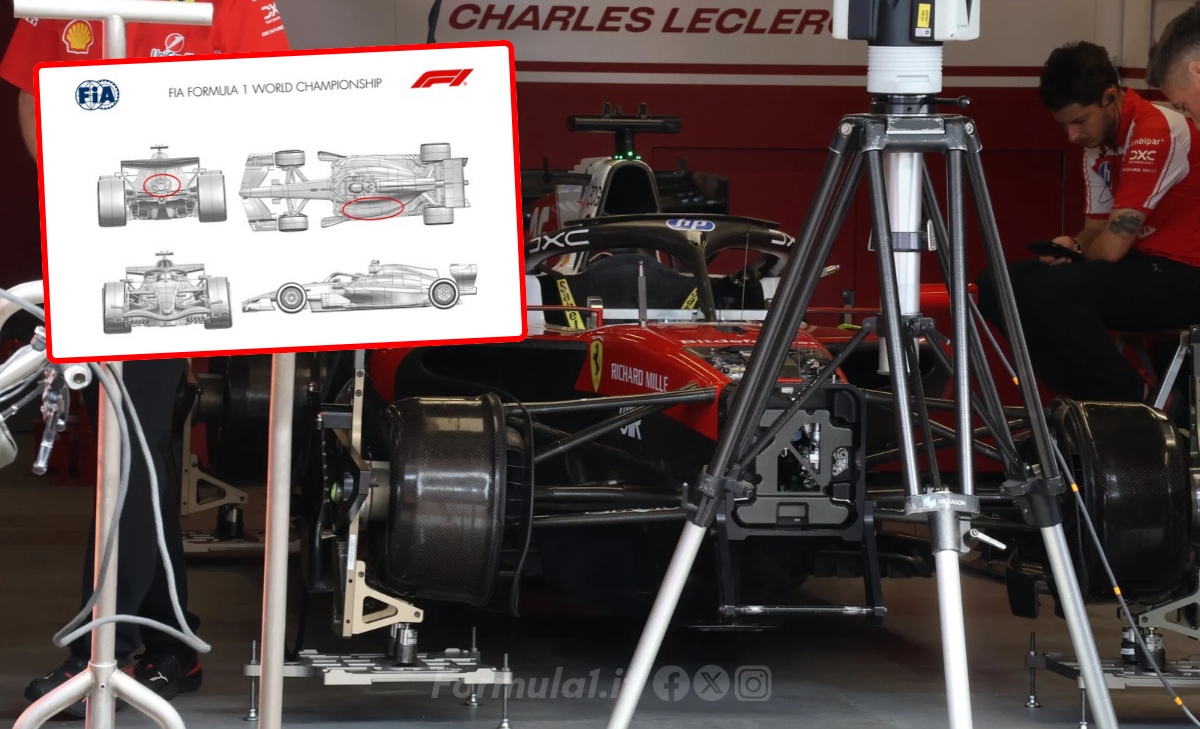
The FIA has published its summary document of the official updates brought by teams to the 2026 Mexico City Grand Prix at the Autódromo Hermanos Rodríguez. Six teams have declared technical changes: McLaren, Red Bull, Ferrari, Racing Bulls, Audi and Alpine.
Following the extensive aerodynamic developments introduced in Austin, Mexico brings a change in priorities. The circuit’s altitude, at 2,238 metres above sea level, is the principal factor shaping the technical choices, as lower air density reduces cooling effectiveness and alters the aerodynamic behaviour of the cars. Teams must therefore strike a compromise between heat rejection and the need to preserve aerodynamic efficiency.
The dominant theme of the updates is power unit cooling, with no fewer than four teams making changes in this area. Ferrari has enlarged the rear bodywork exit and added new louvres to the upper section of the sidepods, accepting an aerodynamic penalty to increase heat dissipation capacity. McLaren has extended and reshaped its cooling openings, while Racing Bulls has made changes to both the rear exit and its louvred panels. Red Bull has also increased the openings in the engine cover to improve airflow through the radiators.
There are also performance-focused changes. Red Bull has additionally revised the sidepod geometry and its junction with the floor, seeking more local downforce through improved airflow management. Audi, meanwhile, has introduced a new rear brake duct deflector aimed at increasing downforce around the rear of the car. Alpine’s update is more modest, with a reshaped exhaust tailpipe winglet adapted to Mexico’s particular environmental and aerodynamic conditions.
Compared with Austin, where several teams introduced significant development packages, this weekend’s changes are therefore predominantly adaptations to the circuit’s characteristics. Of the nine declared updates, six directly concern cooling capacity. With the championship now entering its final phase, the focus is shifting from pursuing major performance gains to making the most of the existing cars, particularly at a circuit with such distinctive technical demands.
The other five teams – Mercedes, Williams, Aston Martin, Haas and Cadillac – have not declared any updates for the Mexican weekend.
Here are all the official changes brought by the teams for the 2026 Mexico City Grand Prix.
McLaren

McLaren has introduced a Mexico-specific cooling configuration, modifying the bodywork louvres, which have been enlarged and reshaped compared with the previous version. The openings have been extended towards the front of the car to increase the power unit’s heat rejection capacity. The change responds to the challenges posed by the thin air at 2,238 metres of altitude, where lower density reduces the amount of heat that can be dissipated through the radiators. It is therefore an adaptation to the circuit conditions rather than a development directly aimed at increasing aerodynamic performance.
| Component | Reason | Differences | Description |
|---|---|---|---|
| Cooling Louvres | Circuit-specific – Cooling | Enlarged and reshaped cooling louvres. | To address the specific power unit cooling requirements at the Mexican circuit, the louvres have been enlarged, extended towards the front of the car and reshaped to increase heat rejection capacity. |
Mercedes
No updates.
Red Bull

Red Bull has introduced two changes with different objectives. The first concerns power unit reliability, with enlarged engine-cover louvres to increase cooling capacity and offset the challenges posed by Mexico’s thin air. The second is a genuine aerodynamic update: the sidepod geometry and the junction area with the floor have been modified to improve airflow behaviour beneath the radiator duct inlet. The aim is to increase local downforce without compromising the car’s stability.
| Component | Reason | Differences | Description |
|---|---|---|---|
| Engine Cover | Reliability | Added louvres for cooling air exit. | To improve airflow through the radiators and recover cooling capacity, the air exit area has been increased by enlarging the existing louvres and providing further optional openings to the exterior. |
| Sidepod | Performance – Local downforce | Modified sidepod geometry and the separation line between the floor and sidepod. | The modification, integrated into the existing sidepod geometry, improves airflow characteristics beneath the radiator duct inlet, increasing local downforce without compromising stability. |
Ferrari

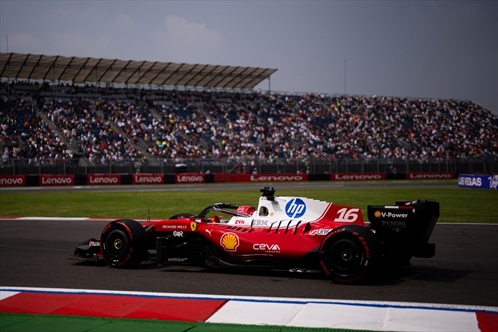
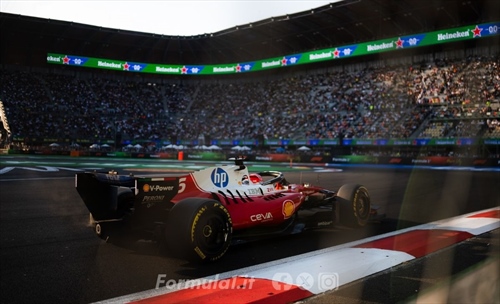
Ferrari has focused both of its updates on power unit thermal management, one of the most delicate aspects of the Mexican weekend. The configuration features a larger rear bodywork exit and the addition of cooling louvre panels on the upper section of the sidepods. The changes increase the amount of heat dissipated, compensating for the lower air density at 2,238 metres of altitude. Ferrari itself acknowledges the necessary compromise, however: the greater cooling capacity is achieved at the expense of aerodynamic efficiency, at a circuit where reduced drag makes bodywork configuration choices particularly important.
| Component | Reason | Differences | Description |
|---|---|---|---|
| Engine Cover | Circuit-specific – Cooling | Enlarged rear bodywork exit. | To meet the demands of the Mexico City circuit, the rear bodywork exit has been enlarged to increase engine cooling capacity, at the expense of the car’s aerodynamic efficiency. |
| Cooling Louvres | Circuit-specific – Cooling | Added cooling louvre panels on the upper section of the sidepods. | The additional louvred panels on the upper section of the sidepods further increase engine heat rejection capacity, enabling the car to meet the circuit’s high cooling demands at the expense of aerodynamic efficiency. |
Williams
No updates.
Visa Cash App Racing Bulls

Racing Bulls has introduced two changes specifically aimed at meeting the particular cooling demands of the Mexican circuit. The first is an enlarged upper rear bodywork exit, to increase the power unit’s heat rejection capacity. The second concerns the cooling louvre panels, with an additional configuration in the front area that increases airflow through the radiators. Both changes expand the car’s thermal management options in extreme conditions, without any declared modifications aimed at increasing aerodynamic downforce.
| Component | Reason | Differences | Description |
|---|---|---|---|
| Coke/Engine Cover | Circuit-specific – Cooling | Enlarged upper rear bodywork exit. | The main cooling air exit, located at the rear of the bodywork, has been enlarged to increase engine heat rejection capacity and meet the circuit’s high cooling demands. |
| Cooling Louvres | Circuit-specific – Cooling | Additional cooling louvre panel configurations available. | To further expand cooling options in extreme conditions, an additional louvred panel is available in the front area, allowing increased airflow through the radiators. |
Aston Martin
No updates.
Haas
No updates.
Audi

Audi is one of the few teams to introduce an update expressly aimed at aerodynamic performance. The change concerns the rear brake cooling duct deflector, whose geometry has been revised to increase local downforce around the rear of the car. The intervention exploits the aerodynamic contribution of the elements surrounding the rear wheel, improving airflow management and the car’s overall efficiency. It represents a further aerodynamic refinement following the developments introduced at previous rounds.
| Component | Reason | Differences | Description |
|---|---|---|---|
| Rear Corner | Performance – Local downforce | Updated geometry of the rear brake cooling duct deflector. | The revised geometry of the rear brake duct deflector increases local downforce in the rear area, improving the car’s overall aerodynamic performance. |
Alpine

Alpine has introduced a single update, classified by the FIA as a reliability measure. The change concerns the reshaping of the exhaust tailpipe winglet, whose configuration has been adapted to the particular environmental and aerodynamic conditions of the Mexico City circuit. It is a limited intervention designed to adapt an existing component to the specific demands of the track, without any declared changes aimed at increasing performance.
| Component | Reason | Differences | Description |
|---|---|---|---|
| Exhaust Tailpipe | Reliability | Modified exhaust tailpipe winglet profile. | For Mexico, the exhaust tailpipe winglet configuration has been resized to suit the circuit’s particular environmental and aerodynamic conditions. |
Cadillac
No updates.
All the news, photos, weather, session times and times from the Mexican GP 2026