 By:
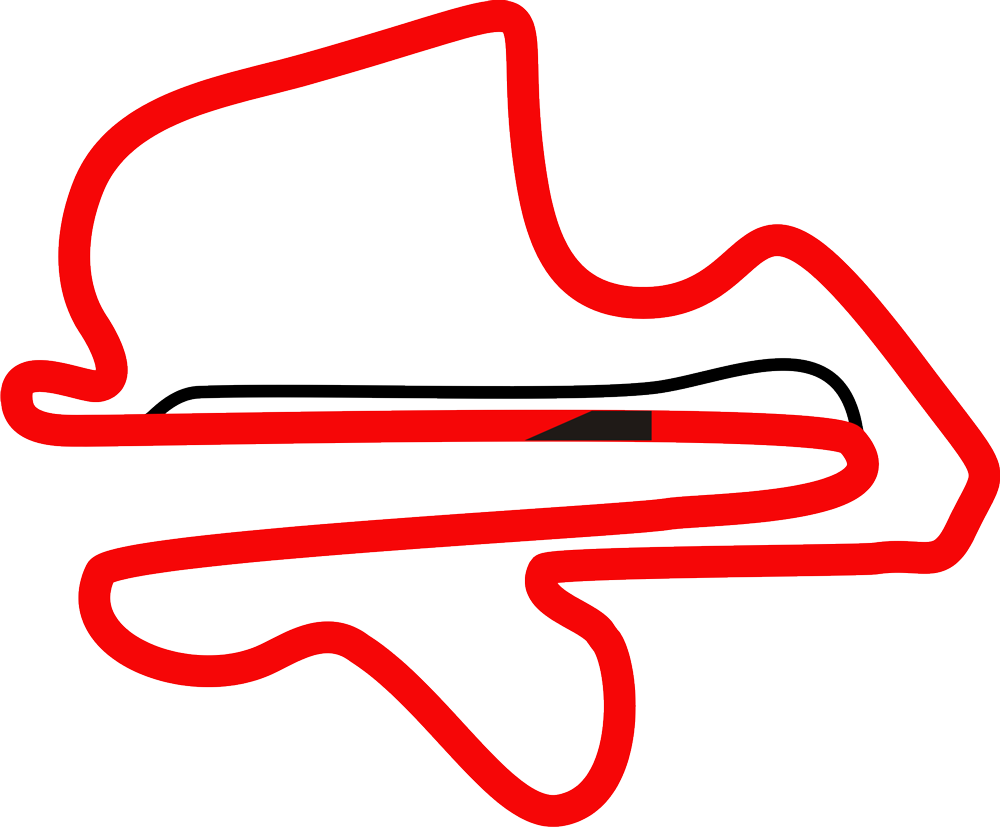
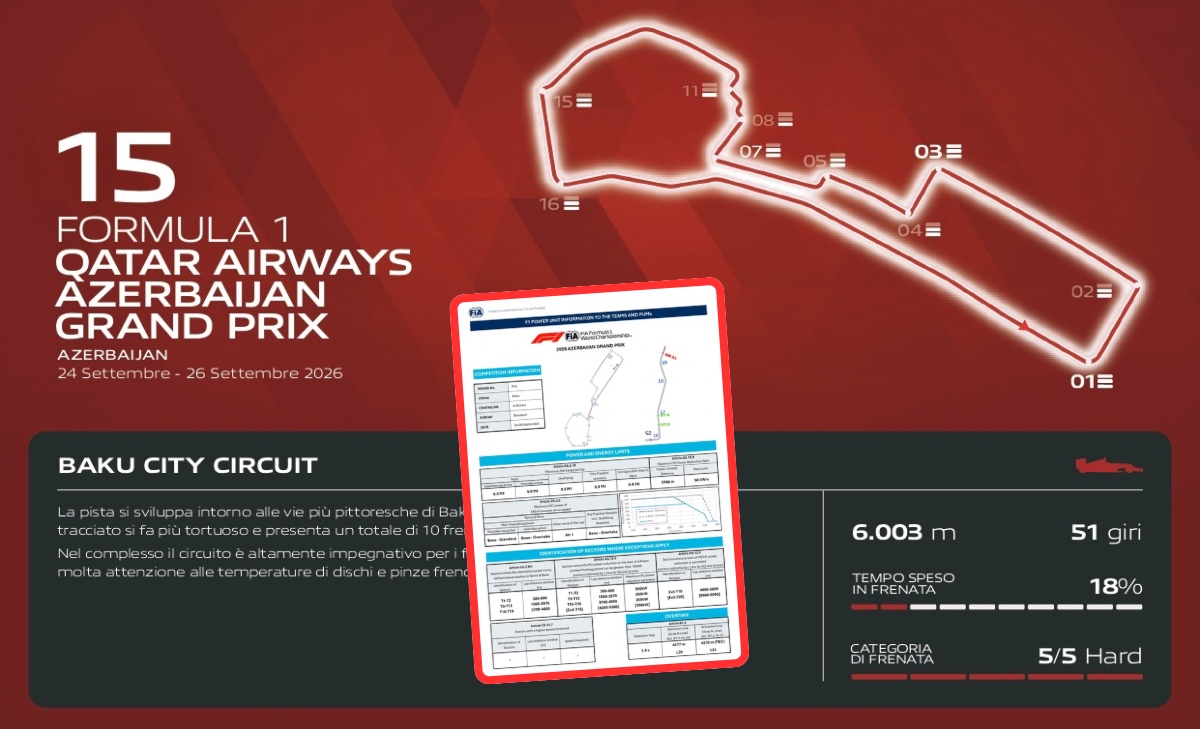
By: Formula 1 heads to Baku for the Azerbaijan Grand Prix, the 15th round of the season, following the unprecedented event in Madrid. The 6.003km street circuit presents one of the year’s most unusual technical compromises: a slow, twisty central section is combined with an extremely long final stretch run virtually flat-out.
From a braking perspective, Brembo ranks Baku among the most demanding circuits on the entire calendar, with a difficulty index of 5 on a scale of 1 to 5. The brakes are used ten times per lap for a total of 18.5 seconds: two braking zones are classified as Hard, six as Medium and two as Light. At five points, the braking phase also lasts more than two seconds.
The most demanding braking zone
According to Brembo simulations, the most severe point for the braking system is Turn 1, immediately after the main straight. The cars will arrive at around 313 km/h before slowing to 140 km/h. The deceleration will last 2.13 seconds and take place over 123 metres. During this phase, drivers will have to apply a 115kg force to the brake pedal, reaching a deceleration of 3.9g. Braking power will peak at 1,652 kW.

Energy management
From an energy perspective, Baku presents a particularly interesting scenario. The extremely long stretch from Turn 16 to the first braking zone might suggest a situation similar to Monza, with a high risk of reaching the end of the straight with little electrical energy available. In reality, the rest of the lap offers far more opportunities for regeneration.
The FIA has set the Maximum Recharge per Lap at 8.5MJ in qualifying, the same figure applicable in the race without Overtake. With Overtake active, the limit rises to 9.0MJ, a figure also used in free practice.

The comparison with Monza makes the difference clear. At the Italian circuit, the FIA had set just 5.0MJ for qualifying and 7.0MJ for the race, rising to 7.5MJ with Overtake: significantly lower figures, linked to the limited number of braking zones and the difficulty of recovering energy without creating the unwanted effects of super clipping. In Baku, by contrast, the long sequence of slow corners and braking zones allows the MGU-K to regenerate far more energy over the lap.
That does not mean management will be straightforward. The issue instead shifts to deployment: once they exit Turn 16, the cars face a very long stretch on which maintaining maximum electrical assistance becomes extremely costly. It will therefore be crucial to distribute the energy accumulated in the central sector correctly, avoiding using it up too early on the straight towards Turn 1.
The FIA has also set a Power Limited Distance of 3,796 metres, with a Maximum PU Power Reduction Rate of 50 kW/s. The latter figure determines how quickly power unit output can be reduced in phases stipulated by the regulations, and is particularly interesting at a circuit where the transition between very slow sections and extremely long acceleration zones is so pronounced.
The overall picture is therefore very different from Monza. In Italy, the main challenge was recovering sufficient energy during a lap with very few braking zones; in Baku, recoverable energy is plentiful, but it must be managed along one of the season’s longest flat-out sections. The challenge will be to strike the right balance between recovery, deployment and top speed, ensuring the electrical component is not depleted too early precisely where every kilometre per hour can make a difference.
Azerbaijan GP 2026: complete guide
This is the third of six in-depth features we regularly publish on formula1.it in the build-up to every race weekend: alongside Brembo’s analysis of braking and energy management, they include Pirelli’s studies and information, the event’s TV and streaming schedule, official updates, the first images and set-ups from the pit lane, and a table of power unit components used.
All the news, photos, weather, session times and times from the Azerbaijan GP 2026