 By:
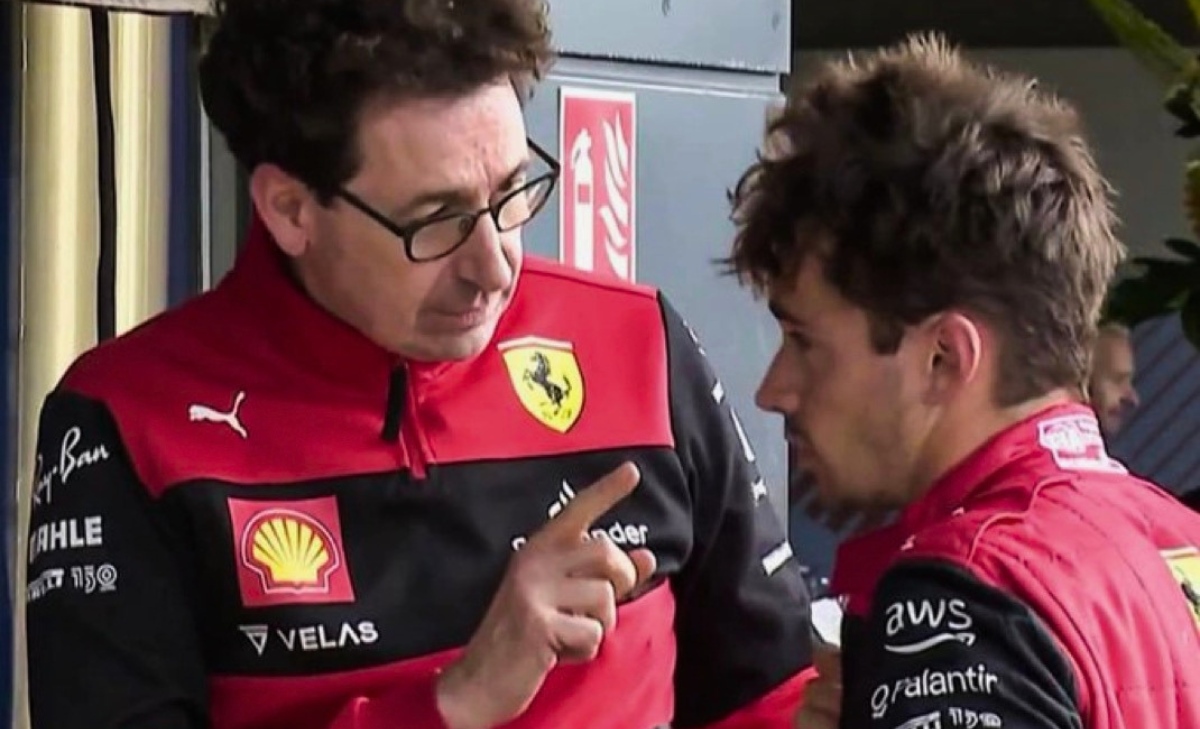
On 3 July 2022, at the end of the British Grand Prix, Mattia Binotto pointed a finger at Charles Leclerc. The gesture lasted only a few seconds, captured by cameras in the Silverstone parc fermé, but it unleashed a wave of criticism against Ferrari’s team principal at the time. Four years on, after what happened in Las Vegas, it is hard not to wonder whether that raised finger carried a meaning many preferred to ignore at the time.
That afternoon, Carlos Sainz claimed his first Formula 1 victory, while Leclerc, hampered by a questionable Ferrari strategy during the Safety Car, lost a race he appeared destined to win. The Monegasque was understandably furious. Binotto approached him before the interviews and, with a rather telling gesture, appeared to call him to order.
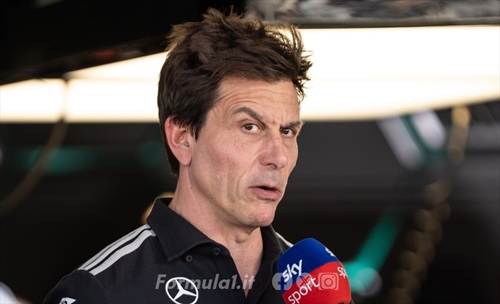
The official explanation was very different: “I told him he had driven a great race and that he had to look ahead, so he needed to try to calm down,” Binotto told Sky Sport. But the image quickly became the symbol of an executive accused of being unable to manage his most valuable talent. An executive who, according to some, had even made the unforgivable mistake of daring to reprimand Charles Leclerc.
Today, however, that scene may deserve a different interpretation. What if Binotto had sensed something that would become increasingly evident in the years that followed? What if, behind that pointed finger, there was also a need to remind an extraordinarily quick driver that Ferrari comes before Leclerc?
Because the issue has never been Charles’s talent, which nobody should seriously question. The issue is how far that talent has, over the years, been matched by the ability to accept compromises, respect the hierarchy and understand when personal interest must give way to that of the team.
Through avoidable mistakes, heightened duels with team-mates and missed opportunities, Leclerc has often given the impression that he sees every internal contest as something that must necessarily be resolved in his own favour. Something appeared to be brewing with Vettel, there were sparks with Sainz, and with Hamilton a fire has been lit that cannot be extinguished without consequences. And at a Ferrari without a dominant car, turning every internal battle into a matter of principle risks throwing away points that become even more valuable.
Las Vegas took the problem to an extreme. On lap 38, Leclerc attempted to overtake Hamilton, making contact and sending him into a spin. The stewards held the Monegasque responsible for the incident and handed him a 10-second penalty. Hamilton finished seventh, Leclerc 10th. Another result compromised by a clash between two drivers who, only a few weeks earlier, had already been called in by their team principal after what happened in Mexico.
But this time there is a major aggravating factor. Fred Vasseur had issued clear instructions and Leclerc did not follow them. The Frenchman, furious after the race, confirmed it without seeking excuses: “We told Charles not to overtake. He made a mistake that penalised the team. It is unacceptable. After the Mexican Grand Prix, we had been extremely clear.”
Vasseur then added even stronger words: “We have to do something and take action. You cannot ruin the work of so many people in this way.” On the coexistence of the two drivers, he admitted the situation was now “unmanageable”.
Those words mark a breaking point, because when a team principal publicly acknowledges that one of his drivers has ignored a direct order, the issue ceases to concern the track alone. It becomes a matter of authority, credibility and respect for the hierarchy.
Vasseur has already been accused too often of being unable to impose himself on his drivers. He tried to give them freedom, sought to manage tensions through dialogue and, after Mexico, firmly reiterated that the team comes before any individual interest. Yet at the first real opportunity, those instructions were ignored once again.
At that point, what value can the team principal’s word have if the driver of a Ferrari can independently decide to disregard it? And what credibility could Vasseur retain in front of his own people if, once again, everything were resolved with a meeting, a few routine statements and a promise to move on?
Ferrari must make a decision. Not necessarily on the immediate contractual future of those involved, but certainly on responsibility and the chain of command. Because continuing like this means condemning the team to a state of permanent conflict and, probably, to wondering one day why nothing concrete was done today.
The Scuderia chose to sign Lewis Hamilton, a seven-time world champion, with everything a decision of that scale entails in sporting, financial and media terms. It was a choice that should have strengthened Ferrari, but instead has made an existing management weakness, already present during the Sainz years, even more apparent.
Hamilton certainly bears his own responsibility for this season’s tensions and has not been immune from mistakes. But in the decisive Las Vegas episode, it is difficult to attribute the greater blame to him. It was Leclerc who attempted the overtake prohibited by the pit wall, Leclerc who caused the contact at a point where none of the other 127 overtakes had been attempted, and Leclerc who received the penalty. Above all, I repeat, it was Leclerc who had been told not to attack, let alone at that point and with those risks.
It is possible to continue defending Charles for his talent, his one-lap pace and his ability to achieve results often beyond the car’s potential. Those are genuine merits. But talent does not guarantee impunity, especially when mistakes compromise the work of hundreds of people and the team’s result.
Ferrari could have scored far more points over the course of this season, even with all the technical limitations of the SF-26. Not every missed opportunity can be attributed to Leclerc, of course, but it would be equally wrong to continue treating his mistakes and excesses as inevitable consequences of intense competitiveness.
Vasseur now faces a choice that could also determine his own future. Either he succeeds in re-establishing an authority recognised and respected by both drivers, with concrete consequences for anyone who fails to observe orders, or Ferrari’s current balance will inevitably have to be called into question. And if this coexistence proves definitively beyond repair, Maranello must have the courage to question its driver line-up too, without treating anyone as untouchable.
Four years ago, Binotto was savaged for pointing a finger at Leclerc. Today, after giving him an order that was ignored on track, Vasseur is openly talking about action. The former left Ferrari a few months after Silverstone. The latter risks seeing his authority erode in front of the cameras.
Perhaps it is time to revisit that old image from 2022. Not to vindicate every decision made by Mattia Binotto, who made plenty of mistakes, but to remember that a team principal must be able to lead. Even when Charles Leclerc is on the other side.
Cover photo by Formula1 TV
All the news, photos, weather, session times and times from the Las Vegas GP 2026