 By:
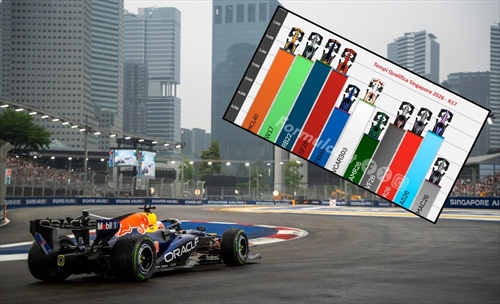
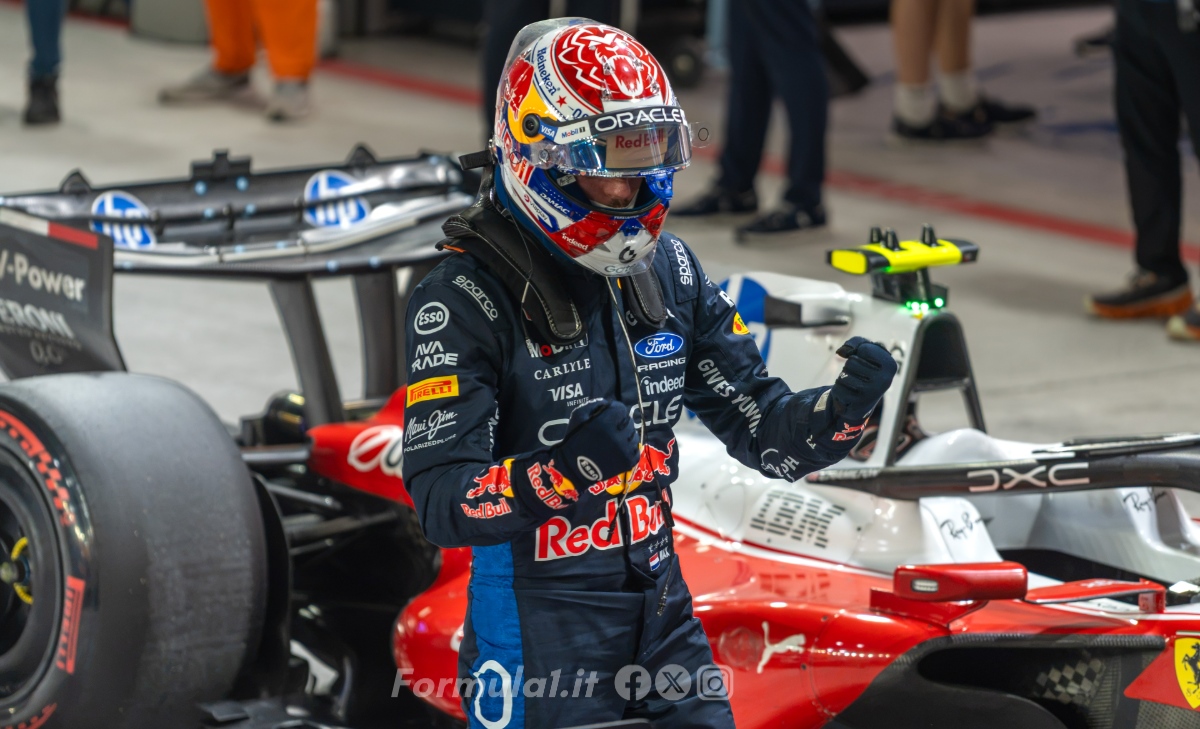
By: Red Bull is unstoppable under acceleration and on the straights, and Verstappen claimed pole position on Saturday in Singapore, putting himself in contention for Sunday’s race victory after winning the Sprint.
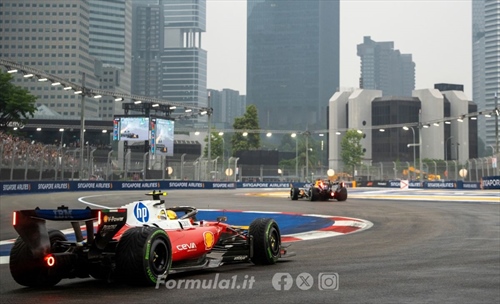
After encountering plenty of difficulties, Leclerc produced a stunning lap on his final attempt to secure a front-row start alongside the Dutchman, just 54 thousandths of a second behind. The SF-26 is at ease around Marina Bay and Leclerc drives it superbly; however, modern Formula 1 rewards acceleration and straight-line speed, areas in which Ferrari is not at its best.
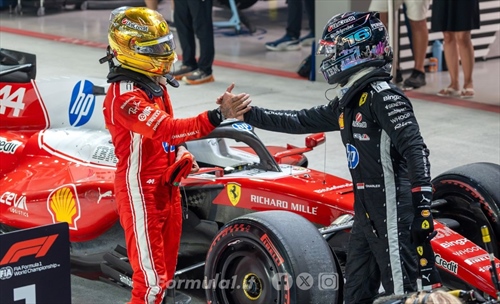
Lewis Hamilton, who looked in much stronger form than the Monegasque throughout qualifying, was unable to put together the perfect lap when it mattered most. There is some regret, as the Briton also had the potential to start from pole.
Verstappen unstoppable on the straights. Leclerc produces magic.
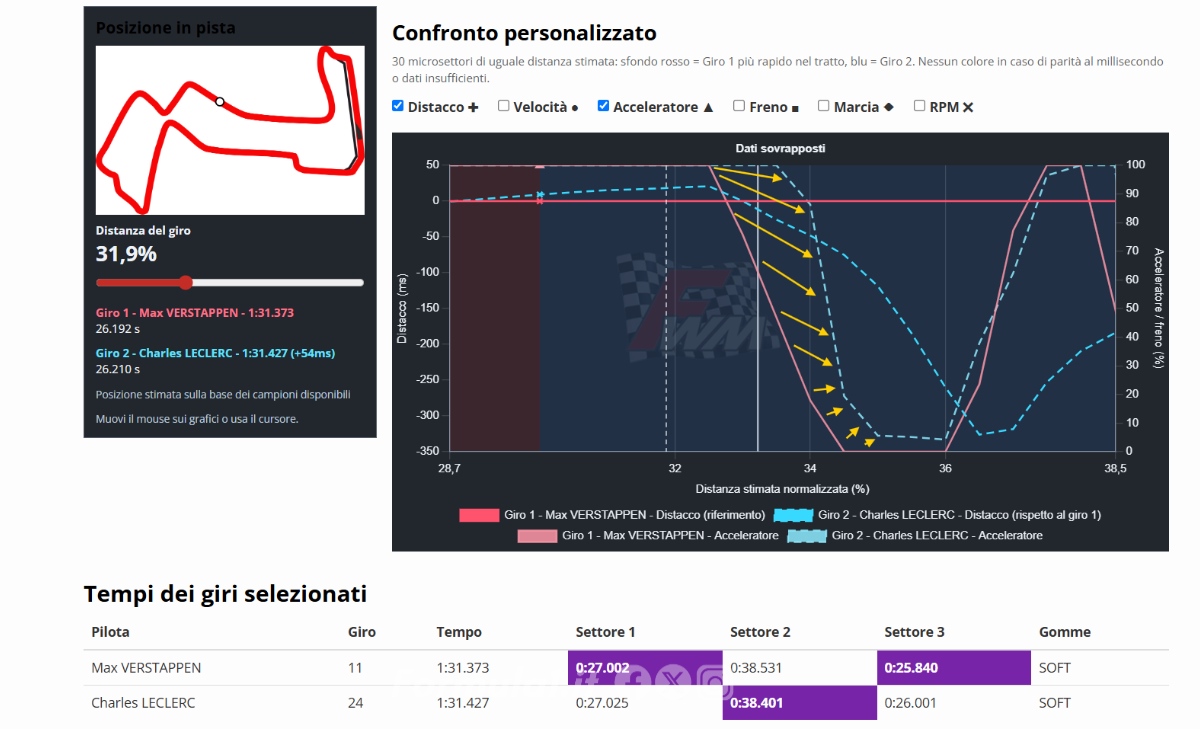
As was already evident yesterday, Verstappen and his RB-22 outclass Ferrari on every straight.
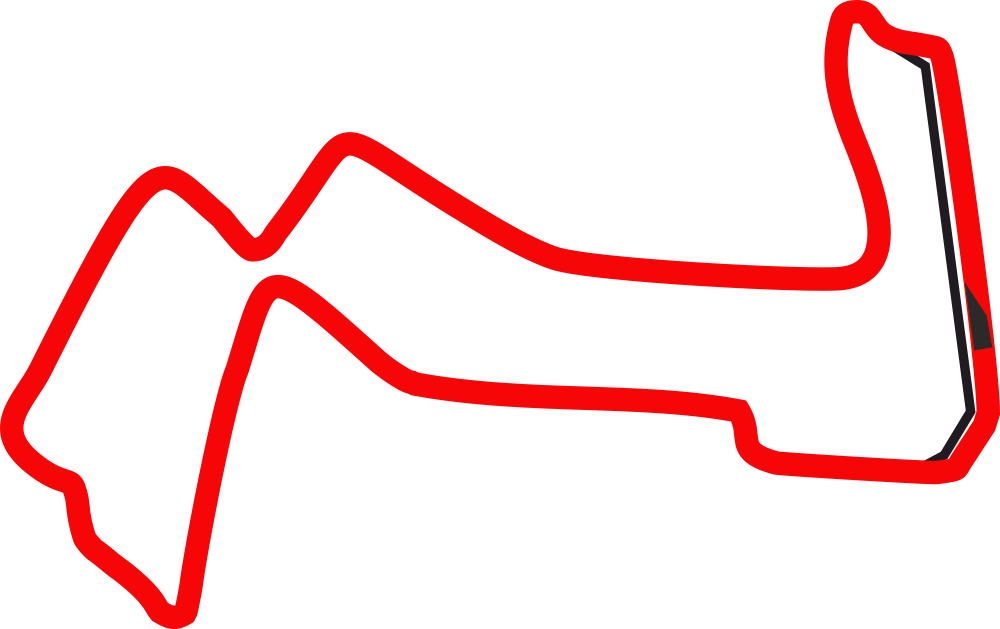
The telemetry graph clearly shows how, even through the first sequence of corners, Leclerc is able to build an advantage of more than two tenths, which Verstappen immediately recovers under acceleration before Turn 5, where he arrives with almost a 10km/h advantage over the Monegasque.
Leclerc’s real masterpiece comes in the second sector.
As in Sprint qualifying, the graph is marked by Verstappen’s extraordinary recovery under acceleration, producing a saw-tooth pattern that makes it slightly harder to read. Yet the overall trend is remarkable, with Ferrari’s number 16 emerging from Turn 13 more than six tenths ahead of Verstappen.
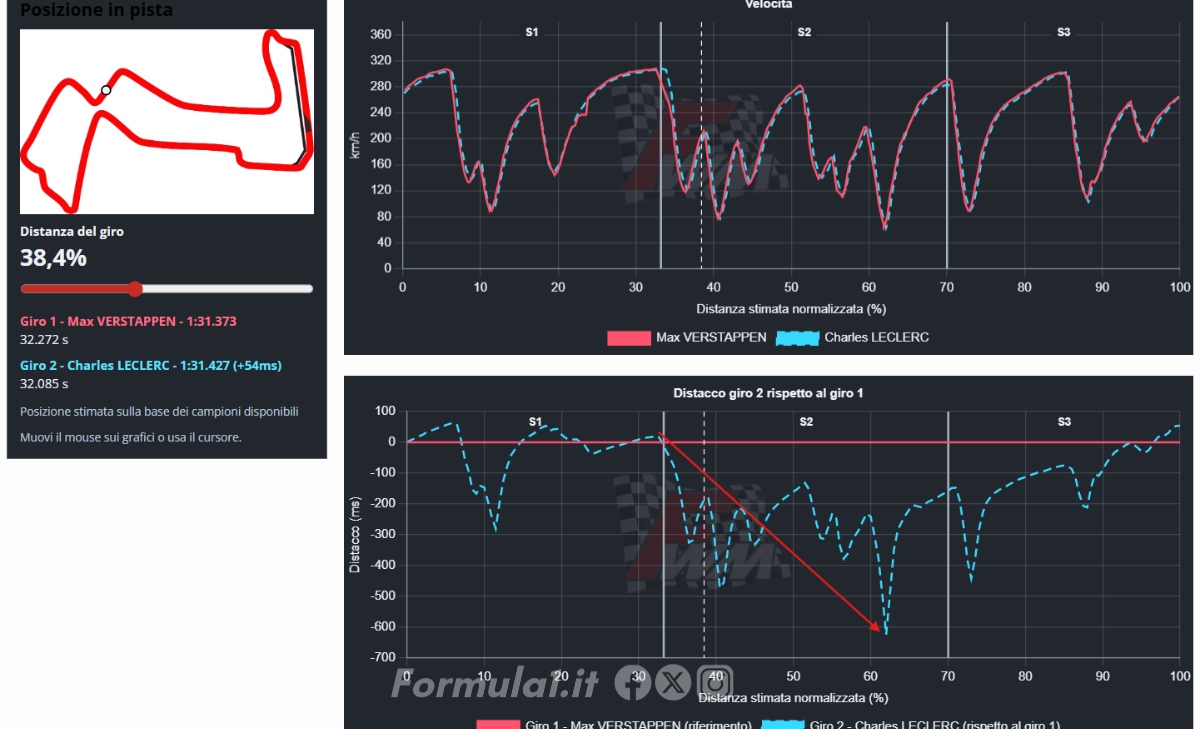
It would have been a pole-winning lap were it not for the power and superior energy management of Red Bull’s power unit, which allows the four-time world champion to devour that deficit and cross the line with the handful of thousandths that secured pole.
The RB-22’s advantage does not lie solely in its power unit, but also in the Dutchman’s driving style. He has adapted to these cars, and his approach is now characterised by an early, full lift of the throttle and much lower cornering speeds, allowing the battery to recharge before deploying full power on the straights.
Hamilton had pole potential but was not perfect on his final attempt
Lewis Hamilton was incredible in the first two qualifying sessions and had the potential to challenge for pole position, but made a number of small errors, some of them very obvious, at the moment when it mattered most.
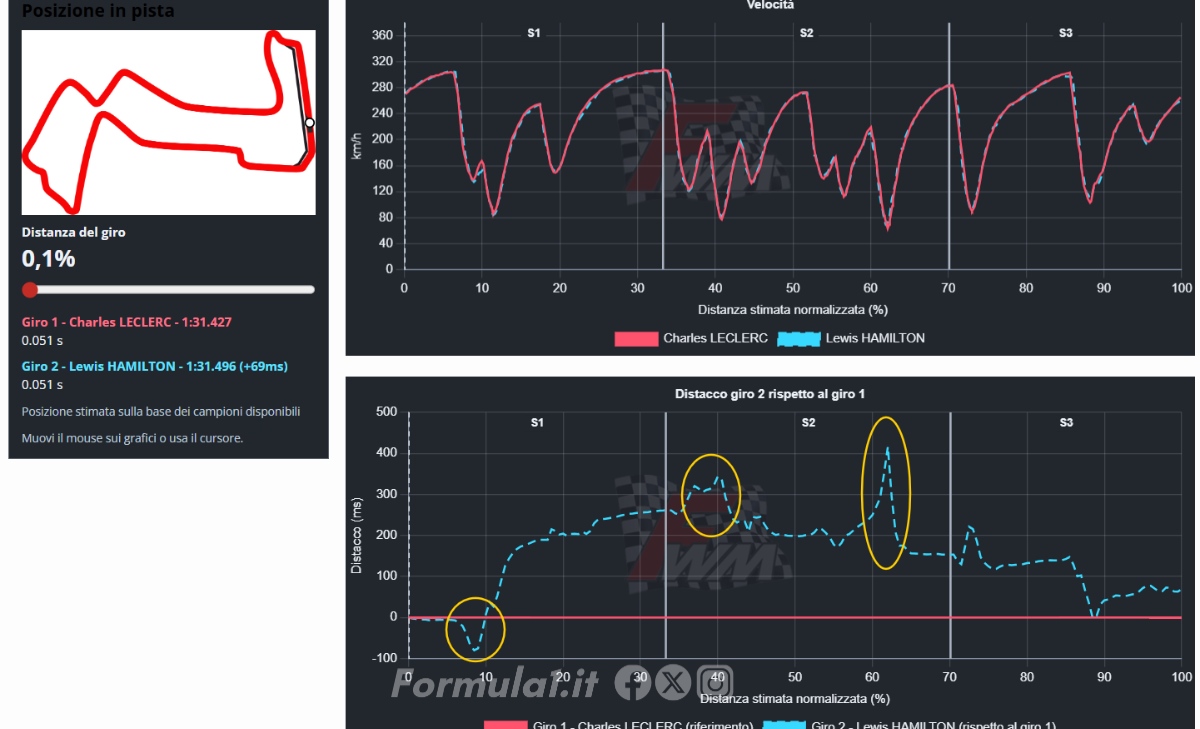
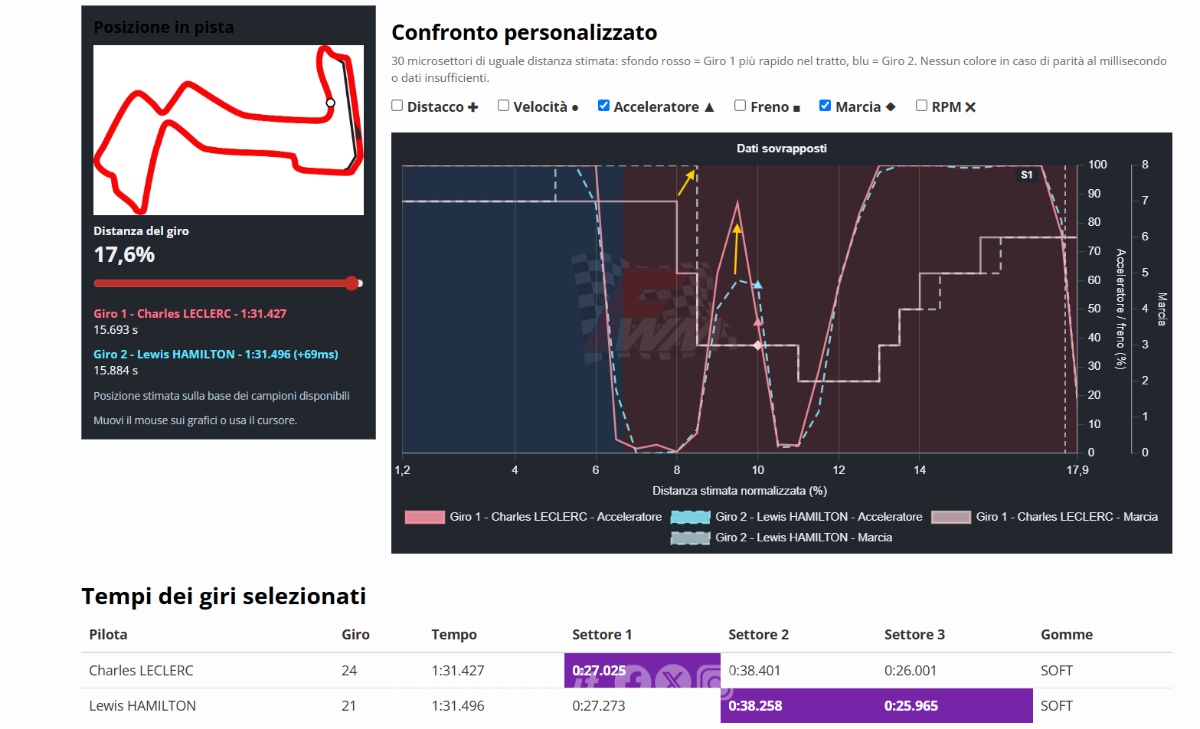
In the comparison graph between Leclerc and Hamilton, the first and most obvious error—the one that opens up the gap between the two Ferrari drivers—comes in the opening complex of corners. The Briton perhaps enters slightly faster and appears not to downshift, which probably puts him in difficulty through Turn 2 and forces him to lift off.
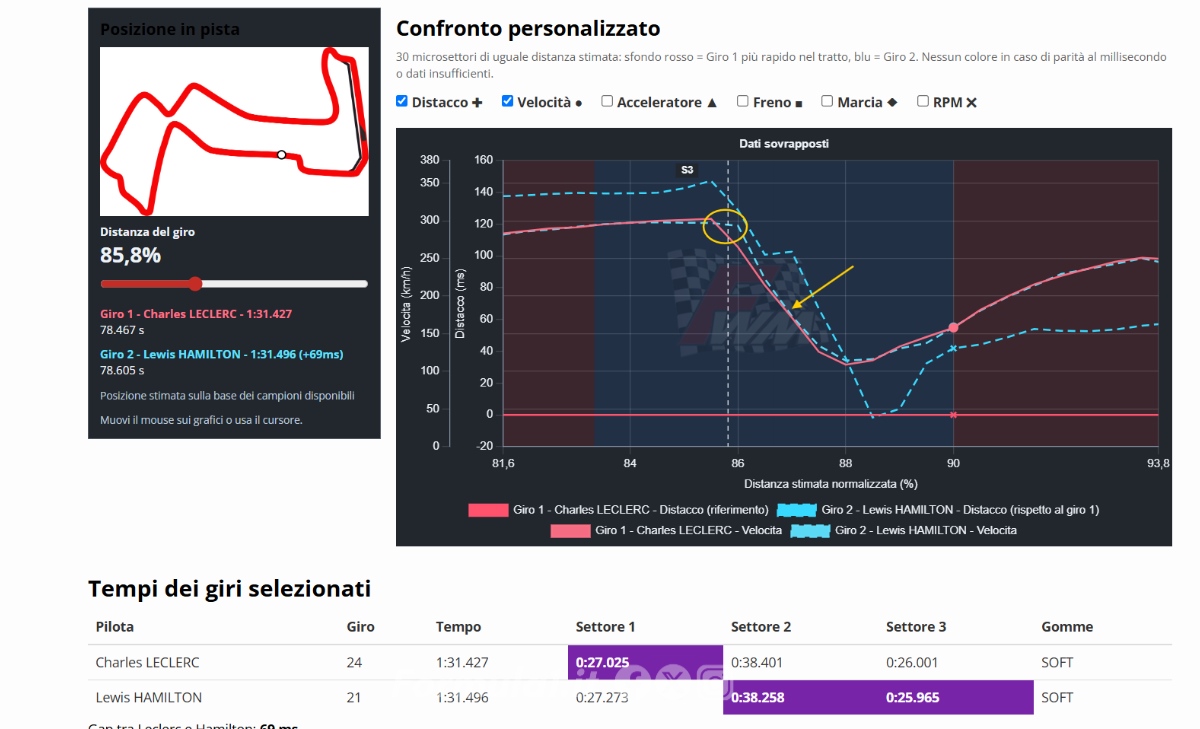
Conversely, Hamilton demonstrates his potential through the Turn 16 and 17 chicane, where he recovers the time lost to his team-mate by carrying a great deal of speed on entry and through both corners.
Despite these errors, second and third place in qualifying confirm just how comfortable the SF-26 is at this circuit.
The article in two minutes
Red Bull is unstoppable under acceleration and on the straights, and Verstappen claimed pole position on Saturday in Singapore, putting himself in contention for Sunday’s race victory after winning the Sprint. After some difficulties, Leclerc produced a stunning lap on his final attempt to secure a front-row start alongside the Dutchman, just 54 thousandths of a second behind. The SF-26 is at ease around Marina Bay and Leclerc drives it superbly; however, modern Formula 1 rewards acceleration and straight-line speed, areas in which Ferrari is not at its best. Lewis Hamilton, who looked in much stronger form than the Monegasque throughout qualifying, was unable to put together the perfect lap when it mattered most.
It would have been a pole-winning lap were it not for the power and superior energy management of Red Bull’s power unit, which allows the four-time world champion to devour that deficit and cross the line with the handful of thousandths that secured pole. The RB-22’s advantage does not lie solely in its power unit, but also in the Dutchman’s driving style. He has adapted to these cars, and his approach is now characterised by an early, full lift of the throttle and much lower cornering speeds, allowing the battery to recharge before deploying full power on the straights.
Hamilton had the potential to challenge for pole position, but made a number of small errors, some of them very obvious, at the moment when it mattered most. However, he showed his potential through the Turn 16 and 17 chicane, where he recovered the time lost to his team-mate by carrying a great deal of speed on entry and through both corners.
Cover photo by Peter Kiss / WHYOUT Images
All the news, photos, weather, session times and times from the Singapore GP 2026