 By:
By: The Azerbaijan Grand Prix proved to be a bitter disappointment for Audi.
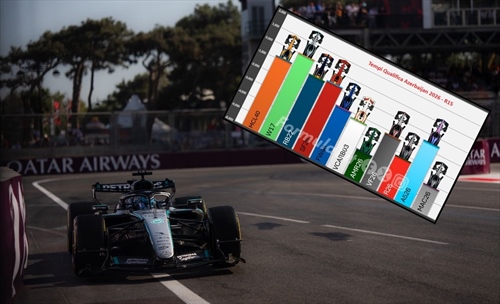
Despite bringing a substantial upgrade package to the Baku circuit, the R26 suffered its first double Q1 elimination of the season and endured an anonymous race, finishing ahead only of Cadillac and Aston Martin.
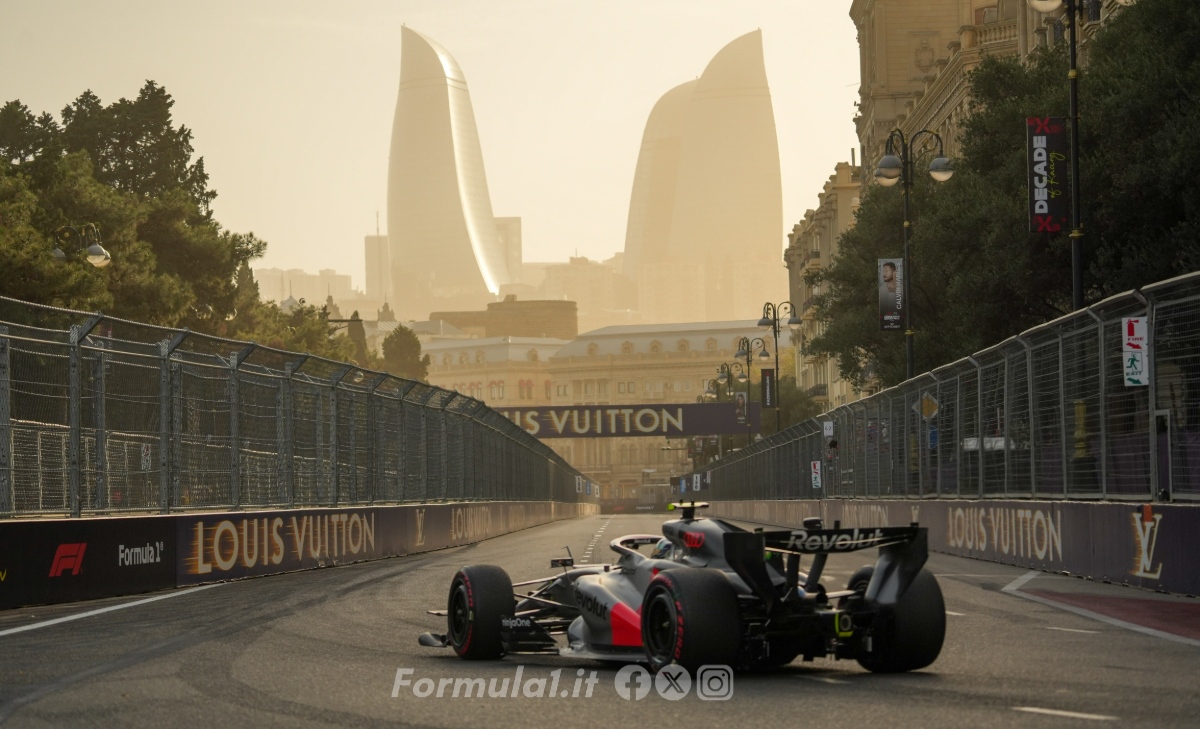
The four-ringed marque introduced a host of new features, effectively fielding an R26-B with a new front wing, new nose and a revised floor, as evidenced by the far more numerous and aggressive slots ahead of the rear wheels.
But that was not all: the entire sidepod aerodynamic concept was revised, bringing back the "waterslide" concept – upper channels that direct air towards the rear of the car, typical of cars built to the previous regulations.
In doing so, Audi took considerable inspiration from the Red Bull RB26, while further exaggerating the shape of the sidepod inlets, which remain a distinctive feature of the Hinwil technicians.
The upgrades do not appear to have worked

However, the numerous upgrades do not appear to have worked particularly well, judging by the disappointing qualifying session and anonymous Saturday race.
What is surprising is that at Monza, another power- and traction-sensitive circuit, the previous version of the R26 performed well in qualifying, with Bortoleto 11th and Hulkenberg 13th, both very close to reaching Q3.
At Baku, the power unit and hybrid management play a crucial role; excellent mechanical traction is also essential to put the power down out of the slow corners.
However, aerodynamic efficiency is needed to minimise the penalty along the very long high-speed section that includes the pit straight, without sacrificing sufficient downforce to bring the tyres up to temperature and remain quick through the more twisty sections.
The difficulty in getting the tyres up to temperature affected every team during Friday qualifying in Baku, but Audi's situation was probably made particularly difficult by its relative lack of familiarity with the aerodynamic characteristics of the upgraded car.
Indeed, Audi carried out extensive aerodynamic testing during free practice, fitting the so-called sensor-laden "rakes" to establish whether the work conducted in CFD and the wind tunnel was reflected on track.
Tyre difficulties, but not only
It is possible that such a radical aerodynamic change completely disrupted the car's aerodynamic maps, making it extremely difficult for the Swiss team's engineers to get the car into the correct temperature window.
But that is not all. At a circuit like Baku, available power matters, and it is in the final part of the lap that Audi pays a clear price in energy management compared with, for example, Lawson's Racing Bulls. It accelerates markedly better both out of Turn 12 and between Turns 15 and 16, before the final straight, where traction remains crucial. One could say that hybrid management is not at the level of Red Bull Powertrains, or perhaps that the strategy of using energy in the first sector did not pay off.
It is difficult to know whether the R26-B will be definitively rejected, because Baku is probably not the most suitable circuit at which to assess such a major aerodynamic overhaul. What is certain is that there will be plenty of work to do at Hinwil to understand which direction to take.
All the news, photos, weather, session times and times from the Azerbaijan GP 2026