 By:
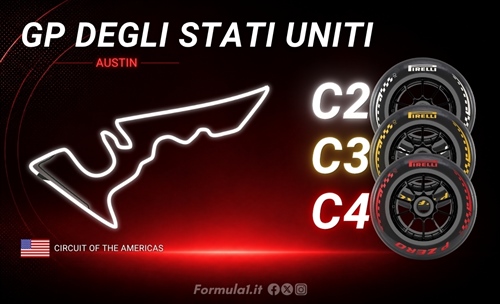
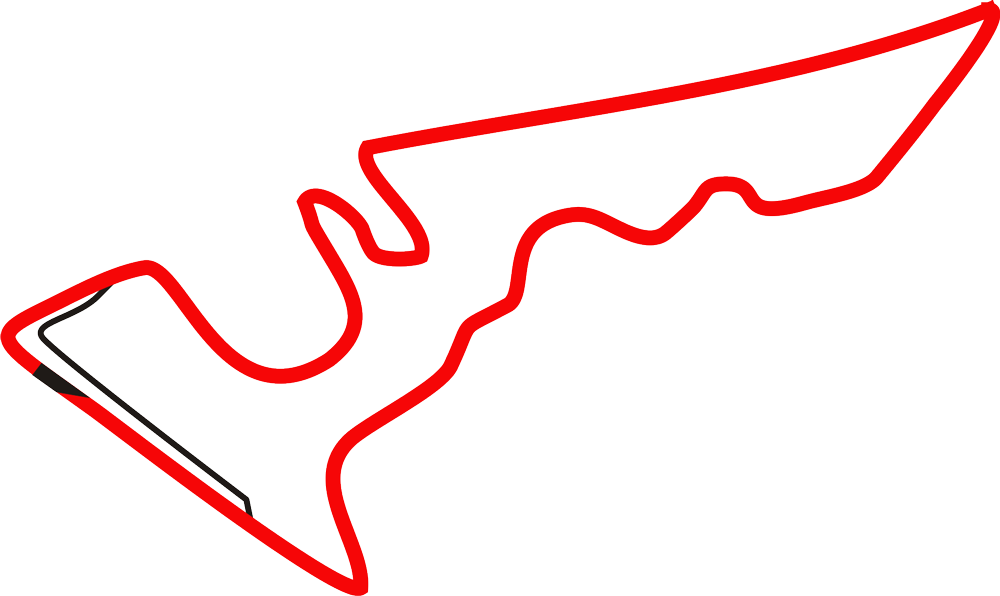
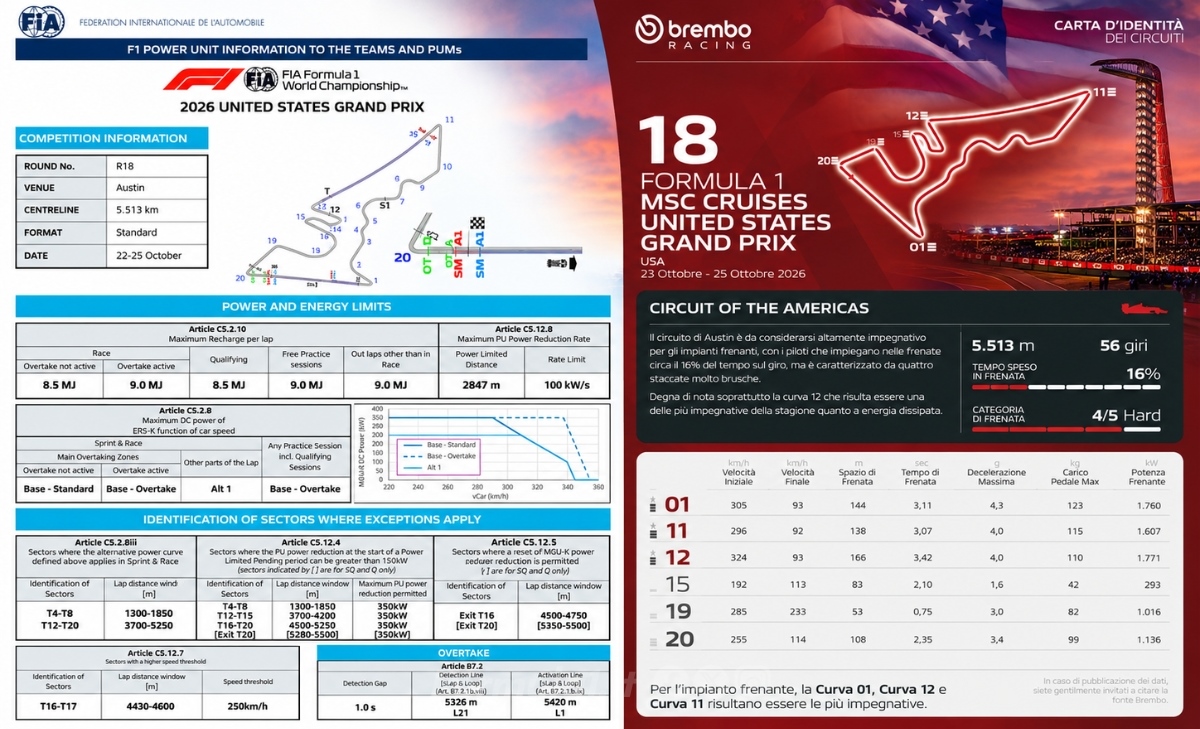
The 5.513km Circuit of the Americas in Austin features 20 corners and elevation changes of up to 40 metres. The first sector is characterised by rapid changes of direction, the second by a long straight that encourages overtaking, while the final sector tests traction and the rear tyres. Bumps and surface irregularities make it more difficult to find the ideal set-up, forcing compromises between suspension settings and aerodynamic efficiency. The race will be run over 56 laps, for a total distance of 308.405km.
Braking demands
According to simulations by Brembo engineers, Austin is the most demanding US circuit for the braking system, with a difficulty index of 4 out of 5. This is despite there being only six braking zones per lap, for less than 15 seconds of total brake use: four are classified as Hard, one as Medium and one as Light.
The most demanding braking zone is at Turn 1, where the cars slow from 305 to 93km/h in 3.11 seconds over 144 metres. Deceleration reaches 4.3g, with 123kg of pedal force and braking power of 1,760kW.

The comparison with 2025 once again highlights the differences introduced by the new-generation cars. At Turn 12 last year, drivers applied 130kg of pressure to the pedal while experiencing 4.2g of deceleration. This year, the expected figures fall to 110kg and 4g respectively, but above all the braking distance increases by 40 metres, from 126 to 166 metres, while the time required to slow down rises from 2.72 to 3.42 seconds.
Power unit: FIA limits for Austin
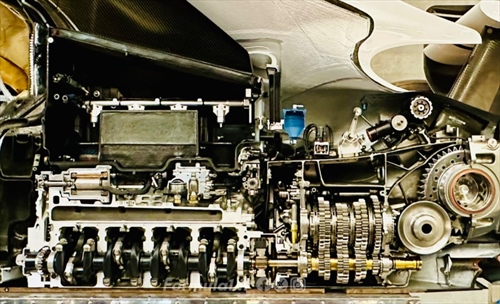
The official Power Unit Information document published by the FIA on 22 October sets out the energy parameters for the United States Grand Prix. The maximum energy that can be recovered by the MGU-K is set at 8.5MJ per lap in qualifying and in the race without Overtake Mode, rising to 9MJ when the overtaking system is active. In free practice, the limit is 9MJ, as it is on non-race out-laps. These values make energy recovery particularly important, especially given the long straights and the many successive corners; clearly, the Federation does not fear an excessive occurrence of the much-hated super-clipping phenomenon.

The FIA has also set a Power Limited Distance of 2,847 metres and a maximum power-unit power reduction rate of 100kW per second. The MGU-K can deploy up to 350kW, but the available power progressively decreases at higher speeds, according to the curves defined by the Federation. In the race, the alternative Alt 1 curve applies between Turns 4 and 8, and between Turns 12 and 20, while the Base Standard and Base Overtake curves are used in the main overtaking zones. For Overtake Mode, as ever, the required gap is one second, measured 5,326 metres from the start of the lap, with activation permitted at 5,420 metres, shortly before the finish line.
Qualifying simulation and energy management
Michal Lubieniecki's simulations predict a qualifying lap of 1:34.582 at Austin, exactly 2.072 seconds slower than the 1:32.510 with which Verstappen took pole position in 2025. The new cars would be significantly faster on the straights, reaching 321km/h versus 312km/h on the main straight and as much as 346km/h versus 324km/h on the back straight, but they would lose up to 20km/h through the corners, particularly in the high-speed esses and the final sector.
Energy management is particularly interesting: in the original simulation, which assumed a maximum recovery of 8MJ per lap, 57% of the energy would come from braking, 25% from partial-throttle phases and the remaining 18% from lifting off the accelerator, with virtually no reliance on super-clipping. In energy terms, these figures equate to 4.56MJ, 2MJ and 1.44MJ respectively.
However, the FIA document subsequently published introduces an important difference: the official qualifying limit is 8.5MJ, half a megajoule more than the assumption used by Lubieniecki. In addition, the Federation has defined the specific deployment curves and the sectors in which particular power-reduction modes are permitted. The simulation therefore remains an interesting reference point, but the projected time and energy distribution will need to be recalculated in light of the official parameters.
All the news, photos, weather, session times and times from the United States GP 2026