 By:
By: The Bahrain GP in Malaysia proved far more complex than expected. Rain shuffled the pack — and more besides. We want to stress this point: it was not the rain that sent the power units into meltdown. The software “froze” because of the low speeds. Those extremely low speeds were caused by the rain, but it was not the water itself that caused the issue. We are keen to make this clear.
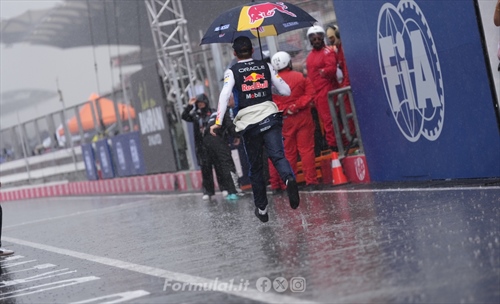
The stoppage caused by the anomaly detected by the FIA (clarification here) meant the cars could not race in proper wet conditions. The software update took time, and the race was able to start more than 90 minutes later than originally scheduled. By then, however, the rain had stopped some time earlier, which threw the teams’ strategy departments into confusion — Ferrari’s included.
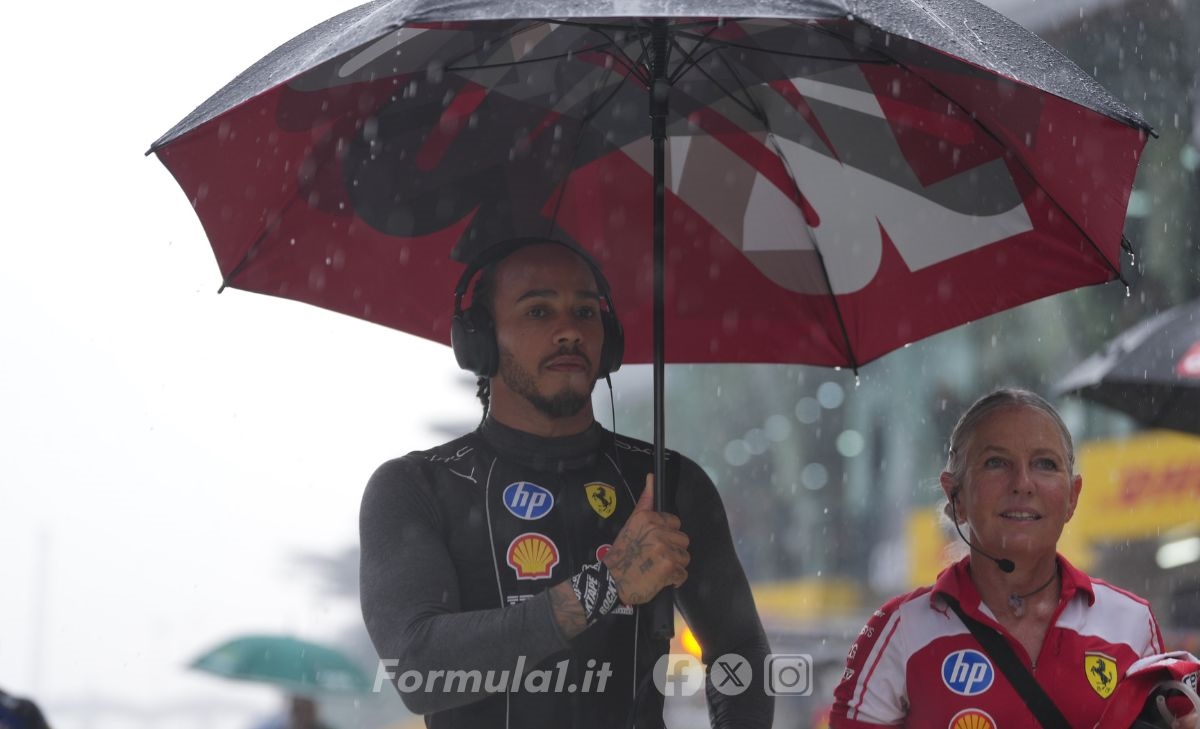
It is necessary to begin analysing the strategies from this point, otherwise certain decisions made by the drivers would not be understood. The race had been due to start at 15:00 Malaysian time. Unfortunately, torrential, monsoon-style rain — I thought I was taking a poetic licence, but it really is a word — meant the start was postponed to 15:40. Perhaps, and I do mean perhaps, this is where the mistake made by McLaren and Ferrari originated. Despite the heavy rain that had fallen until 15-20 minutes earlier, the cars used Intermediate tyres for the opening stint. Unfortunately, the formation lap was affected by software issues with the power units, forcing race control to display the red flag.
Once the software had been updated, the FIA believed there was an opportunity to start at 16:35 local time. By that stage, however, the rain had not been falling continuously for many minutes — more than half an hour, in fact. Aware of the Malaysian asphalt’s excellent drainage properties, some teams believed it was possible to start the GP on slick tyres. This is what created the wide variety of strategies at the start.
Strategy recap
With that necessary introduction out of the way, we can take stock of all the strategies: the winning approach was to start on Intermediate tyres before switching to slicks. In Verstappen’s case, that was predominantly the Soft. During the race, most drivers made three pit stops, two of them under the Safety Car — on lap 09, following Bottas’ retirement, and between laps 43 and 45, after Albon retired.
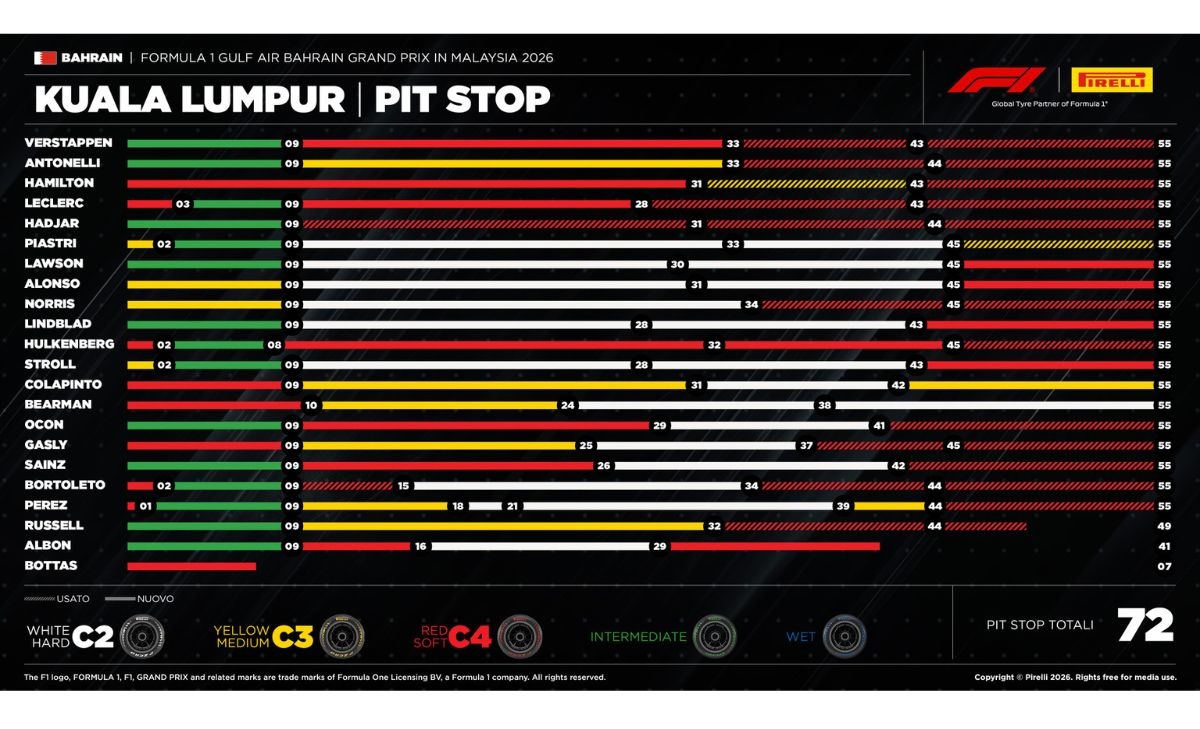
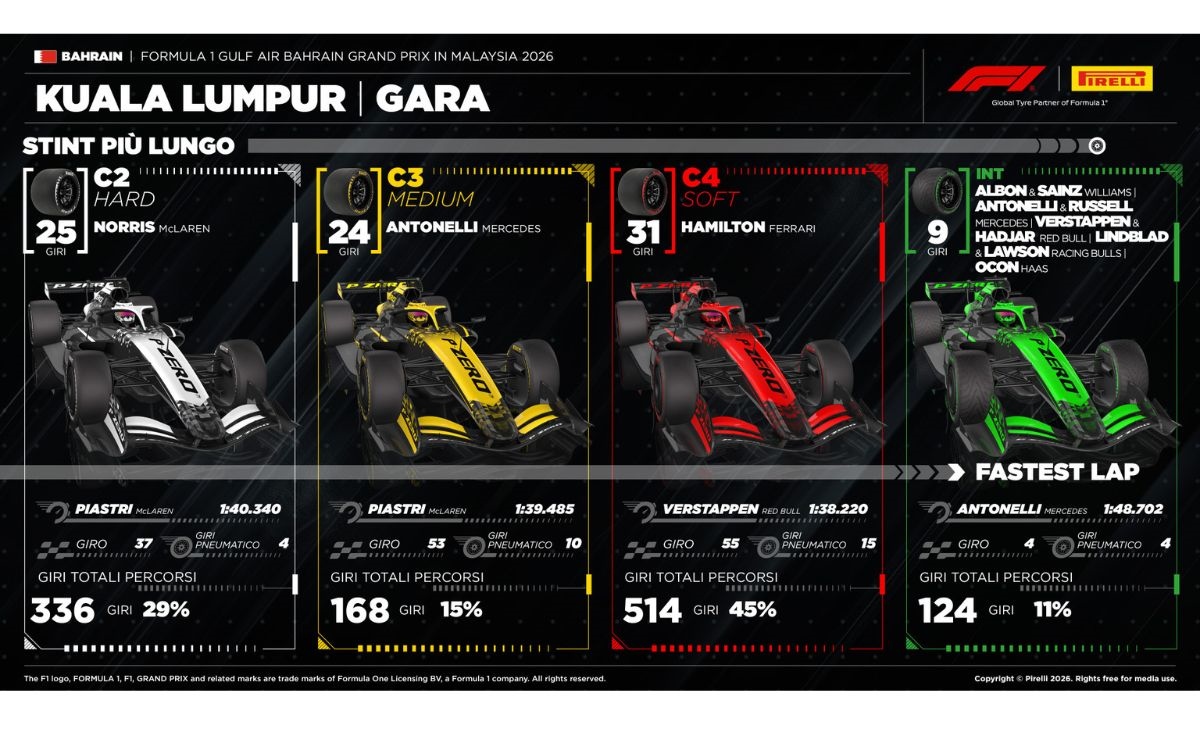
Listing every pit stop today would be a very lengthy exercise and would take up a great deal of time, so we hope you will forgive us for providing only the Pirelli graphic. It is worth noting, however, that Lewis Hamilton was the only driver to finish the race on a two-stop strategy. That was because he chose not to take advantage of the first Safety Car. With 31 laps on the C4 Soft, Lewis Hamilton deserves credit for the longest stint completed on the C4 compound. That run was also made possible by the low track temperatures, which remained between 33 and 38°C.
There is another aspect that caught our attention. In wet conditions, the rule requiring the use of two different types of slick compound no longer applies. In every case, those who did not use Intermediates and therefore ran only slicks made at least one tyre change, in this writer’s view, to ensure they did not risk unwanted penalties.
The two Safety Cars reward Ferrari’s strategy
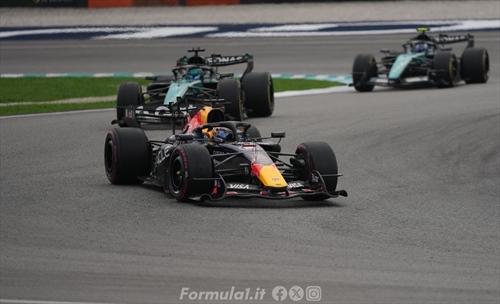
Ferrari’s decision to start on slicks at 16:35 was heavily criticised, but it worked. Not in every case, but for world champions such as Hamilton, Norris and Alonso, it paid off. That said, it bore fruit above all because of the final Safety Car. Norris’ race was compromised by an error behind the Safety Car involving Albon, a mistake he partly recovered from as he finished ninth.
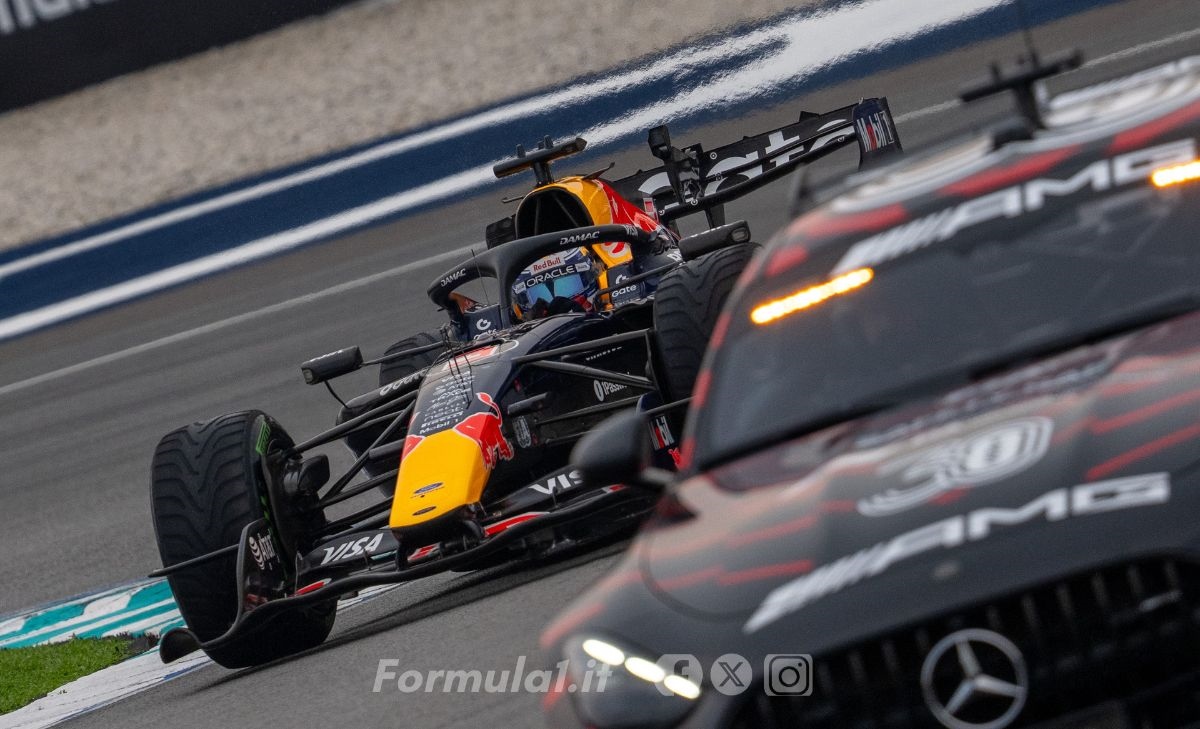
Initially, Albon’s stoppage prompted the deployment of the VSC and, had the stewards been able to move the Williams, which was stranded with a gearbox issue, we would certainly have had a different finishing order. Unfortunately, the car could not be moved and race control was forced to call the Safety Car. That bunched up the field and put Hamilton and Leclerc in a position to catch Hadjar and overtake him.
Alonso, who deserves praise for finishing eighth, also benefited from the final Safety Car. Without Albon’s retirement, Fernando would probably have finished 10th, having been overtaken by Hulkenberg. Perhaps the only driver not to benefit from the final Safety Car was the German Audi driver. Nico produced an impeccable race and certainly deserved points.
Ferrari rescued by its drivers
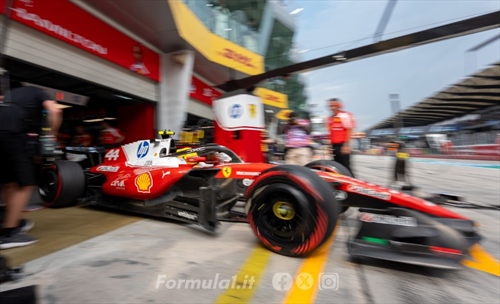
It could have been a massacre. Ferrari’s decision to fit slicks at the start of the race had dropped Hamilton and Leclerc outside the top 10 and a long way from the points. Lewis was able to climb the order thanks to his foresight. Not changing tyres during the first Safety Car proved to be a winning move, putting him back in contention for the top five.
In Leclerc’s case, the team attempted to recover by fitting Intermediates after three laps. Charles’ fate appeared sealed, but the Intermediate proved to be the quickest compound at that stage of the race. Indeed, Leclerc was even able to overtake Hamilton in the opening laps. For him, the first Safety Car meant he had to pit, and that was where he lost position to Lewis. The rest of his race was impeccable, to the extent that he finished fourth behind his team-mate.
Third and fourth were the maximum Ferrari could have hoped for today. Verstappen’s gap of almost 5s over Hamilton in just five laps proves it. Starting on Intermediates would not have produced a different result. The Scuderia simply had to work harder to achieve it. Credit to the drivers: they saved the team’s face. Hamilton and Leclerc completely erased the initial mistake.
Pirelli’s verdict
Dario Marrafuschi, Pirelli Motorsport director, summed up the Bahrain GP in Malaysia as follows: "The race in Kuala Lumpur saw the first proper use of the Intermediate compound. Its performance was positive. In the closing laps, as the track gradually dried, there was some slight graining on the wet-weather tyres. However, there were no particular wear issues despite the highly abrasive asphalt."
"Temperatures were significantly lower than those recorded in the preceding days," the Italian manager continued. "After the downpour, the track remained damp for much of the race, helping to keep tyre temperatures under control and reduce thermal degradation. As a result, the Soft proved particularly competitive and allowed for longer stints. Some drivers managed to cover almost half the race on the softest compound. The neutralisations led many teams to choose the C4 in the final stages. The C2 Hard and C3 Medium showed consistent and predictable behaviour, albeit with lower grip levels than the Soft," he concluded, according to the Pirelli statement.
Cover and internal photos by Peter Kiss / WHYOUT Images
graphics: Pirelli
All the news, photos, weather, session times and times from the Bahrain GP 2026