 By:
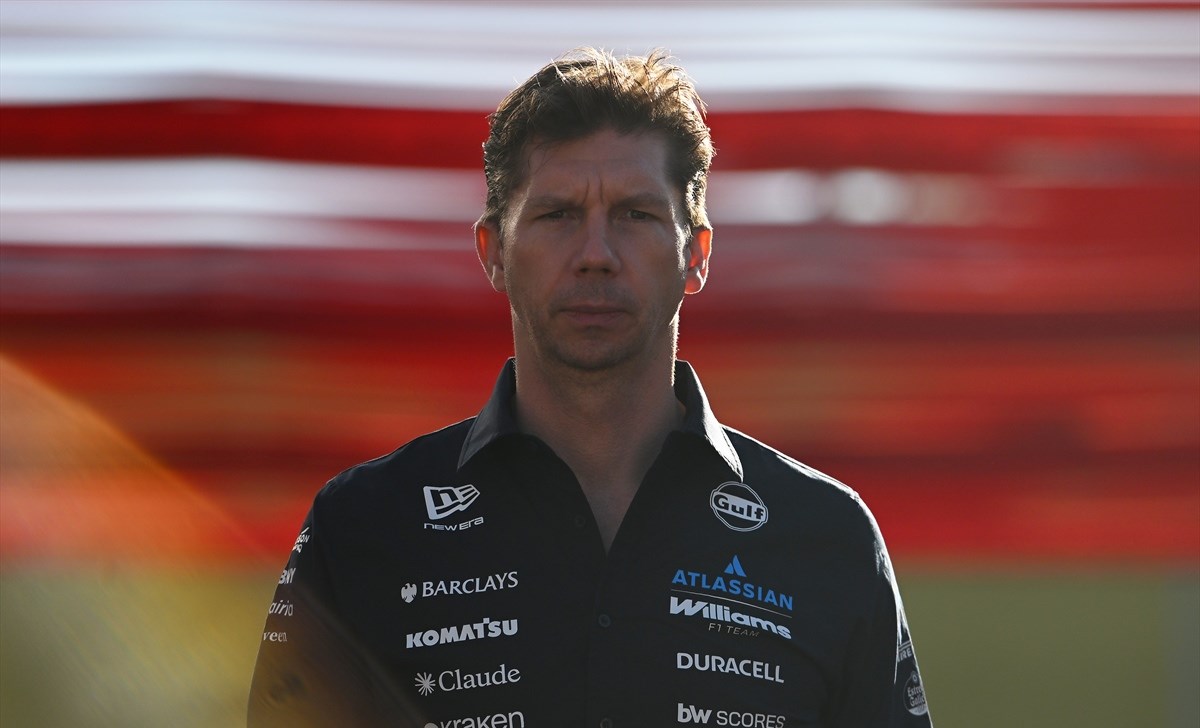
By: Precision defines him, to the extent that he arrives for the appointment with enviable timing. To the second. And he brings the same approach to the exclusive interview he granted this writer during the Italian Grand Prix weekend.
That is how James Vowles, Williams team principal, presents himself: humble, approachable and realistic in answering the questions we were able to put to him. He speaks clearly and candidly, without looking for excuses as he assesses the situation facing his team, while expressing pride in his drivers and ambition for the future of the Grove outfit. All without forgetting his enviable career in the F1 paddock or offering his view on the sport’s future.
James, last year you worked with confidence towards this season. Now you are struggling: what do you think the real issue has been – delays in the project or incorrect technical decisions?
"In reality, the answer is both. The challenge is managing a greater number of components at the same time. So what happened? We spent quite a long time developing the foundations and tools needed to do our job as well as possible. The 2026 regulation change has been the most radical I have ever seen in F1, perhaps the biggest anyone has ever seen. Normally, you do not change the chassis, ECU and engine all at once. It was the first real test for our systems and we failed. We could not produce the components we wanted".
So manufacturing was struggling...
"Yes, we could not make the parts we wanted to the required time and quality standards. There were problems on every front".
But you also mentioned design mistakes: what happened?
"Exactly, there were design mistakes too: the car simply was not good enough. It was too heavy and aerodynamically weak. It did not have the required level of performance. Much of the problem came from the excessive weight and production delays. When delays build up, you are often forced to add weight simply to get the car completed. It is a vicious circle".

A situation in which the budget cap does not help, am I right?
"The budget cap is a very good initiative, but it means that when you make mistakes, you can no longer easily put them right and you find yourself stuck. We found ourselves with a car on which we spent much of the year trying to reduce weight, rather than focusing on development or fixing the internal tools that were not working properly. That carries costs and means we cannot develop the car at the same pace as other teams".
Beyond making the wrong technical choices, you also made mistakes in the “development” of your tools, would you agree?
"Exactly, the situation highlighted that our tools and systems are a long way from the standards of the best. We need to intervene. That is why I have confirmed everything you said in the question: there was not one single problem. I do not think our simulations, technical cycle management, design and manufacturing were up to scratch. I have been saying for some time that nothing we do is at a ‘championship’ level. I expected a step forward from the past. That did not happen".
In light of all this, what is your roadmap for the coming seasons?
"There is no real target tied to the standings. The objective is to fix the systems and tools, and continue investing until they reach the right level. That is the principle behind our work, a path that began alongside investment in new areas. This year, the imperative is to solve the existing problems, not look at the standings. The aim for 2027 is to have a car ready on time, within the weight limit and meeting the set specifications. It will not yet be at the level I would like, which is fighting the top four teams, given the current gap. But it should lay the foundations to look to the future with confidence and compete on equal terms, showing that we have made progress and that further steps forward are possible with continuous growth in mind".
You have made no secret of it: do you not consider Williams to be at the level of the top teams?
"I believe nothing we do is yet at the level of a top team. As I said, that is fine. It is not a problem, as long as people come together when things are difficult and aim to reach high standards, understanding what that means. Last year we built a good car and at times fought for important results, but we were still not at the level of the top teams. Now all of that has become even clearer because of the regulation change...".
You have Carlos Sainz in the team: do you think his arrival from a team like Ferrari has helped bring fresh ideas and a different mentality?
"The reason I wanted Carlos Sainz, but also Alex Albon, in the team is that they have experience of teams that have won the championship and they want this team to succeed too. That is why, every hour of every day, they push us to move forward. They are tireless, they always want to go faster and ask for help to accelerate progress in every area. It is positive; an organisation needs that drive to keep asking itself: ‘Are we championship material or not?’ We will get there, because we will keep giving everything until we are out of breath. The drivers are good enough; they have the ability to win a championship. At the moment, the car is not at that level, but what Carlos and Alex like is being able to make their voices heard, to be listened to and to see their feedback acted upon".

What do you think is Carlos Sainz’s greatest strength?
"I think Carlos’s greatest quality is his ability to understand what is happening with the car and connect the sensations to the data. One of his great strengths is knowing how to involve the engineers, bringing them together to deepen their understanding of the situation. He can identify a problem with extreme precision, down to the millisecond, and understand how to solve it. That is a rare trait when driving. When you drive, your sensations are strong; the feeling you have with the car is immense. That is why drivers tend to exaggerate: they get out of the car and say, ‘I have no grip’. In reality, there is grip; you would be inclined to say: ‘No, there is grip, but you feel you need more of it to make the car go faster.’ Carlos, on the other hand, is very good at not falling into that trap: he looks at the data and says: ‘I know it does not seem like a big thing, but this specific point is costing us three tenths. Let’s fix it.’ It is a very different approach, if you like".
Like Carlos, you also came from a top team in Mercedes: how much experience and knowledge have you brought to Williams?
"The fundamental thing I brought with me is being very clear about what excellence means: being able to lead the team from its current situation towards the world championship. There is the desire, the ability and the determination not to give up until you reach the top. After years of disappointing performances, mediocrity ends up becoming the norm. For me, that is not an acceptable condition: I do not sleep when we do not achieve the results we expect. That is where my desire to grow the team comes from. I have been fortunate and privileged to work in teams characterised by very high-level performance, where you were always pushed to give your best. That is precisely the culture and environment I wanted to bring to Williams".
Do you think your leadership style has been shaped by your previous experiences?
"Yes, certainly. I was fortunate to be part of a group of very high-level people. I am not talking only about Toto Wolff, who obviously had a huge influence, but also Ross Brawn, David Richards and the senior leaders I grew up with. Like many members of that team [Mercedes, ed.], we spent 25 years together, encouraging and challenging one another every day. It was like being among brothers and sisters, a relationship of constantly spurring each other on: a fantastic environment in which to grow".

Finally, on power units, do you believe engines will be similarly competitive in two or three years’ time, or will there still be differences like those seen today?
"It is an interesting question, because if we were not going to change the regulations for 2027 and 2028, I would be confident that the competitive order between Mercedes, Ferrari and Ford would remain unchanged. But there will be changes for 2027. That makes everything interesting: for power-unit manufacturers, it is difficult to maintain leadership. Mercedes is good at managing regulation changes. So, as far as we are concerned, I think we have the right power unit to make progress, and I believe performance convergence will take time. There is no single path to follow, but there will be new breakthroughs. The FIA has more data, but we know the Red Bull-Ford unit is exceptional. I have no doubts about that, but I do not think the gap will be excessive from here on".