 By:
By: Kimi Antonelli’s recent victory at the Spanish Grand Prix was the Italian driver’s eighth of a season that has surpassed even the most optimistic expectations, while for Mercedes it marked a tenth win from the 14 races held so far.
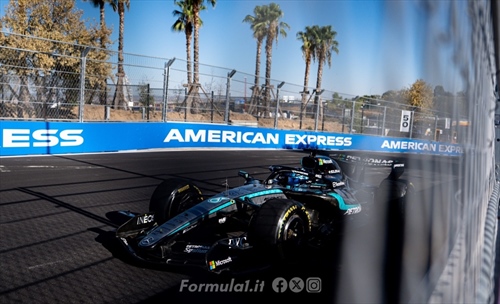
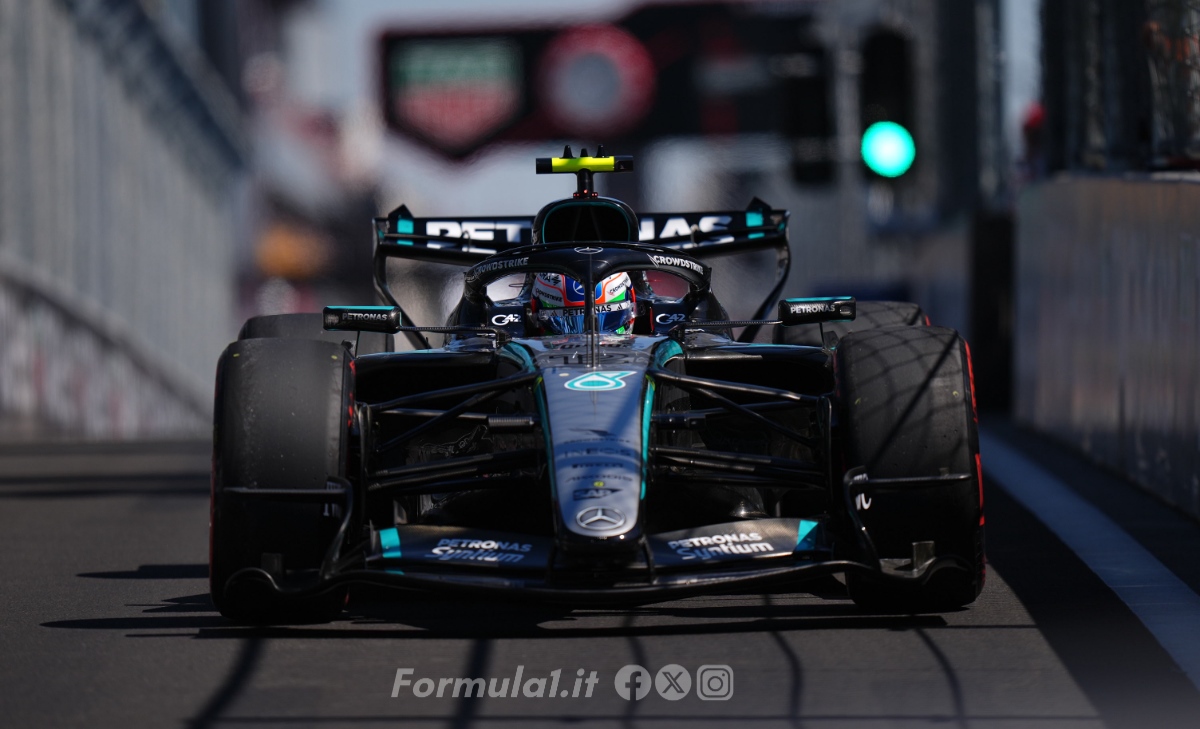
The excitement surrounding the young Italian phenomenon has perhaps diverted some attention from the Mercedes W17, which is emerging as a contender for a place among the ten most successful single-seaters of the past 30 years, perhaps even the top five.
The intention is not to detract from Antonelli’s qualities, especially as his team-mate is enduring a particularly subdued season in the same car, but rather to highlight the quality of the work done at Brackley and the fact that no driver can aspire to the World Championship Crown without a car capable of matching their ambitions.
You cannot win the World Championship without the best car

Max Verstappen knows that well. With the competitive but imperfect RB21, he clawed back more than 100 points on Lando Norris last season, but did not win the Championship; this year, he has had to settle for the lower steps of the podium, driving the difficult RB22 superbly beyond its limits.
Yet everyone remembers the 2023 season, when Milton Keynes’ creation won 21 of the 22 races on the calendar and will, in all likelihood, go down in history as the most successful car of all time.
Alongside the already mentioned RB19, the distinguished lineage of ultra-dominant cars also includes other legendary machines, which in turn made the drivers who took them to victory legendary.
After the 2023 Red Bull, the second most successful car of all time was the Mercedes W07, which won 19 of 21 races in the 2019 season, securing Lewis Hamilton’s fifth of his seven drivers’ titles.
Third in this special ranking is the Ferrari F2002, which we recently saw triumph at Monza in Sebastian Vettel’s hands. Ironically, Michael Schumacher also won his fifth title in the historic car, which claimed 15 wins from 17 races.
What about the W19?
The championship is not over yet, and McLaren have emerged as a serious challenger to Mercedes following the upgrades introduced in Hungary.
However, the Brackley team’s car has won more than 70 per cent of the races, while the aforementioned cars boast success rates of around 90% or considerably higher.
That impressive statistic comes despite several costly retirements that denied it at least two potential victories; moreover, it is among the cars to have received the fewest upgrades in a season in which every change has a direct impact on the stopwatch.
As for the power unit, it should be remembered that, surprisingly, the internal-combustion element is not the best, and an ADUO upgrade is ready but has not yet been used.
There is another interesting statistic in favour of the Silver Arrows: four of the ten most successful cars in history are Mercedes machines from the pre-ground-effect regulatory era (2014-2021), while during the following four-year period Brackley unfortunately never managed to produce a title-winning car.
Perhaps it is no coincidence that, having returned to cars more similar to those of the first turbo-hybrid era and once again been tested on the power-unit front, the engineers led by James Allison have once more created a title-winning machine.
Antonelli therefore has the chance to write his name alongside the greats of the past, but only thanks to a car that is in contention to do the same.
All the news, photos, weather, session times and times from the Spain GP 2026