 By:
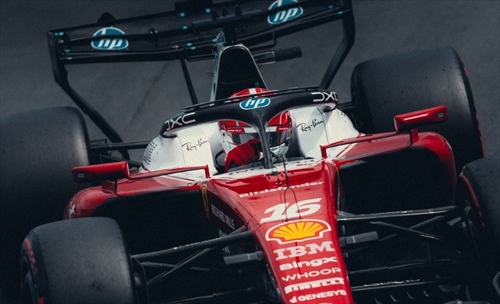
By: At Zandvoort, Ferrari did not have the problem of a slow car and, perhaps, not even a strategic flaw in the strictest sense. It discovered something older and more delicate: that a strong team is not merely one capable of building a competitive car, but one that, when a race presents a crossroads, can make a decision without seeking permission from fear.
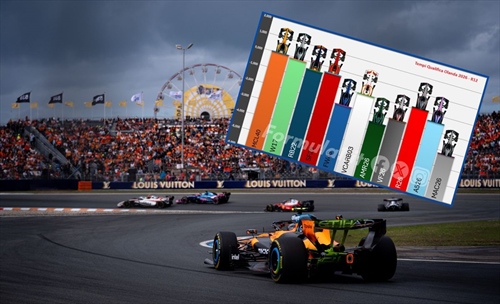
The Dutch Grand Prix ended with Hamilton fourth and Leclerc fifth, while the Mercedes drivers took second and third behind Norris. Yet, looking at Ferrari’s pace, the impression was of an opportunity left on the table. Not necessarily a victory, but at least an achievable podium, based on the data.
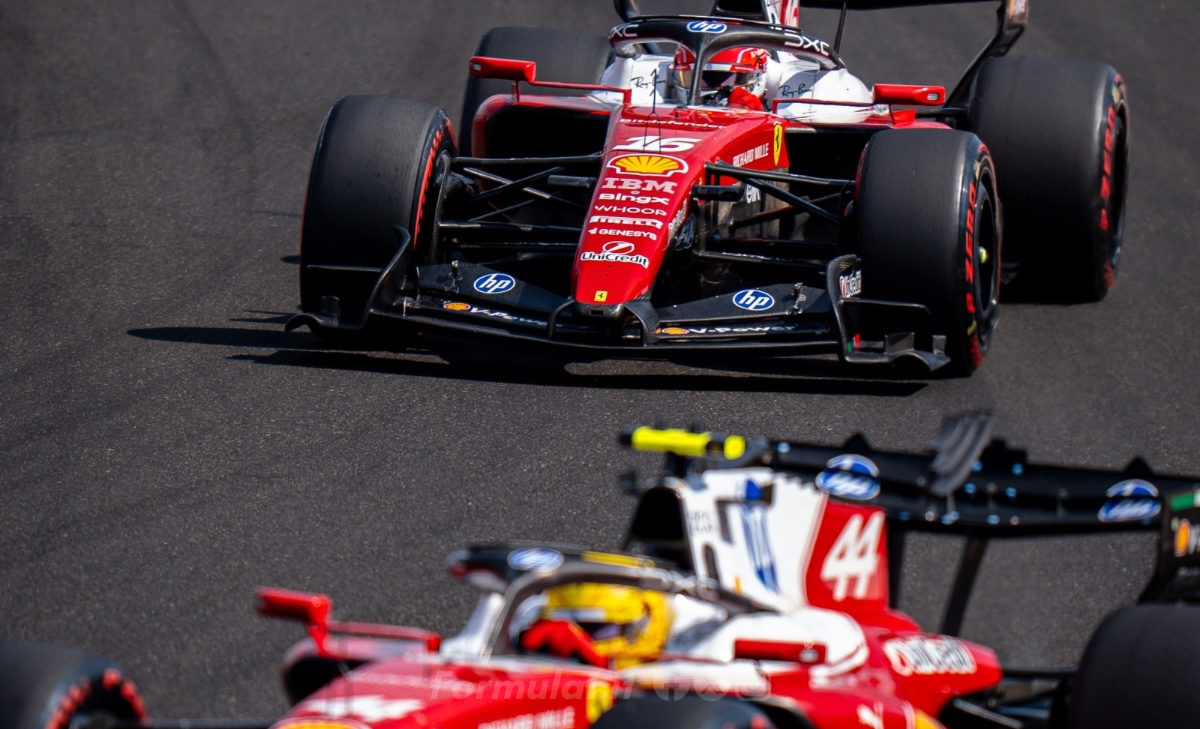
The issue is not simply the time Hamilton lost behind Leclerc. It is how that time was lost. Hamilton was on a different strategy, had indicated that he had pace and, above all, needed the pit wall to interpret the situation rather than merely acknowledge it. Leclerc’s call to the pits came when the potential advantage had already diminished. Hamilton, after the race, did not use the language of diplomacy: in his view, the late decision cost him a podium. In our view, too.
But the most interesting thing happened a few metres further along, in the Mercedes garage. Russell and Antonelli were not left to burn through tyres, time and patience in the name of presumed impartiality. The team read the situation, gave an order and moved ahead the driver in the better position to defend the result. No drama, no internal referendum: assessment, decision, execution.
That is the lesson for Maranello: managing two drivers does not necessarily mean treating them equally; it means handling the race situation correctly.
Ferrari still seem to have a certain reluctance when it comes to making decisions. As though every order must be preceded by lengthy negotiations, every choice explained to the driver, every temporary hierarchy capable of turning into a diplomatic crisis. But Formula 1 is not a boardroom. On track, often, one lap is a verdict or an opportunity that will not return on subsequent laps.
There is a second lesson, perhaps an even more important one. Hamilton and Leclerc are two champions who do not need reassurance: they need to know that, when the pit wall speaks, it does so because it has a more complete view of the race. If the driver begins to wonder whether the garage has understood the situation, then the radio becomes a place for negotiation rather than an operational tool.
At Zandvoort, Ferrari paid the price for precisely this: not so much one huge mistake as an accumulation of hesitations. And in Formula 1, hesitations become mistakes a moment later.
There is time to put it right. But the solution is not to promise to be more aggressive at the next opportunity. It is to establish the rules beforehand: when positions are swapped, when the faster driver is prioritised, when the team result is protected and when, instead, drivers are allowed to race.
Because Ferrari’s real problem is not deciding who should be ahead. It is reaching the moment when a decision must be made without yet knowing how to make it: more than a lesson in strategy, this is a lesson in management. Perhaps the most important one Zandvoort could have delivered to Maranello.
Cover photo by Luca Martini / WHYOUT Images
All the news, photos, weather, session times and times from the Dutch GP 2026