 By:
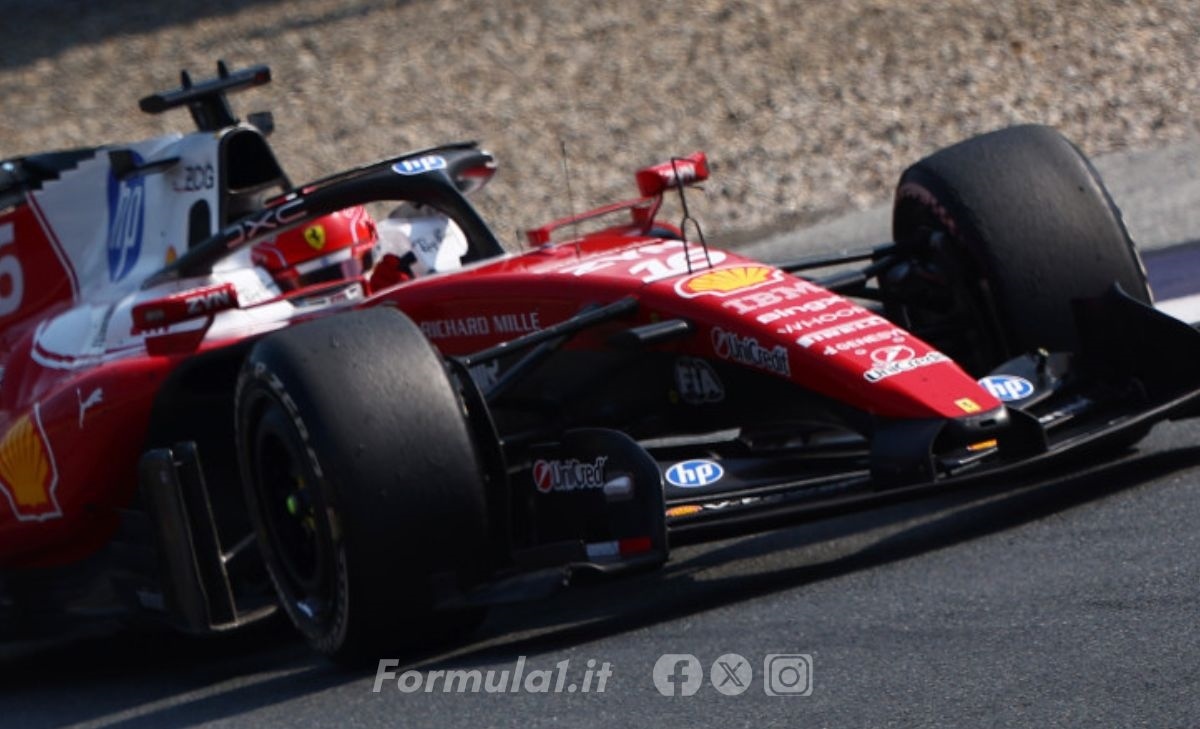
By: The Prancing Horse has a problem. A serious problem. Every time it plans a strategy around the C3, the race goes wrong. If you do not believe us, stay with us until the end of the article. Leclerc and Hamilton have had only two races in which they performed below expectations. And in both races, the strategy relied heavily on the C3 compounds. If you are not convinced, we will prove it.
In our view, the problem is simple, yet at the same time very complex. In every race where track temperatures exceed 45°C and Ferrari has to rely heavily on the C3, both Hamilton and Leclerc struggle badly.
The evidence is as follows. Let us take four Grands Prix from the 2026 season. The two in which Ferrari won and the other two, where the SF-26 showed clear difficulties.
Barcelona GP: P1 Hamilton - DNF Leclerc
During the Barcelona weekend, Lewis Hamilton secured his first victory at the wheel of a Ferrari. An important result, greeted with great enthusiasm by everyone. Temperatures reached 52°C during the weekend, and Lewis Hamilton chose to use the C3s in one of his stints. Fortunately, he used them only briefly, for a single stint of barely 14 laps. Nothing, considering he completed 11 laps on the Soft tyres in the opening stint. On that occasion, the strategy was built around the C2s, the most suitable compound in those temperatures.
British GP: P1 Leclerc - P3 Hamilton
A dream GP for Ferrari with both cars on the podium. Silverstone is a fairly demanding circuit for tyres, but on this occasion, despite track temperatures of 41°C, Pirelli had made the C1 available as the Hard, the C2 as the Medium and the C3 as the Soft. Leclerc and Hamilton relied heavily on the Hard and Medium tyres. The use of the C3s at the end was solely dictated by the Safety Car (C3 use: only 4.5 laps).
Austrian GP: P5 Hamilton - P8 Leclerc
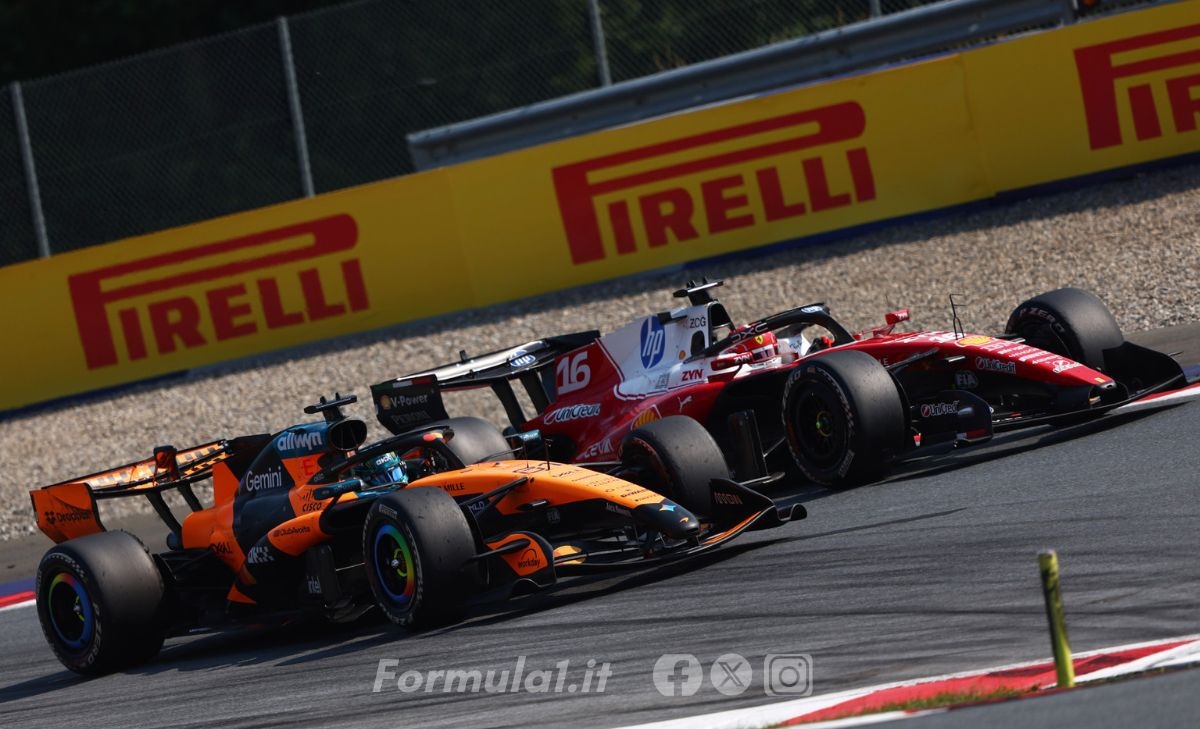
Now let us move on to the critical events. At the Red Bull Ring, temperatures reached 49° C, while Pirelli had nominated the C3 as the Hard. Inevitably, Ferrari found itself relying heavily on this compound, choosing to use it for two of the three stints with both drivers. Something that put the team in great difficulty.
Hungarian GP: P4 Leclerc - P5 Hamilton
Once again, there were 52°C track temperatures, with Ferrari using the C3 Hard tyre in two of the final four stints with both drivers. Two stints, those on the white-walled C3s, in which it struggled enormously to keep pace with its rivals.
Our theory
All this is to say that, in our view, Ferrari struggles enormously to race on the C3s. Not in normal conditions, obviously. Ferrari struggles to race on the C3s whenever they are the Hard compound and track temperatures are also very high.
We have been saying for a long time that Ferrari has a problem, and ignoring it will not help. As the middle compound in the Pirelli range, the C3 is nominated at virtually every F1 circuit. Ferrari therefore cannot ignore it.
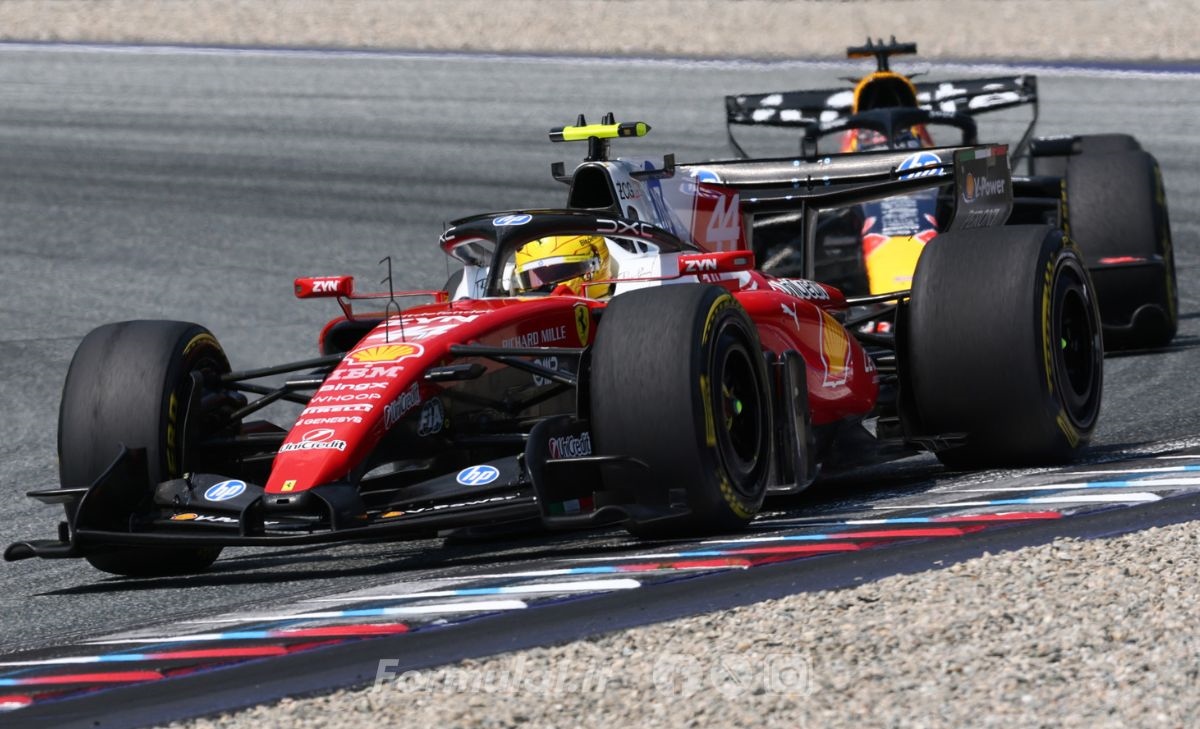
When temperatures are very high and teams find themselves racing with the C1, C2 and C3, or the C2, C3 and C4, as happened in the two Grands Prix won by the Italian team, drivers can simply avoid that compound and still target a good result.
The situation becomes more complicated in races with high temperatures where the C3 is designated as the Hard. In that case, to extend stints as the other teams do, Ferrari tries to emulate them without success.
None of this is good enough. Ferrari must find a way to get the best out of the C3 tyres even in extreme heat and with not overly high lateral loads.
For obvious reasons, the Maranello team's strategy cannot be to disregard the C3 in circumstances similar to the Austrian or Hungarian GP. Doing so would probably cost it an additional pit stop compared with its rivals. The team must solve the problem if it wants to become a fully fledged main rival to Mercedes.
Photo: Pirelli