 By:
By: We have finally seen the debut of the new Formula 1. Drivers began to come to terms with new regulations and a more sophisticated way of managing energy, while we fans began to familiarize ourselves with new and sophisticated terminology.
From a practical point of view, there are three terms that should never be confused (we say this because it is very easy to be wrong).
Active aerodynamics (usable in ‘’straight mode’’)
First, let's start at the base. In Melbourne, active aerodynamics debuted last week. From 2026, the cars will feature movable front and rear wings that open in a straight line (where permitted) to reduce aerodynamic drag, reduce stress on the powertrain and reach higher top speeds. Attention!! Active aerodynamics can always be used during the GP, during every single lap. So it's not a system that will help you defend yourself or attack. There is, it just allows you to be faster and use it.
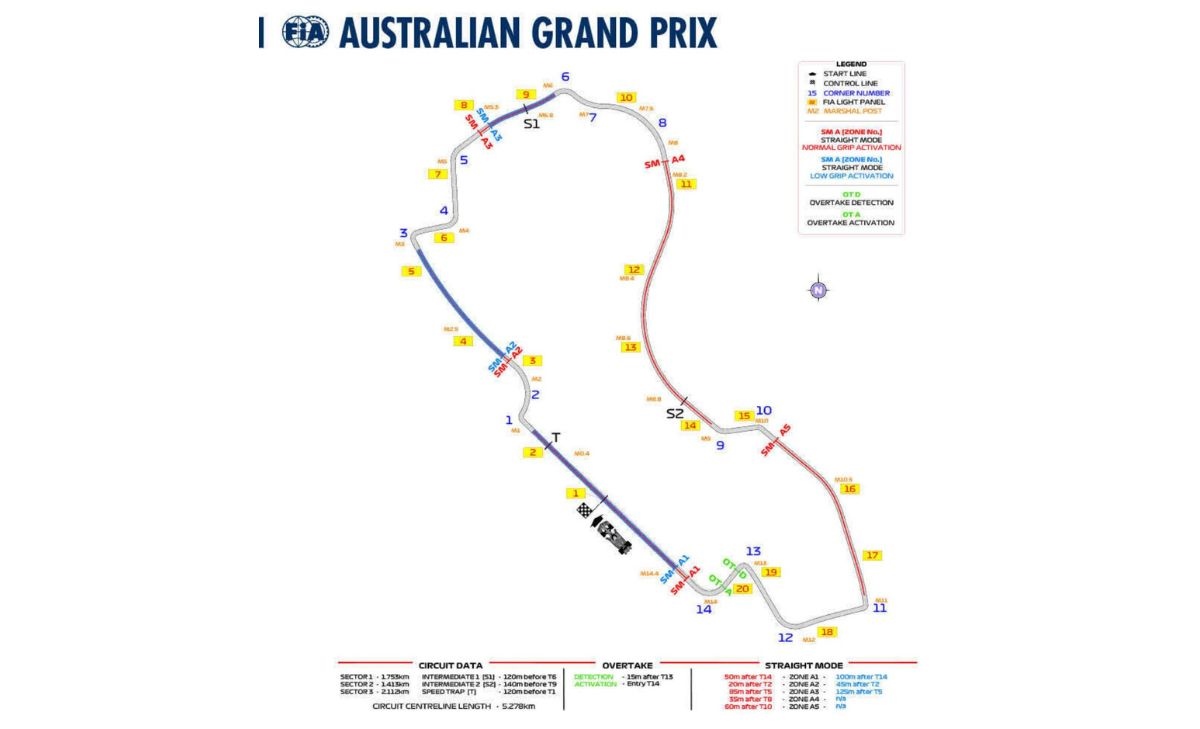
In which areas of the track is it used? The FIA will define the points where it can be activated on a race-by-race basis. In Melbourne, for example, it was used in 5 zones for straight mode under normal grip conditions (dry track), which drops to 3 zones under low grip conditions (rain or other weather events that reduce grip; for example in Sakhir the wind helped bring sand onto the track, an element that reduces grip).
In the photo you have a complete picture of the areas in question. In red are the areas that are activated under normal grip conditions, while in blue are those with low grip. If you notice that the areas in blue are also shorter than those in red for areas A1, A2 and A3.
Energy Management – Difference Between Boost and Overtake Modes
The energy management part is the most difficult to understand. First of all, Boost and Overtake modes are not the same. In both cases, drivers require more power per power unit, but in different quantities and modes.
Boost
The Boost is always available, at every lap. The driver may use the Boost at his or her discretion for both attack and defense. When using it, it relies on all the energy from the combination of heat and electric motor. The only limit here is the amount of energy the MGU-K manages to recover during a lap: 9MJ (but it's not easy to always manage to reach this value, the real challenge lies here as far as the drivers are concerned). Of these 8.5 MJ can be used, in theory, via the Boost, constantly at each step and regardless of the point on the path. The FIA limited the value of energy to be used to 7 MJ in qualifying and 8 MJ in the race.
Overtaking Mode (Override) – The DRS Substitute
Overtake Mode is the true heir to DRS. If the next driver is within one second of the one in front, he will be entitled to an additional 0.5 MJ to spend on the next lap.
If we look at the map of Albert Park for example. The detection point and the activation point (in green, of the OM) are positioned sequentially in curve 14. By being in Curve 14 less than a second away from your rival, you will essentially have 0.5 MJ more to spend on the next step. The difficulty lies right here: if you want to use Overtaking Mode for two consecutive laps, assuming you have the right to do so in terms of gap, the driver will have the ability to recover up to 9 MJ to meet engine demand.
Power delivery between Boost and Overtake Mode follows two separate functions
The power delivered will be managed by the control unit and will be supplied following furmule with a trend of this type:
P = C(v) − d(v)×v; P is the power measured in kW
C and d are constants that vary greatly depending on the speed and mode of use between Boost and Override. The constant d is in turn also multiplied by the instantaneous speed (v) of the car. Obviously there is the control unit that keeps track of everything. The pilot simply has to ask for more power. We decided not to go into too much detail by including the C and d values in the equation, because, from what we understand, the Federation reserves the right to change them from GP to GP depending on the expected difficulties in overtaking.
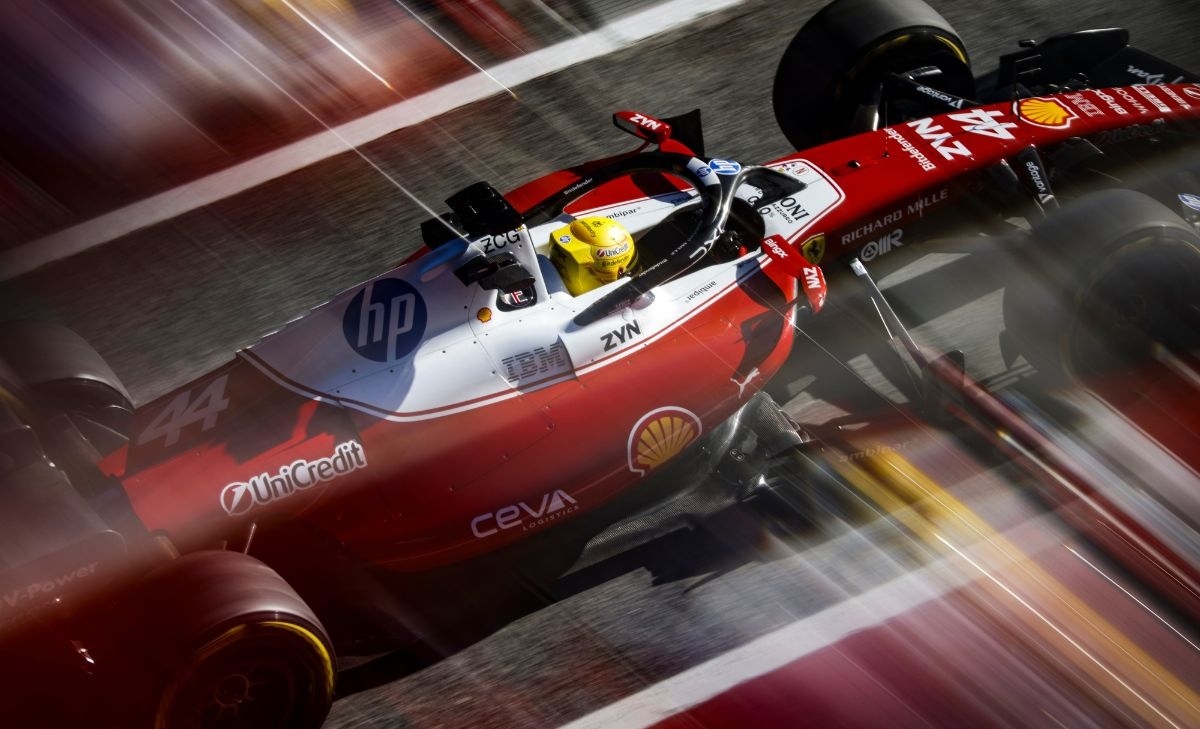
Cover photo: X, Ferrari; Internal photo: FIA
Read in italian language: La sostanziale differenza tra Boost e Overtake Mode
All the news, photos, weather, session times and times from the Chinese GP 2026