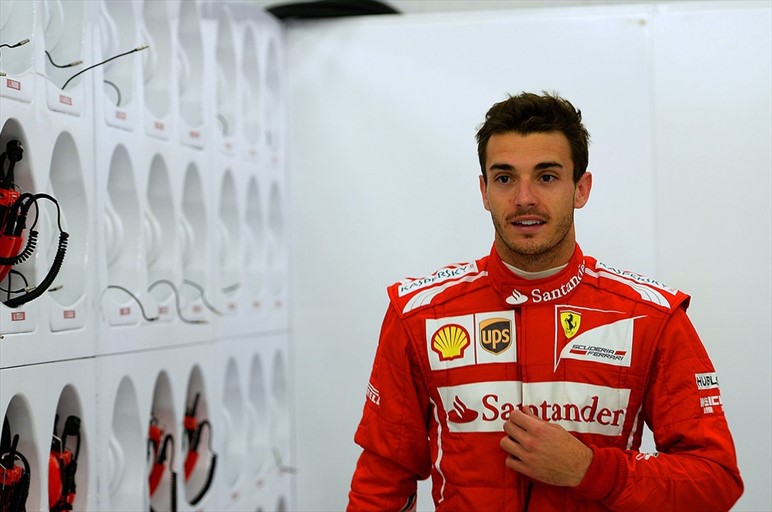
Grands Prix entered 34
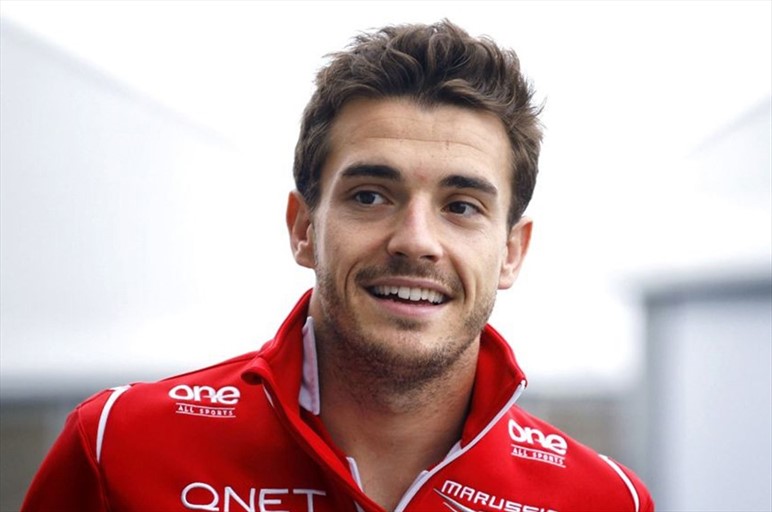
Bianchi Jules(Nice, France, 03/08/1989)
0
34
0
0
Biography of F1 driver Bianchi Jules
Website: www.jules-bianchi.com
Jules Bianchi was born on 3 August 1989 in Nice, France, into a family deeply connected to motorsport: his grandfather Mauro Bianchi and great-uncle Lucien Bianchi both competed at international level. After karting, Jules followed a linear and high-profile path through the junior categories, establishing himself as one of the purest talents of his generation.
In 2007 he won the Formula Renault 2.0 Eurocup with SG Formula, while in 2008 he claimed victory at the Formula 3 Masters in Zandvoort. He then progressed to the Formula 3 Euro Series and later to GP2, where he spent several seasons achieving wins and consistent top results. In parallel, he joined the Ferrari Driver Academy, becoming one of the most closely watched prospects within Ferrari’s young driver programme.
His Formula 1 debut came in 2013 with Marussia. In an extremely limited technical context, Bianchi immediately stood out for speed, strategic clarity and the ability to maximise every opportunity. His career highlight arrived at the 2014 Monaco Grand Prix, where he finished ninth on the road and was later classified eighth after penalties to other drivers: these were the first and only World Championship points in Marussia’s history, a performance widely regarded as one of the finest individual drives of the modern era on a street circuit.
On 5 October 2014, during the Japanese Grand Prix at Suzuka, held in heavy rain and critical visibility conditions, Bianchi was involved in a dramatic accident. On lap 43, under double yellow flags following Adrian Sutil’s off-track incident, his Marussia left the circuit at the Dunlop Curve and struck a recovery crane positioned in the run-off area. The impact caused a severe diffuse axonal brain injury.
Subsequent investigations conducted by the FIA concluded that there were no mechanical failures on the car nor errors by marshals, and that the accident resulted from a combination of speed, aquaplaning and race condition management. Nevertheless, the Bianchi case prompted a profound reassessment of passive and active safety in Formula 1, particularly regarding head protection and the presence of service vehicles on track during races.
Bianchi remained in a coma for several months, constantly supported by his family, before passing away on 17 July 2015 in Nice, due to neurological complications resulting from the accident. He was the last Formula 1 driver to die as a consequence of a race-related accident since 1994.
His passing marked a turning point. Among the most significant consequences was the accelerated development and subsequent introduction of the Halo, the cockpit protection device made mandatory in Formula 1 from 2018. Initially controversial, the Halo has since proven decisive in preventing serious and potentially fatal injuries, becoming one of the symbolic elements of Bianchi’s sporting and human legacy.
On a personal level, Jules Bianchi played a central role in the development of Charles Leclerc, with whom he shared a deep, family-like friendship. Having grown up together in karting in Monaco, Bianchi was both a technical and personal reference point for Leclerc. On multiple occasions, Leclerc has publicly acknowledged Jules’ decisive influence on his career, dedicating victories and symbolic moments to his memory.
Jules Bianchi is remembered as one of the brightest talents of his era, a driver destined for a top-level future and, above all, as a figure who permanently changed the way Formula 1 addresses the issue of safety.
Current season statistics
Formula 1 Season*
| Year | Team | Chassis | Points |
|---|---|---|---|
| 2014 | Marussia | MR03 | 2 |
Qualifying teammate battle
| Year | Team | Teammate | Win | |
|---|---|---|---|---|
| 2014 | Marussia F1 Team (MR03) | Chilton M. | 12 VS 3 | |
| 2013 | Marussia F1 Team (MR02) | Chilton M. | 17 VS 2 | |
| Total | 29 VS 5 | |||
Best results in Formula 1 *
| Grand Prix | Team | Chassis | Pos. |
|---|---|---|---|
| Monaco GP 2014 | Marussia F1 Team | MR03 | 9 |