 By:
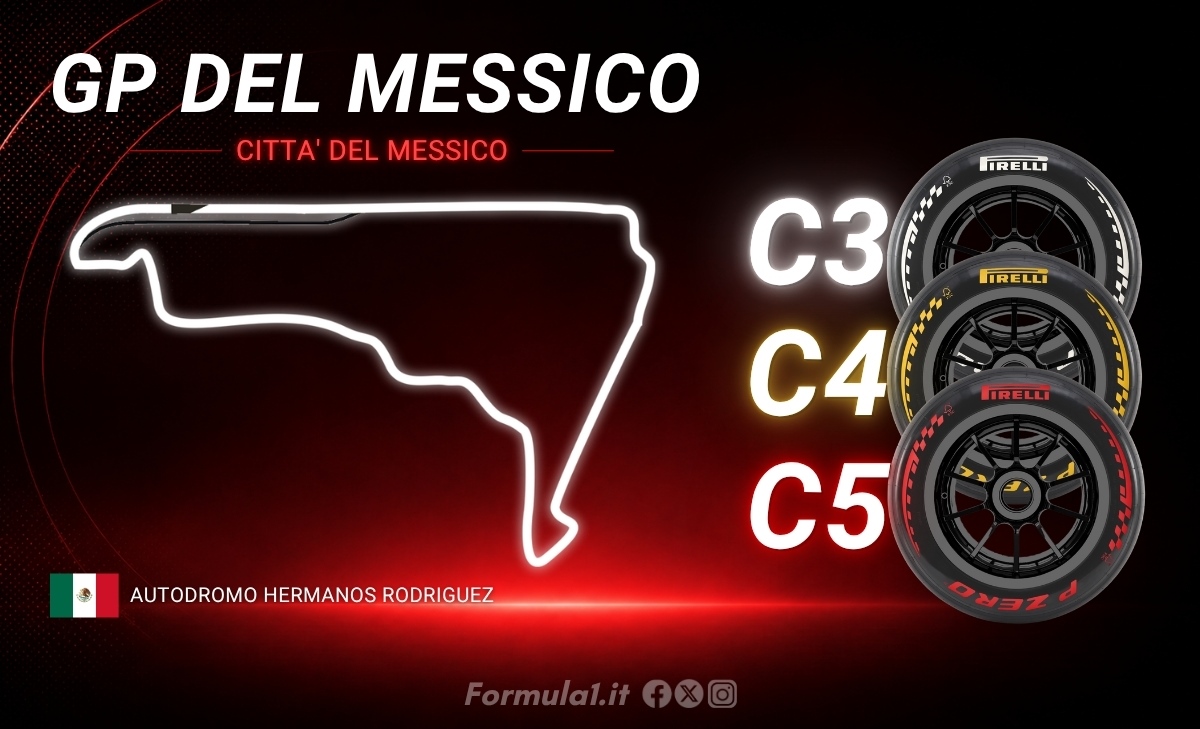
Formula 1 is ready to take on the second round of its American triple-header this weekend at the circuit named after brothers Pedro and Ricardo Rodríguez in Mexico City, a unique venue on the calendar thanks to its altitude of more than 2,000 metres above sea level.
For the 2026 edition of the Grand Prix, Pirelli has selected the softest trio in its range: C3 as the Hard, C4 as the Medium and C5 as the Soft. This is a different choice from last year, when a compound step was attempted with the C2 used as the Hard, a solution that ultimately proved less interesting from a performance perspective than the softer alternatives.
The main new feature of the weekend is the resurfacing of a large section of the circuit. The work covered the stretch from Turn 16 to Turn 1 and the section from Turn 7 to Turn 16, leaving only the first sector largely unchanged. New asphalt is usually associated with higher grip levels and less roughness than older surfaces. However, it will be important to assess its actual characteristics during the early stages of the weekend.
The Autódromo Hermanos Rodríguez is traditionally one of the least demanding circuits for tyres. Its many low-speed corners and limited lateral loads tend to keep wear under control. At the same time, the thin air reduces the aerodynamic downforce generated by the cars, increasing tyre sliding and making graining a factor that must be monitored closely. With a new, smoother asphalt surface, this characteristic could play an even more significant role in determining strategy.
In Mexico, the track is often quite dirty during the opening sessions, with grip improving significantly lap after lap. This year, that evolution could be even more pronounced given the resurfacing work.
From a strategic standpoint, the circuit's low severity and the behaviour of the three compounds at tracks with similar characteristics could favour a one-stop race. Tyre management to extend stints will nevertheless remain an important factor, particularly as the rear axle is subjected to the greatest stress.

The difference between the various strategic options could depend more on the confidence each driver can draw from a particular compound than on the tyres' actual wear limit. As seen at several events this season, some teams may be more inclined towards the softer compounds to benefit from the extra grip available, while others may favour the consistency and stability offered by the Hard compound.
In any case, the Soft compound could once again play a central role. The C5 has shown excellent characteristics at low-intensity circuits and could prove an interesting option not only in qualifying but also in the race, expanding the range of strategic possibilities compared with previous seasons.
Another aspect to watch will be braking performance. The altitude reduces aerodynamic efficiency and can make the management of the most demanding braking zones more challenging. The long main straight leading into Turn 1 could increase the risk of lock-ups, especially in the early stages of the weekend when grip levels are still limited.
Last year
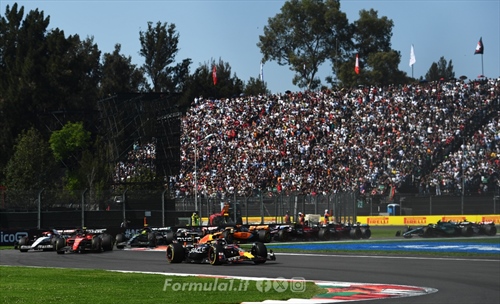
Last year's starting grid was split between one-stop and two-stop strategies. Most drivers chose to start on soft tyres, while only six cars opted for mediums and two for hards. The softest compound was also used by those on a two-stop strategy, fitted for the final stint thanks to extremely low degradation and the absence of graining.
A special podium cap
Pirelli's podium cap for the Mexico City Grand Prix celebrates Día de los Muertos, which falls on race Sunday. The special-edition cap, to be worn by the drivers on the podium, features a black base decorated with traditional Mexican artistic motifs. The Podium cap was designed by Denis Dekovic and produced by Pirelli Design. As with the other special editions, this one is already available to buy on the dedicated website.


All the news, photos, weather, session times and times from the Mexican GP 2026