 By:
By: Over the Italian Grand Prix weekend, Scuderia Ferrari celebrated 30 years since the start of its historic partnership with Michael Schumacher, an anniversary marking the most successful era in the Scuderia’s long history in the pinnacle of motorsport.
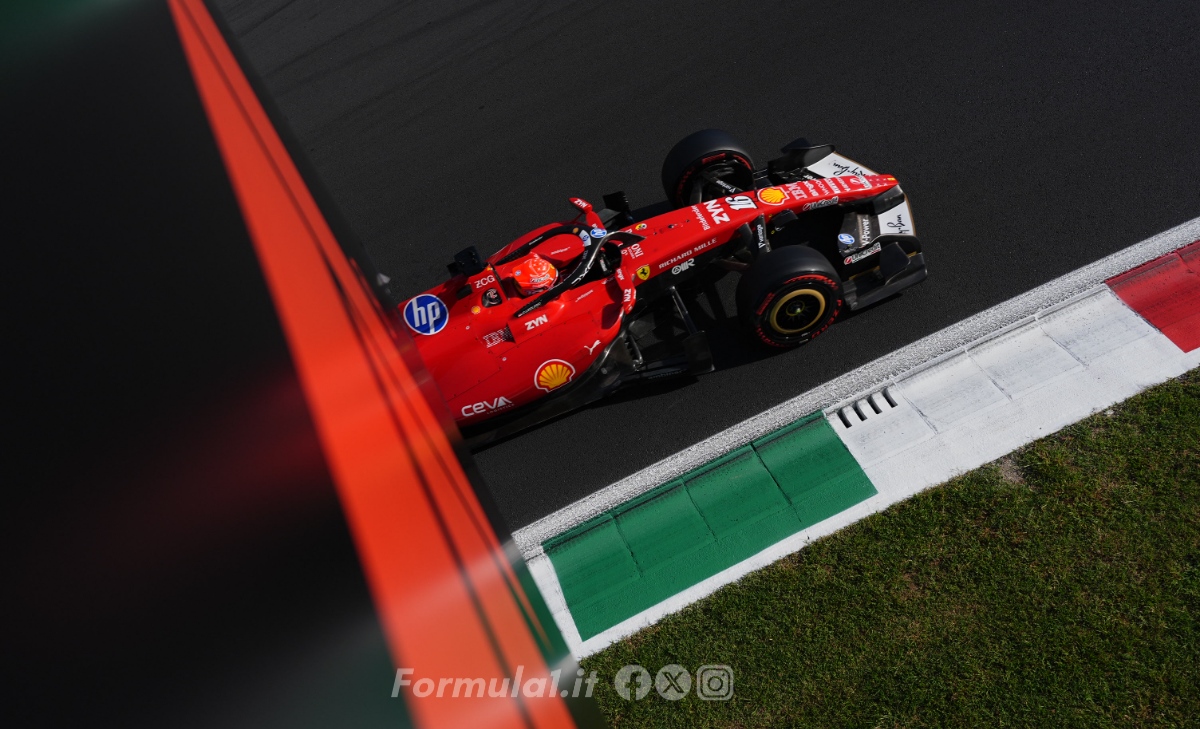
To mark the occasion, it unveiled a livery directly inspired by the first car driven by the “Kaiser”, the F310, the first in a line of single-seaters powered by naturally aspirated engines – V10s and V8s that represented the pinnacle of engine technology before hybridisation took hold in racing.
The wild roar of the past

One of the defining characteristics of those engines was their sound.
Going to a circuit, especially Monza, was an experience that engaged every sense.
People went to the track not so much to see the cars, which were always partly hidden by guardrails and barriers, but to be intoxicated by the high-pitched, wild and deafening roar of the engines.
There was pleasure in the exquisite torture of that piercing sound, and amazement at the vibrations transmitted through the ground, felt in the flesh and in the bones.
Sebastian Vettel offered a taste of that past when he drove Schumacher’s F2002 ahead of the Italian race, once again unleashing the Ferrari V10, which tore through the atmosphere at the Lombardy circuit with its 3.0-litre capacity and more than 18,000rpm.
The historic Maranello machine announced its arrival from many metres away, making fans turn their heads towards the point from which the screaming car would emerge.
It then overwhelmed us with its sharp, crackling downshifts, like gunshots, leaving us astonished by the howl of the V10 as it disappeared, gradually fading in intensity, shaped only by the relentless succession of gear changes.
Not all fans, especially younger ones, have first-hand experience of what it meant when a group of 10 cars with these characteristics arrived on the Grand Prix grid: a wonderful, infernal din that left you astonished and exhilarated.
The present: a timid, tamed hum

For those seeing the current cars in action for the first time, the start of yesterday’s race was deeply disorientating.
Something felt decidedly out of place: the sound.
The sound of the 2026 cars’ power units is… small, timid and discreet. Even more so than the power units of the recent past.
If you are on the opposite side of the circuit, no noise tells you the race has started.
In the past, it was impossible not to notice that the race had begun, because the sound of the cars could be heard for almost the entire lap and from every point around the track.
Nothing announces the arrival of the Formula 1 cars until just a few metres before the corner and, at that point, the sound produced by the tyres rolling along the surface is perhaps more noticeable than that of an internal-combustion engine now relegated to a secondary role.
As the cars pass, fans can comfortably talk among themselves: chat, lose focus... something far more difficult during the support events; Formula 2 and Formula 3 are decidedly more aggressive and engaging as they go by.
The human mind assigns meaning to sounds, linking them to deep sensations and using them to convey messages, instincts and emotions.
Seen in this light, the absence of that sound marks the loss of a dimension of an experience that for decades made the relationship between fans and Formula 1 visceral – a sport now increasingly identifiable as a product rather than a spectacle of overwhelming, irrepressible passion.
The sound of today’s power unit quickly disappears, from the mind and the heart.
All the news, photos, weather, session times and times from the Italian GP 2026