 By:
By: Monza proved a sweet treat with very bitter notes for the home crowd. A sweet treat with a shot of Amaretto. Andrea Kimi Antonelli’s victory warmed the hearts of the fans who came to watch the GP, but it is impossible to be completely happy when considering the race run by Ferrari.
Antonelli’s triumph sees the Italian flag fly from the top step of the podium for the first time since 1966, when Ludovico Scarfiotti won for Ferrari. A success that had not arrived for more than 60 years, achieved, moreover, by executing exactly the right strategy for today.
Before giving you our opinion on the matter, however, let us take a closer look at the choices made by the teams today. Although we told you in our race preview that the most competitive strategy at Monza would be a one-stop, and that is what most drivers did, the route chosen by the teams made life far from easy for their drivers.
Strategy recap
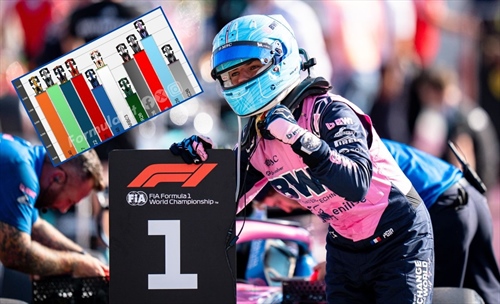
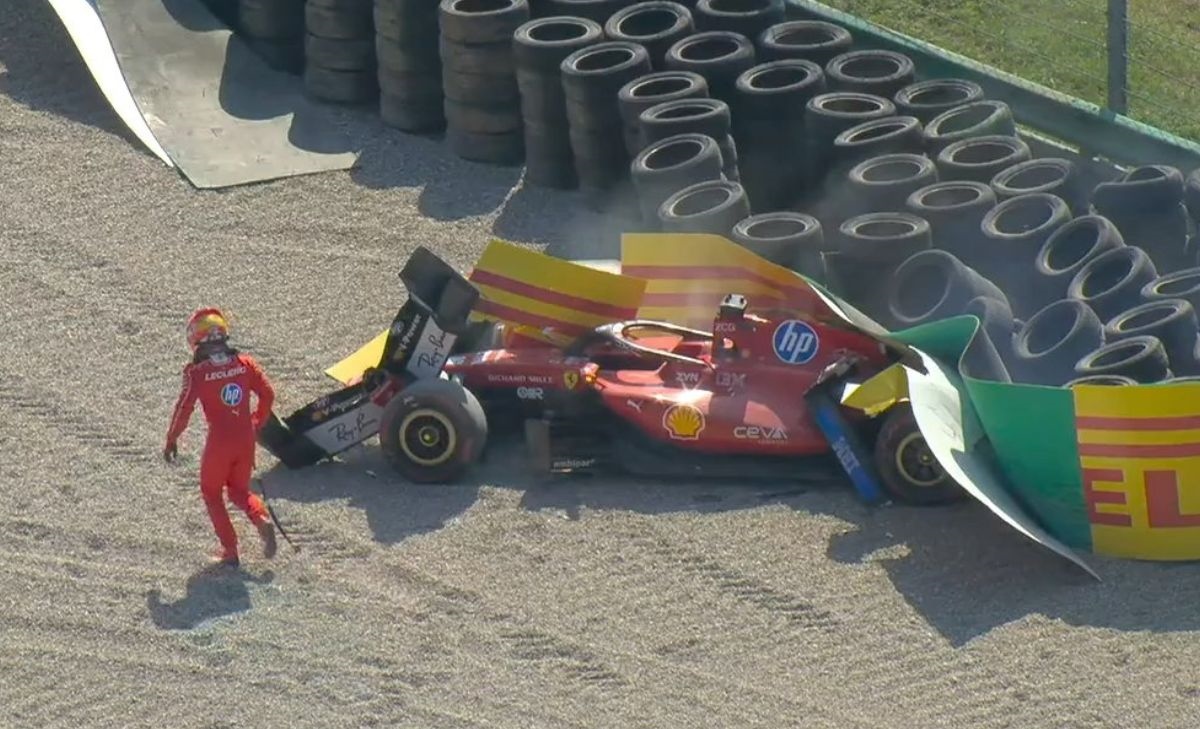
The choice made by a large part of the grid was to change tyres during the red flag, brought out by Charles Leclerc’s accident, before completing the race on the set selected for the restart. Naturally, those who opted for Hards retained at least a semblance of competitiveness at the end, while drivers such as Hamilton, Tsunoda and Bortoleto, who had to complete 50 laps on C4 Mediums, really struggled.
To recap, the Medium-Hard runners were Russell, Norris, Piastri, Gasly, Lindblad and Colapinto; Bearman was the only driver on Soft-Hard; Hamilton’s Ferrari and Bortoleto’s Audi ran Soft-Medium; while Tsunoda alone used Hard-Medium.

The two-stop strategies were far more sensible and quicker, adopted, for example, by race winner Andrea Kimi Antonelli, with an H-M-M approach, and third-placed Verstappen, on Soft-Medium-Hard. Outside the points, Hulkenberg and Lawson ran Medium-Hard-Medium; the Spaniard Sainz, followed by Ocon, used Soft-Hard-Medium; Albon went Medium-Hard-Soft, Perez Soft-Soft-Medium and Bottas Soft-Medium-Soft.
The strength of Antonelli and Mercedes
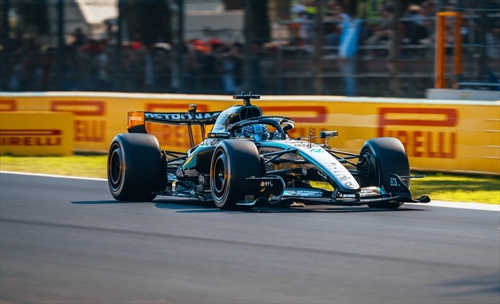
The Temple of Speed is a circuit defined by extremely long straights and heavy braking zones, making the Italian GP the ideal place to change an engine and overtake. Antonelli produced a remarkable recovery drive from P19. It was an achievement that demanded all of his talent. The toughest part, and the moment in which Kimi had to sharpen his weapons, was his duel with Russell, a battle he managed perfectly apart from the trip through the gravel with a few laps remaining.
It is clear, however, that Mercedes also gave Andrea the means to do it. The new power unit, even if not updated with ADUO, gave Antonelli the boost he needed to push when required and overtake every driver in front of him. The perfect combination of man — or rather, boy — and machine.
Ferrari blackout
Ferrari were non-existent. This time, not so much in terms of outright performance, because Hamilton showed that, while the tyres were capable of delivering performance, Lewis was fighting for fourth place. That may be disappointing considering Ferrari were racing in front of their home crowd, but honestly, even if Leclerc had remained in contention, judging by the pace, he would not have been able to challenge the Mercedes cars or Verstappen.

The problem for the Prancing Horse was the usual one. Generally, especially on big occasions, when an unfavourable incident occurs, it is as if the Maranello team is struck by a violent bolt of lightning that sends all systems into blackout. That is what happened today. The start itself, with the battle between the drivers, had already created a moment of confusion, compounded by Leclerc’s accident, born from a lapse in concentration, probably caused by the realisation that they did not have the pace to run at the front today. Charles switched off, and so did the team members.
From the crash onwards, Ferrari switched off. With Hamilton starting on Softs, fitting Mediums — particularly given the SF-26’s problems with the C3 — was the most logical choice, but it was unthinkable that they could maintain competitive pace to the end of the race on C4 Mediums. Lewis should have stopped and changed tyres. Even a used set would have been fine, as would seeing what the pace could have been on Hards. Choosing not to stop, with the McLarens on Hards, was harakiri. It is a shame it ended like this.
Pirelli’s analysis
As usual, the view of Pirelli motorsport director concludes the piece: "We expected all three compounds to be viable options for the race, and that proved to be the case. The teams had the opportunity to adopt different approaches, and the variety of compounds at the start demonstrated that. Those who moved quickly onto Hards or Mediums were able to cover much of the race distance without difficulty because the level of degradation was extremely low. Even during the most closely contested phases, with numerous overtakes and some lock-ups, no significant wear-related issues emerged. There were some instances of graining, but they affected certain teams rather than others".
"Overall," continues Dario Marrafuschi, "the behaviour of the entire range proved very positive. The drivers were able to push throughout the race, encouraging close battles and numerous overtakes. Congratulations to Kimi Antonelli, who managed to take victory with an extraordinary recovery drive from P19. He made 26 overtakes and took advantage of a Virtual Safety Car to fit a fresh set of Mediums, which allowed him to catch and pass his team-mate before the chequered flag. His success has returned an Italian driver to the top step of the Monza podium 60 years after the last time.”
Photos: X, F1; graphics: Pirelli
All the news, photos, weather, session times and times from the Italian GP 2026