 By:
By: The 2026 Formula 1 World Championship has prompted widespread criticism of energy recovery in modern power units. With the MGU-H—the motor-generator able to recover energy from exhaust-gas enthalpy until last year—no longer in use, the unenviable task of keeping the cars’ batteries “always” charged has been assigned solely to the MGU-K.
This is where a problem has undoubtedly emerged. How does the MGU-K work? The MGU-K can operate both as a motor and as a generator. When current flows from the battery → MGU-K → transmission, it functions as a motor and delivers torque, contributing directly to the car’s propulsion with up to 350 kW, around 476 bhp.
When the transmission is used to recover energy, meanwhile, it flows from the transmission → MGU-K → battery, with the MGU-K acting as a generator. This process removes mechanical energy from the system and converts it into electrical energy.
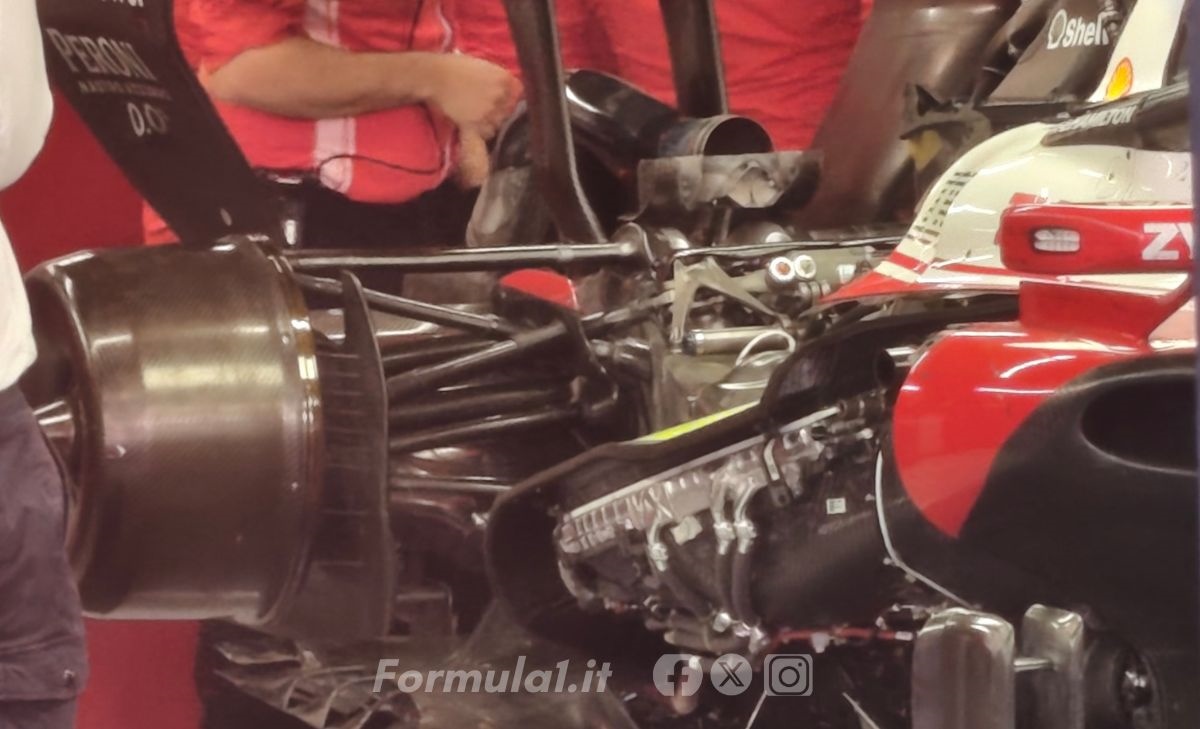
The MGU-K is mechanically connected to the drivetrain. When it operates as a generator, it is driven by the mechanical system and produces resisting torque. To generate current, the MGU-K must oppose the rotation driving it. This electromagnetic resistance therefore becomes genuine braking torque at the rear wheels.
This is why electrical energy can be stored in the battery in two different ways: by acting through the transmission while the internal combustion engine is actively contributing to the car’s motion (clipping, or super-clipping when this method must be used while the combustion engine is running at full output), or by acting as a brake and recovering the kinetic energy lost under deceleration.

The MGU-K dilemma
Where did the problems seen at the start of the year originate? From the fact that the MGU-K cannot recover all the energy modern Formula 1 cars need through braking alone. The battery has a maximum capacity of 9 MJ, initially set according to the circuit and then reduced to 7 MJ due to the problems encountered early in the year. The FIA nevertheless retains the option to change this value depending on the circuit’s characteristics.
Why is this so difficult? Did Formula 1 engineers make an error in their assessment, or is it simply impossible to recover more energy under braking?
A practical example: polesitter Antonelli’s lap at the Chinese GP
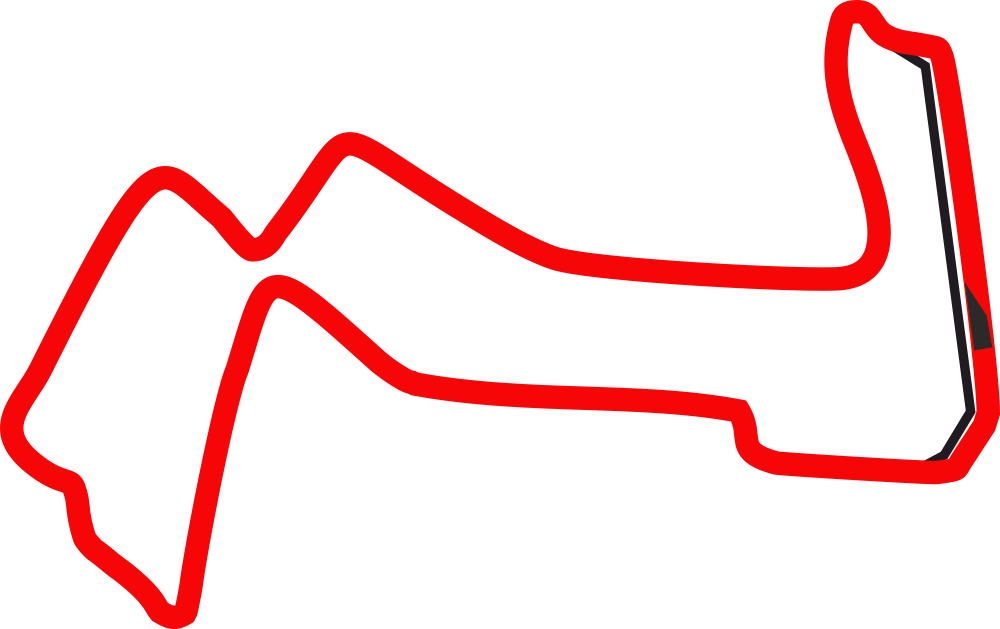
To answer this, we thought we would offer a practical example. Let us examine Andrea Kimi Antonelli’s qualifying lap in China (1’32”064) and the heavy braking zone for Turn 14. As we know, Kimi enjoyed strong acceleration out of Turn 13, reaching a peak speed of 332 km/h, but due to super-clipping, braking only began from an initial speed of 303 km/h.
It was heavy braking, without lifting off. He reached a final speed of 68 km/h before accelerating again and heading towards the end of the lap. The entire process took around 3.5 seconds.
A quick calculation shows that the maximum recoverable kinetic energy under this braking phase is 2,600 kJ, or 2.6 MJ. Note that this is a purely theoretical figure. As Brembo confirms, this braking phase can reach a maximum of 1.67 MJ, or 65% of the theoretical figure. This is because the electric motor itself has an efficiency limit and it is never possible to recover 100% of what is available due to mechanical friction in its internal components and the kinematics of motion.
Our calculation also shows that the 350 kW motor-generator would require around 4.8 seconds to recover the full 1.67 MJ available. Unfortunately, however, Antonelli took 3.5 seconds to complete such a deceleration. This means that not even the full 1.67 MJ was recovered. Over 3.5 seconds of such braking, the electric motor-generator could have recovered a maximum of “just” around 1.23 MJ (again, in the realm of theoretical approximation, also assuming that the MGU-K can reach full output almost instantaneously). The remaining roughly 0.44 MJ, certainly more, would therefore have been transferred to the brakes, increasing disc temperatures.

This exercise also helps us understand how brake-system temperature management has changed. If we take a major step back to before the power-unit era, namely 2013, in the days of naturally aspirated engines, brake discs had to be sized to absorb around 1.6 MJ of energy, all of which would be dissipated as a significant rise in temperature. They must now be sized to dissipate around one third of that figure.
To conclude the analysis, China featured three high-intensity braking events. Through braking for Turns 14, 1 and 6, drivers could have recovered a maximum of around 3.5 MJ. In the other four, less intense braking zones, they may have exceeded 2.5 MJ. This leads us to conclude that, optimistically, through braking alone at the Shanghai circuit, modern Formula 1 cars could have recovered a maximum of around 6 MJ, using the MGU-K as a brake. That is around 60%-65% of the energy they would actually have needed to sustain a qualifying lap at the car’s full potential.
This is why super-clipping was widely used at the start of the year
This explains why drivers had to resort to super-clipping on the straight leading to Turn 14 and lift off in other areas of the circuit, such as on the approach to Turns 1, 6, 9 and 12, in order to reach the 9 MJ maximum set by the FIA at the beginning of the event for the qualifying lap. In doing so, they could recover the missing 35%-40%.
So, was the MGU-K adequately sized?
To answer our question, we must bear in mind that China is a very particular circuit, where Turn 14 alone may have pushed the MGU-K so hard. It was the only braking zone in which the generator had to try to store a very large amount of energy in a limited time. The other braking zones, while still heavy in some cases, offered more braking time, which helped the generator maximise charging.

So we come to the heart of the matter: would a larger motor-generator really be enough to solve the energy-management problem? Probably not. It would only be used at full output on rare occasions, such as Turn 14 in Shanghai or perhaps Turn 1 at Monza. For most corners on the calendar, 350 kW is sufficient to ensure adequate energy recovery. It is not a question of MGU-K power: the problem is that modern F1 cars are designed to use a great deal of electrical energy, but circuit layouts do not offer sufficiently demanding corners to meet this major requirement. This is why, looking ahead, there is consideration of taking a step back and placing greater importance on the internal combustion engine.
F1 and WEC compared
Here is an interesting point. If you believe F1 is not at the cutting edge, consider that the second FIA World Championship with the most powerful MGU-K is the WEC. In endurance racing, LMP1 cars use a 200 kW motor-generator, which is 57% of the power of an MGU-K fitted to 2026 F1 cars.
Data analysis
The data used for our calculations were obtained using the GPtempo.com platform, but naturally the formulas we used are incomplete. We used straightforward theoretical formulas, based on kinetic-energy balance.
It is therefore an estimate that does not take many factors into account: the car’s mass changes during the transition; we did not consider elevation changes, and therefore climbs and descents, or potential energy; above all, we merely estimated losses due to friction, aerodynamic drag and brake heating through simple deductions.
We have chosen to present this estimate in order to bring our readers closer to the technology of modern Formula 1 power units.
For those who want to have some fun
For any readers who would like to try some calculations, below are the simple formulas we used for our purposes.
The difference in kinetic energy can be calculated as follows:

The key is always to express everything in the correct units. To obtain energy in joules, you must use kg for mass and m/s for the two speeds (Vi, initial speed; Vf, final speed).
With  you will find the time required to recover a given amount of energy (E) with an MGU-K of a given power output (P). E is expressed in joules, P in watts.
Cover photo: Formula1.it; internal photos: Formula1.it and Mercedes