 By:
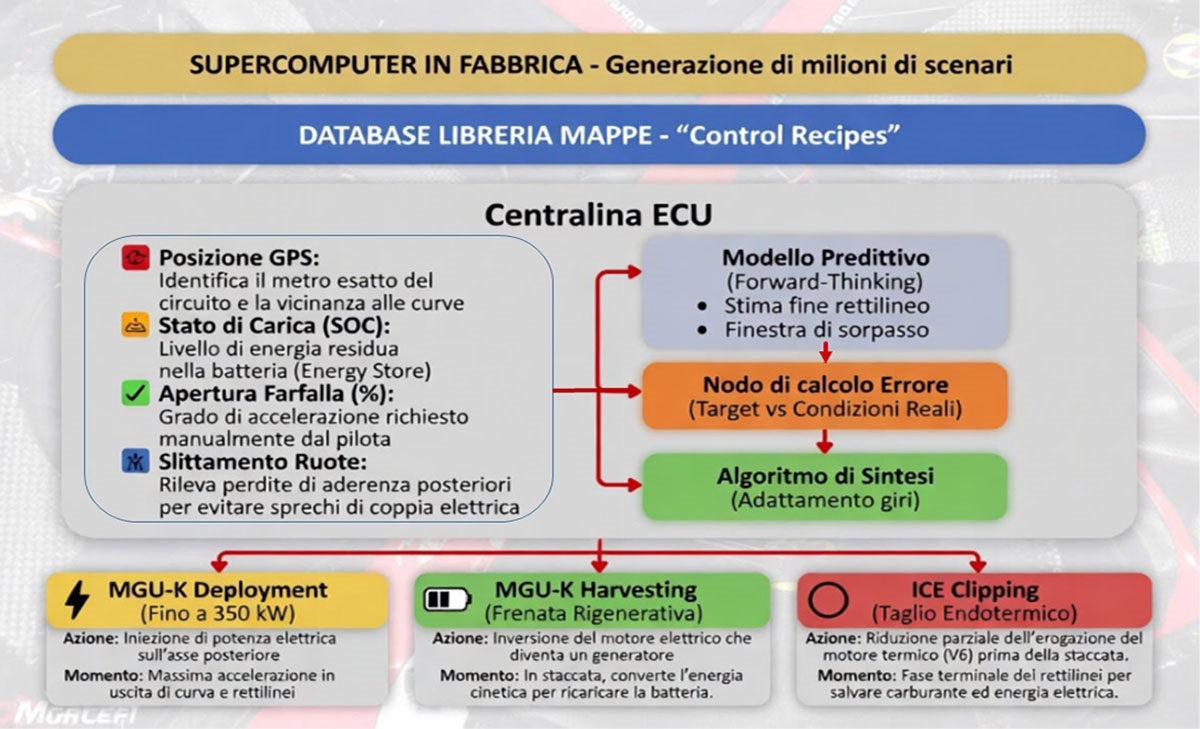
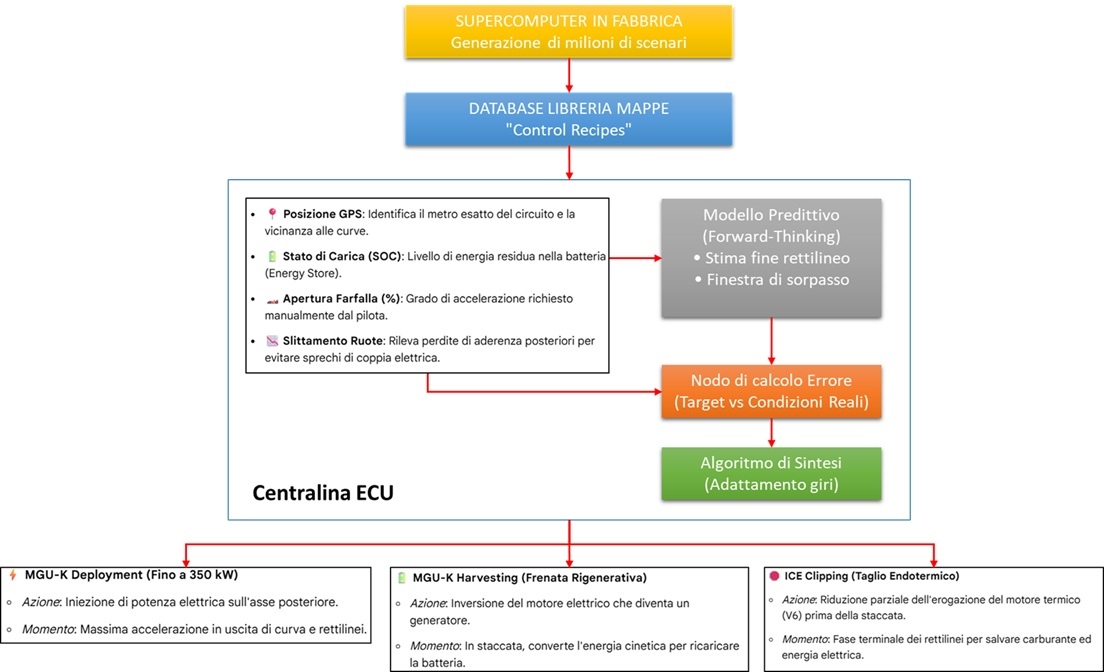
By: New-generation power units feature self-learning algorithms, predictive systems that learn in real time. The software processes data from previous laps (speed at individual points around the circuit, energy consumed and recovered) and uses it to predict the optimal electrical energy deployment map for the following lap. This is not artificial intelligence in the commonly understood sense of the term, but rather a sophisticated adaptive system. This learning does not take place only from one lap to the next. If a deviation from the expected model occurs at any point, the algorithm immediately recalculates the optimum way to distribute the remaining energy over the rest of the lap.
How adaptive algorithms work over a lap
Rather than relying exclusively on pre-event simulations carried out at the factory, the power unit processes data from previous laps in real time.
- Predictive lap analysis ("Forward-Thinking"): The algorithm analyses speed at individual points around the circuit, engine load and recovered energy to project the optimal deployment strategy for the following lap.
- Dynamic mid-lap recalculation: If an unexpected deviation occurs during the lap (for example because of traffic, a gust of wind or tyre overheating), the algorithm instantly alters delivery for the remainder of the track.
- Compensation for environmental variables: A strong headwind on a straight artificially extends the effective length of that straight. The computer detects this and adjusts the megajoules of electrical energy deployed to avoid completely draining the battery before the end of the acceleration zone.
The driver still has control over the power unit
Some variables are still managed by the driver. If they lift off the throttle too late at a specific point, or open the throttle beyond around 60% too early on corner exit, the energy balance changes. The algorithm records this and adapts its strategy for the rest of the lap. This is precisely why Lando Norris said at the start of the season that drivers can no longer make the difference through bravery, but only through the metronomic precision demanded by the power unit. George Russell arrived at Spa having revised his driving style, following indications from Mercedes that his inputs could contribute to the deficit on the straights. The deficit nevertheless appeared in Belgium. The reason is that the second part of the equation is completely beyond the capabilities of anyone in the cockpit. Stella identified two key external factors: track grip and wind. A stronger headwind makes the algorithm "think" the straight is longer than it actually is, because the car loses speed before reaching its end, and the system adjusts energy delivery to suit this incorrect reading. The result is a drop in power precisely where the driver needs maximum boost. Unpredictable electrical energy delivery affects drivers in two distinct ways. The first is a direct loss of time on the straights. The second is more subtle, but equally damaging. If the power unit recovers more energy than usual near a braking zone, the car is travelling several km/h slower at the point where the driver starts braking, and the braking marker has to move. If the driver does not know that additional energy recovery is about to arrive, they brake too late. Or, if they expect significant energy recovery that then does not arrive, they brake too early and lose time.
Nikolas Tombazis' view
The FIA's single-seater director, Nikolas Tombazis, said he understood the drivers' frustration over the influence of the self-learning software element in the 2026 power units: "I believe their observations are a consequence of the fact that energy is limited and therefore the best way to manage it becomes of paramount importance. And then the various strategies that need to be put in place to do so are linked to this.". From a logical standpoint, such software intervention runs counter to one of the pillars of the sporting regulations, which states that every driver must drive the Formula 1 car alone and without any assistance. However, the Greek engineer believes that the software management of power units entrusted to self-learning algorithms is necessary, as managing energy distribution cannot be left entirely in the hands of the drivers. Because of the complexity of current power units, Tombazis believes it is extremely difficult for a human being to determine the optimum deployment strategy: "So I don't think human beings can rationally control all these parameters."
Updated F1 drivers' and constructors' standings