 By:
By: It is often said that in Formula 1, the harshest judgments and most cutting verdicts are based solely on the latest result. I prefer a different perspective: reading today’s performances in light of the past too, without forgetting the journey that led a driver or team to that result, whether positive or negative. I could give countless examples of how these two approaches can lead to different conclusions, but today I want to focus on the narrative that has accompanied almost every story involving Valtteri Bottas for several months now.
Moving from a world championship-winning Mercedes to a Cadillac that struggles even to reach the chequered flag might appear to be the least rewarding way to spend the final years of a career, the perfect material for memes and mockery. Yet for Valtteri Bottas, the challenge with the new American team represents more than simply an opportunity to remain in Formula 1.
Speaking to the Financial Times, the Finn discussed the difficulties encountered during Cadillac’s first season, explaining how the work now required of a driver by the American team differs profoundly from what he did during his years at Mercedes.
But behind the team’s still decidedly modest results lies an interesting situation, on which Formula1.it has recently gathered information directly from within the Cadillac camp. It primarily concerns the comparison between Bottas and Sergio Pérez, two drivers with experience at leading teams who have now been tasked with helping a project still in its infancy to grow.
From Mercedes to Cadillac: two different ways of working
“I knew it was going to be a difficult year. There was going to be a lot of work to do to solve problems, make progress and get every area of the team working”, Bottas explained.
The Finn has claimed 10 wins and 67 podiums during his career, spending five seasons alongside Lewis Hamilton at Mercedes. It was an experience in which the engineers’ work was largely focused on finding marginal gains from an already highly competitive car.
At Cadillac, however, the priorities are entirely different. The team must develop the car, its infrastructure and its operational processes simultaneously, while also preparing its future engine programme, scheduled for 2030.
“It’s not just about thinking about this weekend, but also what could help us in the short and long term. You have to look at the bigger picture when it comes to car development.”
It is a perspective Bottas appears to have fully embraced, also showing particular enthusiasm for Cadillac’s new Silverstone facilities, which he described as the most impressive he has encountered in his Formula 1 career. When the Financial Times asked whether the new American facilities were even better than those of the Brackley team, the Finn replied without hesitation: “I would say so.”
It is not just about investment and technology. Cadillac is also building an important organisational structure, with a particularly well-regarded working environment capable of attracting qualified professionals from elsewhere in Formula 1. Its geographical location is certainly an advantage: the British base sits at the heart of the so-called Motorsport Valley, a few kilometres from Aston Martin in Silverstone and a short distance from Mercedes in Brackley; McLaren in Woking is also part of the same major British motorsport cluster.
This concentration of expertise makes it easier to recruit engineers, technicians and specialists already accustomed to working at the highest level of motorsport. For a team newly arrived in Formula 1, being able to rely from the outset on state-of-the-art facilities and highly experienced personnel is an important advantage, even if turning those resources into performance will inevitably take time.
Returning to a present that is less rosy than the outlook, aside from performances that have fallen short but are in line with expectations for a debut season, the main problem is undoubtedly reliability. In the first 16 races of the season, Bottas has recorded eight retirements, a particularly damaging figure for a team that needs to accumulate mileage and information.
“When you encounter problems, whether in practice or qualifying, that is precisely when you are unable to improve. You end up trying to solve them instead of focusing on performance and on how to make the car faster.”
The comparison with Pérez and the unknown background
One particularly interesting element has emerged regarding the development work, which we can bring you exclusively. According to information obtained by Formula1.it, Bottas is held in very high regard within the team, despite what the on-track results might suggest.

The Finn is described as a driver who is extremely precise in the feedback he provides to engineers, punctual and consistent in his simulator commitments, as well as particularly available and respectful in his dealings with staff.
These are qualities that take on particular importance in a team building its own working methodology from scratch.
The assessment gathered on Sergio Pérez, meanwhile, is said to be markedly different. While the Mexican is recognised as having greater outright pace, there is reportedly not the same level of appreciation within the team for his technical contribution, owing to less precise feedback and less consistent involvement in simulator work than his team-mate, with several sessions that the Mexican is said not to have completed.
There is another factor, perhaps even more important in understanding the performance gap between the two drivers.
According to information gathered by our editorial team, Pérez has a more developed car than Bottas. After the summer break, the Mexican is said to have benefited from a substantially more comprehensive upgrade package, while the Finn continued to use a less recent specification.
This difference would help explain the huge time gap seen between the two Cadillacs at recent events, which was not evident in the first part of the season.
However, this would not be a choice linked to a desire to favour Pérez. The differentiated distribution of upgrades would primarily meet two needs: containing development costs in compliance with budget cap restrictions, and gathering comparative data between different configurations across different circuits and conditions.
Based on the indications received, the United States Grand Prix in Austin could mark the point of technical realignment: Bottas should also receive the upgrades already used by his team-mate, allowing for a more even comparison between the two cars.
Two veterans, one project to build
For his part, Bottas does not appear intent on fuelling internal rivalries. Speaking about his relationship with Pérez, the Finn stressed that both have gained enough experience to understand what the priorities must be for a team still in the building phase.
“We have been in big teams and we have also gone through more difficult moments in this sport. We have both seen what works and what doesn’t. We know that, at this point, we have to put the team ahead of ourselves.”
For Cadillac, the decision to rely on two experienced drivers was not simply about having a dependable pairing on track, but above all about accelerating the team’s technical and organisational growth.
Bottas’s contribution, at least according to what we have been told, appears to be particularly appreciated in precisely this respect. It is a commitment the Finn also confirms in his own comments, explaining that he finds satisfaction in work far removed from what he did during his winning days at Mercedes.
“I like solving problems. Of course, I would like to race in the pack and fight for points, but I knew this year was going to be difficult.”
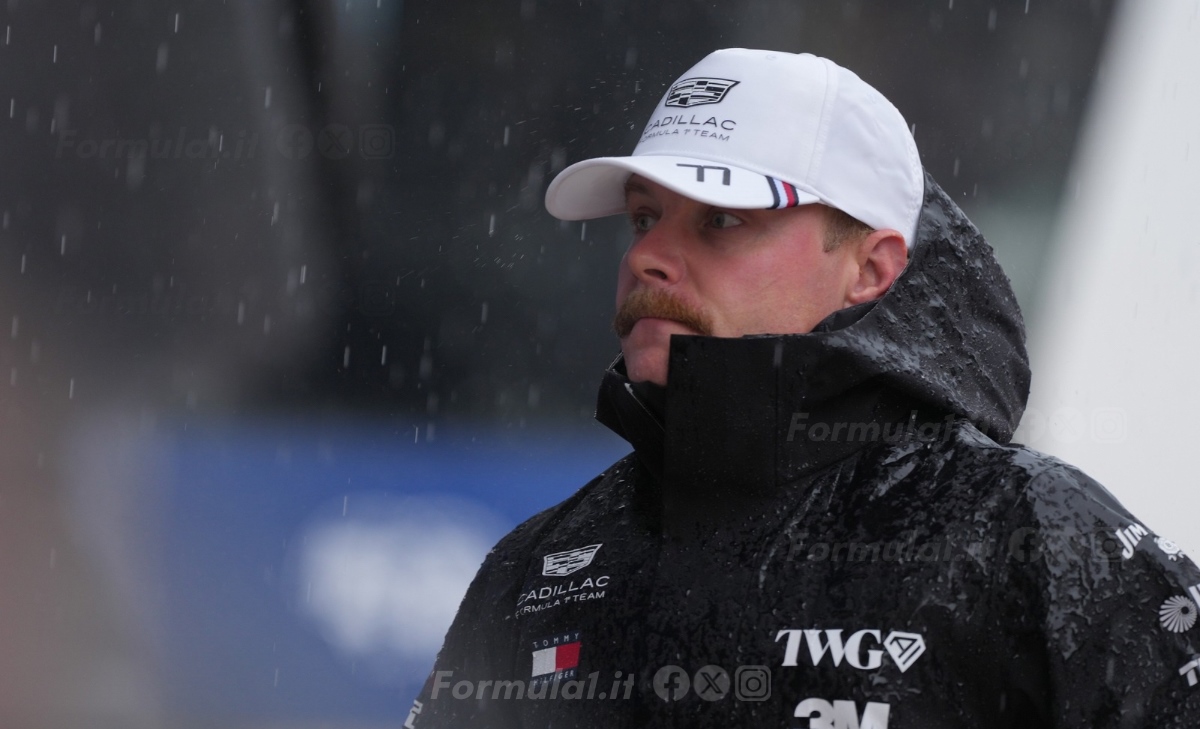
Cover photo by Luca Martini / WHYOUT Images