 By:
By: For too many years, we have watched a Formula 1 that appears to prioritise spectacle over the authentic appeal of motorsport. Street circuits, monumental backdrops, social events and exotic destinations have become central to a commercial expansion which, in some cases, has ended up relegating what should make this sport special in the first place: racing. Forgive us, then, if Formula 1’s return to Africa, while undoubtedly news to be welcomed with enthusiasm after decades of waiting, also raises some questions for us.
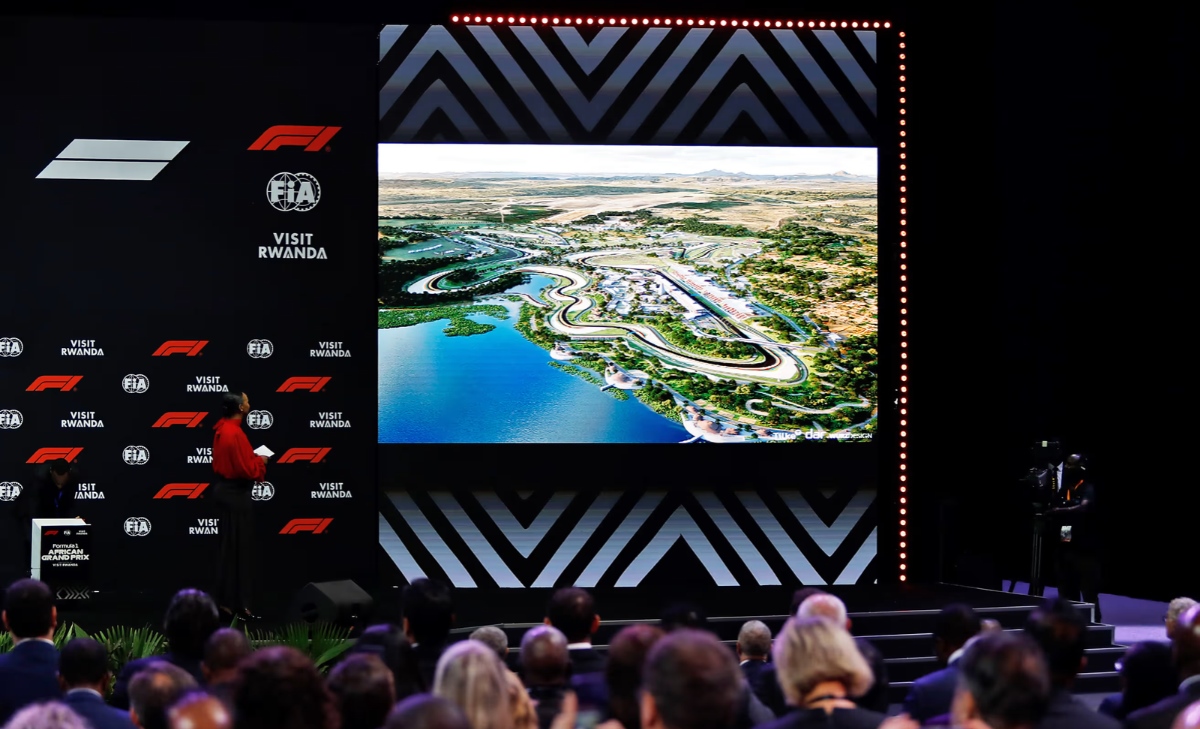
The official announcement came on 13 October in Kigali, where a 10-year agreement was unveiled to host the African Grand Prix in Rwanda from the early years of the next decade. The World Championship will therefore return to the African continent for the first time since 1993, when the last South African Grand Prix was held at Kyalami.
FIA president Mohammed Ben Sulayem described the agreement as «a historic moment for our sport», stressing that the return to Africa represents an important step in motorsport’s global growth. He also assured that the Federation will work with Formula 1 and the organisers to ensure the new circuit meets the highest international standards.
But one part of his remarks deserves particular attention. Ben Sulayem explained that the agreement must serve to create «a lasting legacy», through the development of new talent, engaging younger generations and opening up opportunities for African motorsport. The president also stressed the issue of accessibility, recalling the FIA’s responsibility to take the sport to new communities and support its growth at every level.
«We will ensure that once Africa is in, it does not leave.» A statement that implies the existence of a long-term project and will be one of the most important measures of the venture’s success.
Can Formula 1 really help the African economy?
We are not sure this is the most important question, but it is difficult to ignore the contrast between the economic hardship faced by part of Africa’s population and the luxury, at times even excessive, that accompanies some events in the top category. Formula 1 is now a promotional platform with extraordinary international reach, capable of attracting visitors, investors and media attention. Hosting a Grand Prix, however, also involves enormous costs, especially when a circuit and all the necessary infrastructure must be built from scratch.
In a country such as Rwanda, where a significant part of the population still faces serious economic hardship, it is legitimate to ask how much of this investment can translate into tangible benefits for the population. Hotels, catering, transport and local businesses could certainly benefit, but it is far from guaranteed that the wealth generated by an international event will be distributed broadly enough.
Rwandan president Paul Kagame presented the project as an investment in the country’s future, capable of creating jobs, developing skills and attracting new economic activity. Stefano Domenicali also stressed that the aim is not simply to stage a race, but to generate economic and social benefits through tourism, investment and the growth of local businesses.
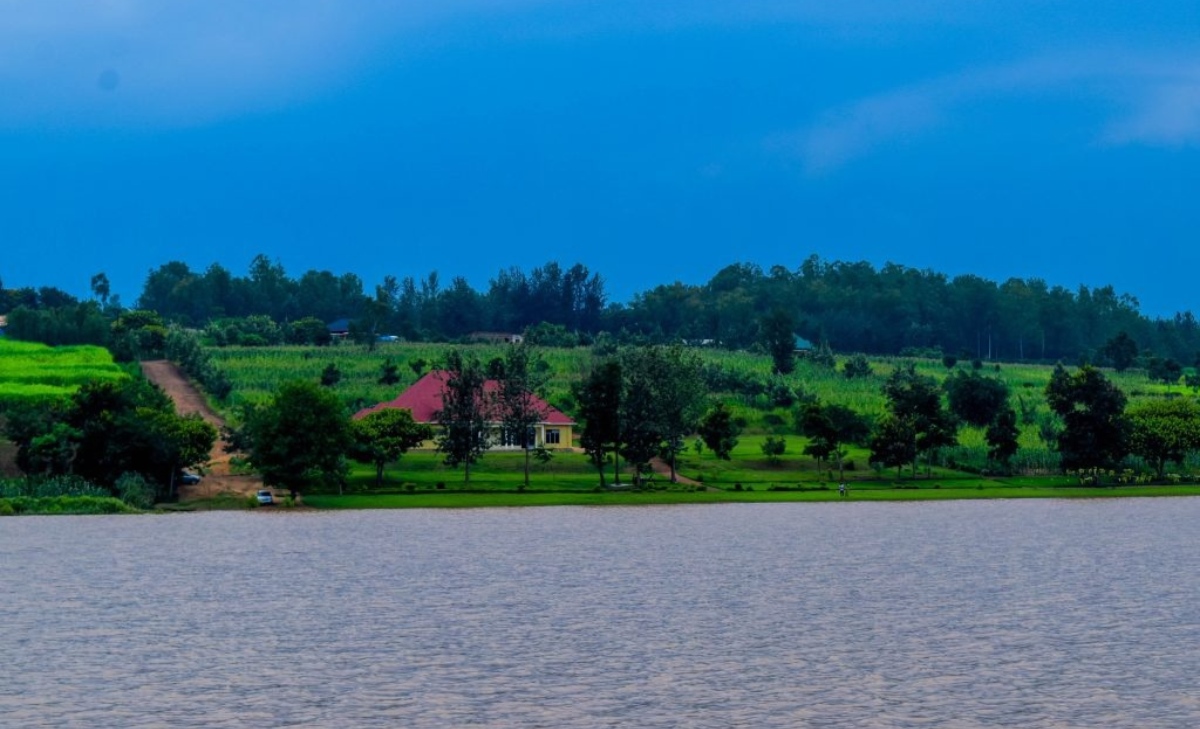
The decisive factors will above all be the funding model, the involvement of Rwandan businesses and the ability to use the infrastructure beyond race weekend. The circuit will in fact be built in Bugesera, around 40 kilometres south of Kigali, next to the new international airport, as part of a wider tourism and commercial development project. It is a potentially interesting approach, provided the economic benefits do not remain confined to the event and its main operators.
A spectacular circuit, at least on paper
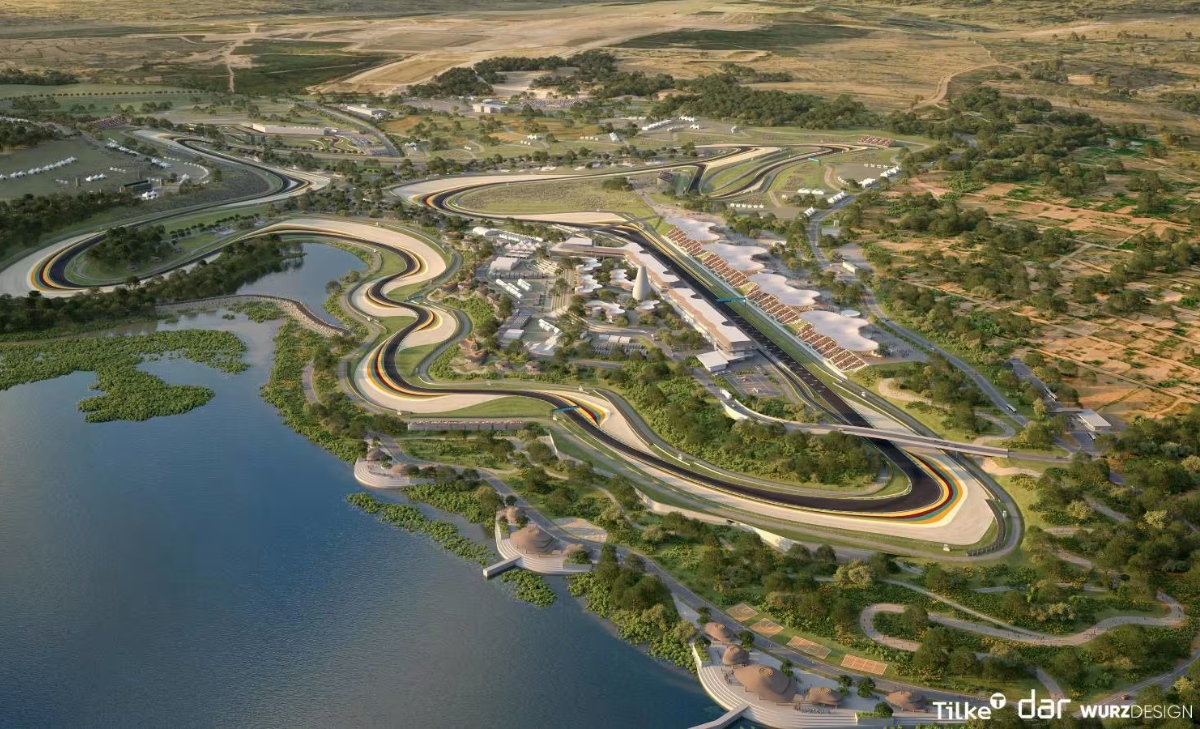
From a sporting perspective, the first information about the layout is decidedly encouraging. The project, developed with input from former Formula 1 driver Alex Wurz and the Tilke and Dar studios, will make use of the natural contours of the terrain, characterised by hills and significant elevation changes.
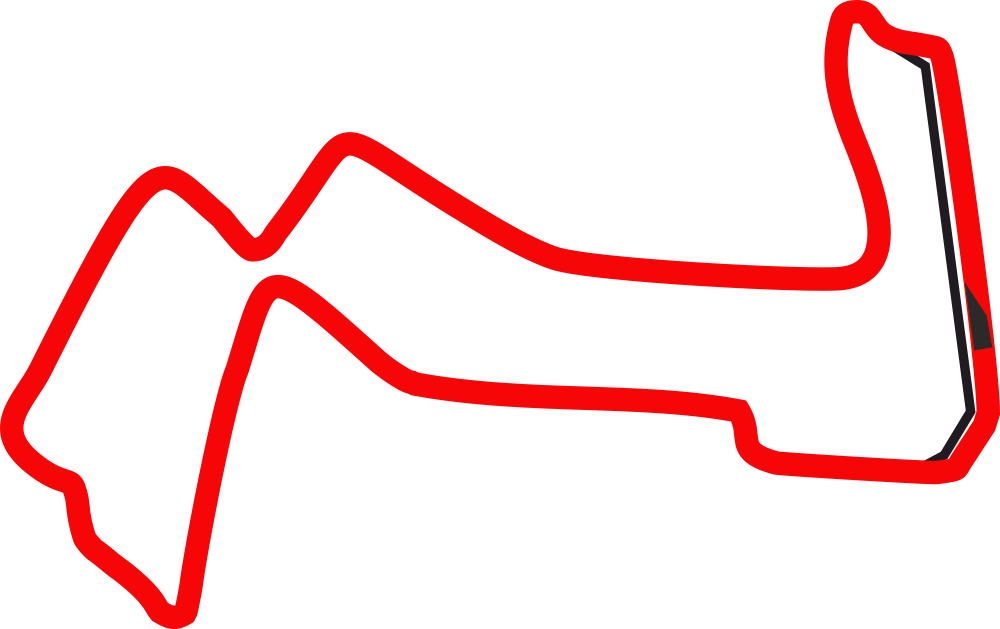
The preliminary design calls for a circuit more than six kilometres long, with 17 corners, running anti-clockwise and featuring 197 metres of total elevation change over the lap. Very fast corners, elevated sections and steep gradients should define a layout that will also include a long straight followed by a demanding braking zone. All of it set in a hilly landscape overlooking Lake Kidogo.
Wurz described the future circuit as a kind of roller coaster, designed to showcase driving and test drivers and engineers. It is a prospect that particularly intrigues us, because it recalls a fundamental characteristic of some of history’s most fascinating circuits: the ability to exploit the natural contours of the land to create corners, changes in gradient and technical sequences truly capable of challenging those behind the wheel.
However, we would not want this project too to end up being shaped above all by television, commercial and architectural requirements. A circuit does not become interesting simply because it crosses a spectacular landscape or offers evocative helicopter shots. It must have its own sporting identity, corners requiring courage, lines that allow for different interpretations and characteristics capable of encouraging closely fought racing.
The hope is that, this time, the spectacle is designed for the track, not merely for what surrounds it. And that the announced elevation changes and ultra-fast corners are not just features to showcase in presentations, but become part of a circuit capable of winning over drivers and fans.
The risk of another white elephant
Finally, there remains a problem Formula 1 knows very well: major facilities built on the back of international ambitions, but destined for limited use once the Grand Prix spotlight has faded.
The organisers expect the new complex to host motorsport competitions, concerts, conferences and other events throughout the year, with a stated capacity of around 100,000 spectators. This is essential to justify an investment of this scale, but only time will tell whether there will be sufficient demand to sustain the facility economically over the long term.
This is where Ben Sulayem’s words on accessibility and talent development take on particular significance. It would be paradoxical to build one of the world’s most modern circuits on a continent that has waited more than 30 years for Formula 1’s return, without at the same time creating the conditions for a new generation of African drivers, technicians and fans to genuinely engage with motorsport.
Formula 1’s return to Africa is news we welcome enthusiastically. The continent deserves once again to be an integral part of the World Championship, and Rwanda certainly has the right to invest in its sporting and economic ambitions. But it would be a mistake automatically to regard a project as virtuous simply because it restores Formula 1’s presence in a geographical area from which it has been absent for far too long.
In 10 or 20 years’ time, the question will be a different one: will Rwanda have gained infrastructure capable of generating opportunity, employment and development, or merely a hugely expensive circuit to maintain?
Because, beyond the announcements and promises, the true legacy of a Grand Prix and such a major investment should not be measured by the spectacular images of one weekend, but also by what it manages to build in the area over the other 362 days of the year.
Cover photo www.formula1.com
Interior photo www.topafricanews.com