 By:
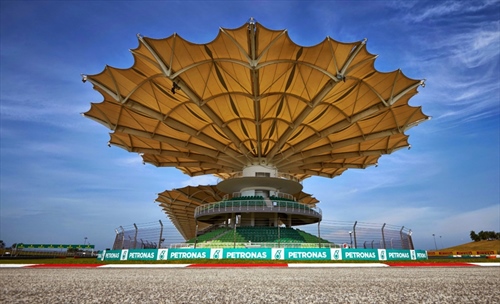
By: After a nine-year absence, the Sepang International Circuit is ready to host a Formula 1 World Championship Grand Prix once again. The Bahrain Grand Prix, which was not held in April, will instead take place at the Malaysian circuit. It will be a significant challenge for the teams and drivers, as the last race at Sepang was held in 2017, when both the cars and tyres were markedly different from those of today.
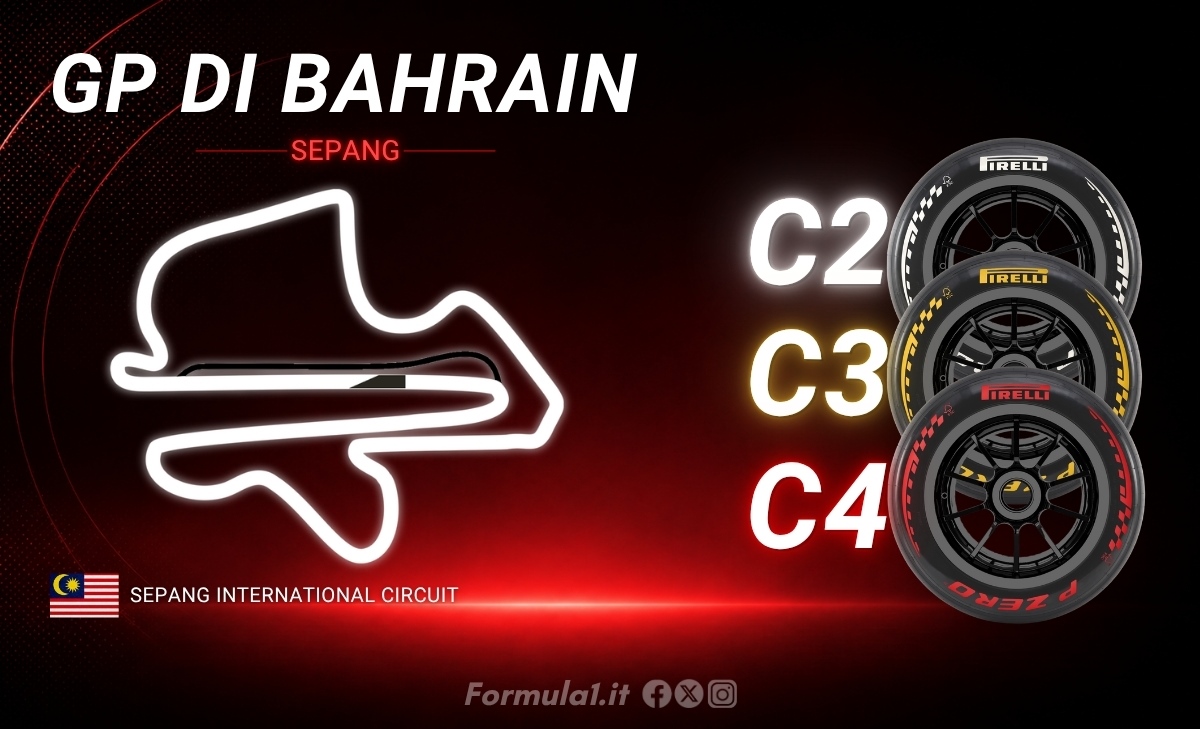
Located a few kilometres from Kuala Lumpur, the circuit is 5.543km long and combines long straights with a series of high-speed corners, particularly concentrated in the middle sector. It is a track that generates medium levels of tyre energy, placing it in a severity range comparable with Spa-Francorchamps and Shanghai. Ambient and track temperatures will be an important factor in tyre management, making thermal degradation one of the key variables throughout the weekend.
For the return to Kuala Lumpur, Pirelli has selected the C2, C3 and C4 compounds, designated Hard, Medium and Soft respectively. This choice is slightly more aggressive than the harder trio that would have represented a more conservative option given the characteristics of the circuit. The aim, however, will be to provide teams with a broader strategic range, creating conditions that reduce the time difference between one-stop and two-stop strategies.
Sepang has a relatively abrasive surface, with a roughness level comparable to that of Bahrain, while retaining its own distinctive characteristics.
Grip levels are likely to be low on Friday, but should progressively improve over the course of the weekend as the track evolves. One of the main challenges facing the teams will be thermal management on both axles.
The circuit has undergone several changes in recent years. In 2023, the section between Turns 6 and 12 was resurfaced, with further work carried out in the area around Turn 9. However, according to the assessment made by Pirelli engineers a few weeks ago, the overall characteristics of the surface remain very similar to those recorded in 2017.

More recently, from the start of September, further surface levelling work has been carried out to eliminate irregularities in the asphalt, along with cleaning operations aimed at improving track conditions ahead of the Grand Prix.
Teams will also have to contend with the lack of available data. Despite being a historic circuit, no team has genuinely relevant references for the current generation of Formula 1 cars.
As a result, Friday’s free practice sessions will be more important than usual, both for the drivers, who will need to familiarise themselves with a circuit many have only experienced in the simulator, and for the teams, who will need to find the right car set-up and assess tyre behaviour.
Furthermore, while there is no shortage of technical unknowns, the weather conditions could add another layer of complexity. Afternoon thunderstorms are a constant in this region in early October and could affect any session over the weekend. Intense heat, high humidity and sudden downpours have always been among the defining characteristics of the Malaysian Grand Prix during the years when it was a regular fixture on the Formula 1 calendar.
The record book
The upcoming event will be the 20th Grand Prix held at Sepang, which was part of the Formula 1 calendar from 1999 to 2017. The driver with the most wins in Kuala Lumpur is Sebastian Vettel, with four victories, one more than Michael Schumacher and Fernando Alonso. Schumacher also shares the record for pole positions at the Malaysian circuit with Lewis Hamilton: both drivers have started from pole five times. Among the teams, Scuderia Ferrari holds the record with seven wins.
All the news, photos, weather, session times and times from the Bahrain GP 2026