
 By:
By: During the start practice sessions at the Belgian GP (through some television images), we once again saw particularly pronounced smoke emerging from the secondary duct used by Ferrari to expel exhaust gases from the wastegate valve.
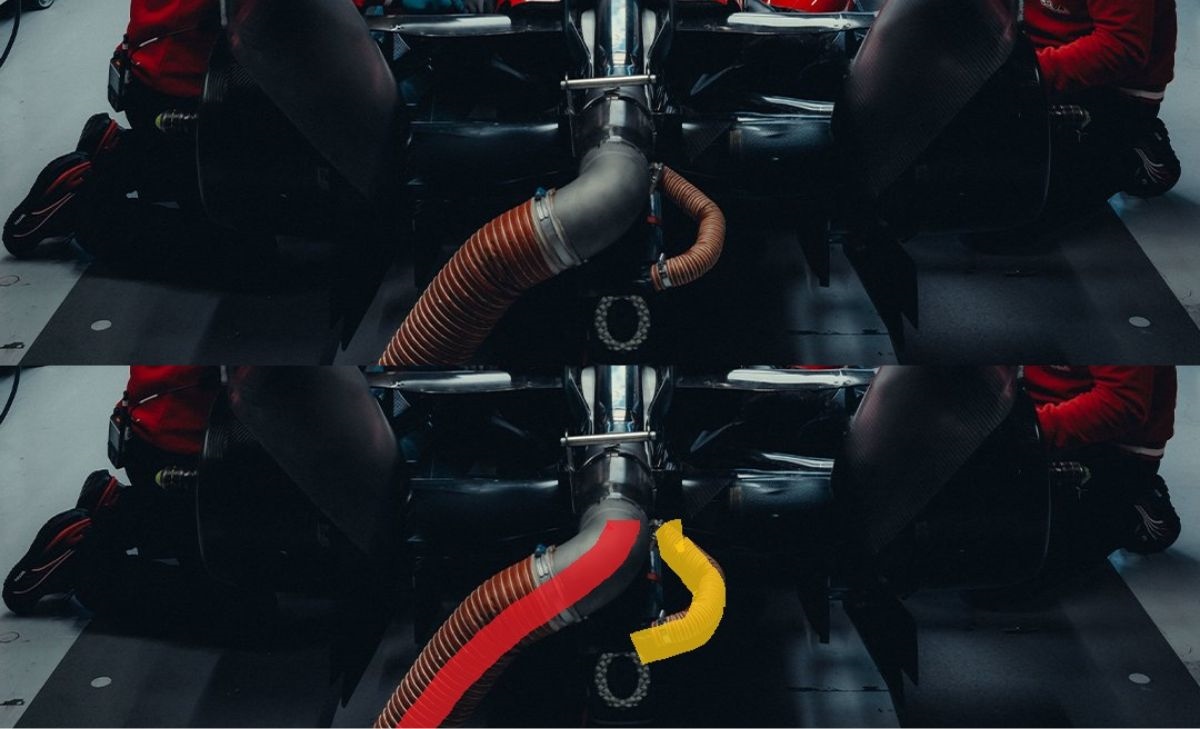
There is nothing unusual about this. Scuderia Ferrari has adopted an original solution, having chosen to position this duct by the rear-end load-bearing structure (just above the large oval LED light located at the centre of the car, at the rear of the gearbox area; see photo).
In the detail below (see photo), the Ferrari SF-26 can be seen stationary in the pits with two ducts used to extract gases during an engine ignition test. The main duct is highlighted in red, the secondary one in yellow.
What the regulations say
Under the regulations, manufacturers must comply with two requirements: first, route the exhaust gases from the wastegate valve through a separate duct from the turbine’s main outlet; second, position it so that the other duct faces rearwards and is 10 mm away from the main one (as the crow flies). This requirement is intended to accentuate the sound produced by the internal combustion engine.
Having again seen a great deal of smoke during the Belgian GP (this occurs when the driver is running at low engine revs or during start practice), we decided to get a little closer to the car in Hungary . On that occasion, we discovered a third duct, smaller in size (blue circle in the photo).
As it is made of plastic, it was clear that it was not intended for exhaust gases. So what could it be for? Before answering that, here is another clue to build the suspense. This outlet is not always fitted to the car. The small plastic pipe can only be seen in certain situations.
Ferrari fits between two and three rear-end outlet ducts
So what could its purpose be? If you thought of condensation that can form beneath the engine cover, we can confirm that you were right. The pink pipe (blue arrow in the photo below) therefore appears only at Grands Prix where Ferrari opts to use a particularly closed engine cover. Without significant air circulation, the air temperature beneath the engine cover skin is very high.
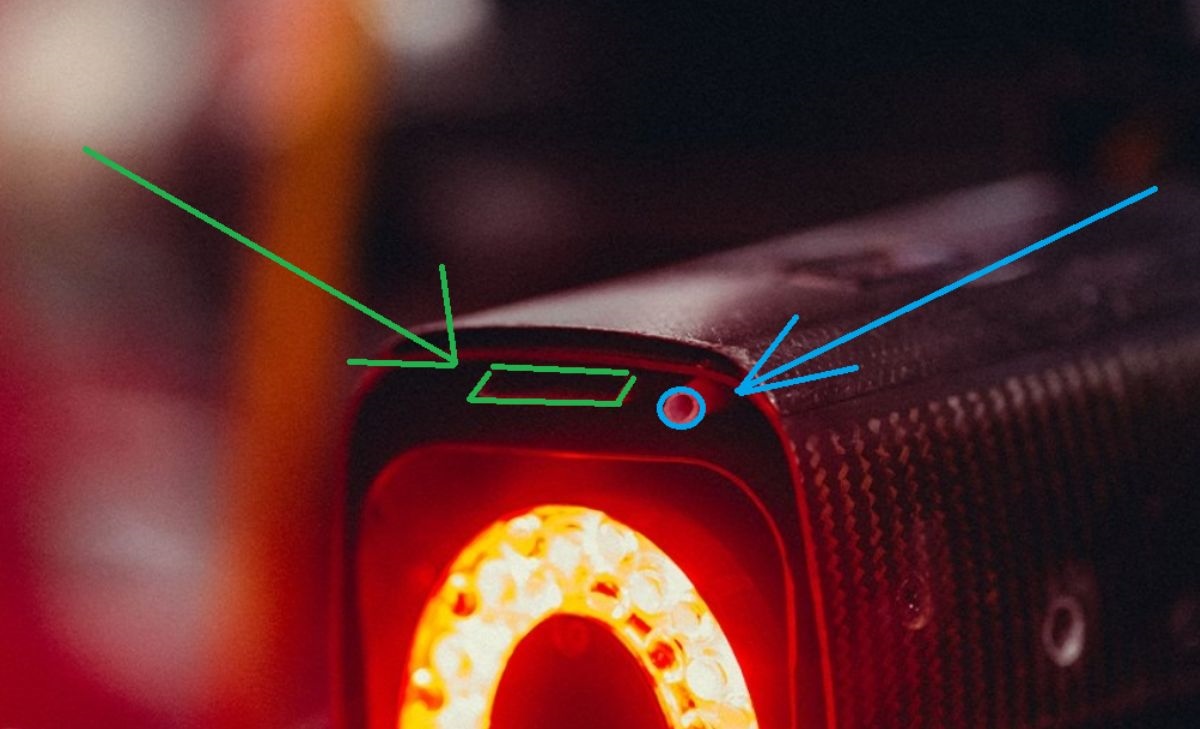
When this comes into contact with the bodywork, which is at a lower temperature than the internal compartment because it is exposed to the outside environment, it creates a temperature difference that contributes to the formation of water.
Hence the need to expel the condensation outside. Having water able to move freely beneath the engine cover skin is certainly not one of the scenarios an engineer would seek in an F1 car.
Cover photo: X, Ferrari; Internal photos: X, Ferrari.

