 By:
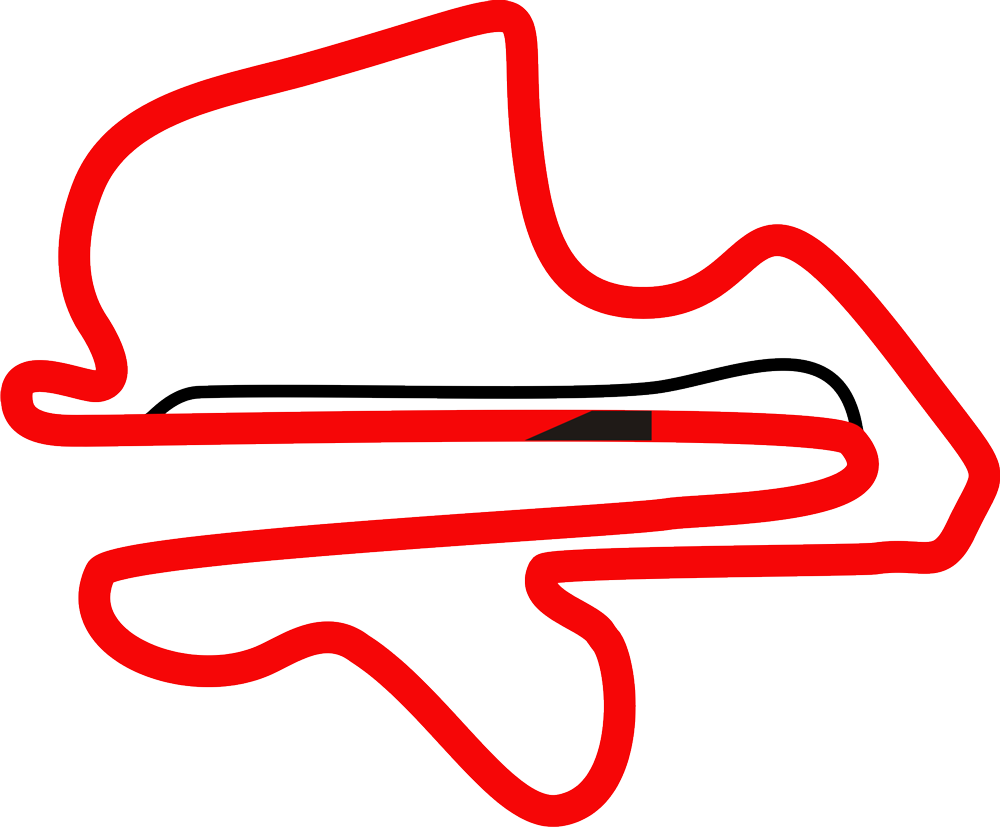
By: Four overtakes in an entire Grand Prix is a figure that is difficult to ignore. The debut of the Madring inevitably drew criticism and, just hours after the chequered flag, there was already talk of possible changes to the circuit for next season. But are we really sure that the problem lies solely with the track?
That is precisely the question at the heart of the third and final part of our exclusive interview with Jarno Zaffelli and Dromo. This time, however, the focus has shifted from the Madring to the single-seaters that raced on it.
In the first two parts of our investigation, we reconstructed a story that is far more complex than it might appear from simply looking at the circuit layout. Dromo, the Italian company that designed the Madring, claimed authorship of the layout but also explained how, after its supervisory role ended in September 2025, several fundamental elements were allegedly changed from the original intentions.
We began with the origins of the project, the urban planning constraints of the IFEMA site and the subsequent involvement of Tilke, also addressing the delicate contractual issue raised by the Italian company. Dromo’s position was very clear: "The track is as we designed it. If you look at it from above, it is ours. But the result has been altered."
In the second part, we examined the technical heart of the Madring. Turn 5, the different configuration of Turn 11, the entry to Monumental, camber, gradients, kerbs and asphalt: changes which, according to Dromo, left the design seen from above substantially unchanged but profoundly altered the way the cars tackle some of the key sequences.
All of this, however, may explain only part of what we saw during the Spanish Grand Prix. Designing a modern circuit is not only about the track: it is also about the car for which that track is devised. And the Madring faced a particular difficulty: it was conceived while the FIA and Formula 1 were still defining the characteristics of an entirely new generation of single-seaters.
The project was therefore developed against a backdrop of evolving regulations, changing simulations and power unit characteristics that we were only able to observe on track in 2026. The management of electrical energy has emerged as one of the most significant technical themes of the new Formula 1.

At the end of the race, discussions had already taken place in depth on Sunday evening about possible changes for next year, with Toto Wolff even confirming that the organisers were in contact with the FIA over changes to certain sections of the circuit. Dromo, however, identifies two separate issues. The first predates the race: some geometries and characteristics of the built track already differed from Dromo’s design intention and, according to the designers, that was enough to change the behaviour of certain sequences. The second emerged during the weekend: the specific management of the 2026 Power Unit.
The provocation remains simple, but it is more precise: before changing Madrid again, also look at how much of the lap was run with the Alt 1 delivery curve and what happened to speeds between qualifying and the race.
Dromo does not deny the problems that emerged during the first Grand Prix. It does, however, challenge the notion that the solution must necessarily involve an immediate change to the layout. "When they say, ‘We will make changes for next year,’ I think: ‘Make them,’ because I know they can only move by a few metres."
According to the Italian designers, the first Grand Prix held at the Madring did not provide a faithful test of the intentions behind the circuit’s conception. And, Dromo insists, the point is not to shift responsibility onto the FIA: the geometric changes alone were already enough to mean the design intention was not reproduced in full. The energy issue is an additional factor, not a replacement for it.
The power issue
The central issue concerns the characteristics of the 2026 power units and the management of electrical energy over the lap.
Dromo argues that energy management had a particularly significant impact in Madrid: "Before changing the track again, I would look at the data and then assess it." The reference to 66% concerns the portion affected by Alt 1, not a percentage of power removed. The FIA’s official document of 10 September indicates Alt 1 from T5 to T22, in the 1,500-5,100-metre window: 3.6km of the 5.416km lap, or around 66.5% of the distance. The same document indicates a Power Limited Distance of 3,206 metres and, in certain specific sectors, a maximum permitted PU reduction of up to 350kW: this is a regulatory limit and does not mean the cars ran continuously with 350kW less.
The point raised by Zaffelli is therefore another one: "If such a long part of the lap is completed with a different delivery curve, before concluding that another change to the track will solve the problem, it is necessary to separate the effect of the geometry from that of the Power Unit. But let us not confuse the two levels: for us, some geometric changes had already altered the track before Alt 1 even came into play."
The principle expressed by Zaffelli is clear: a track designed with certain expected levels of car performance in mind can behave differently if the cars reach certain points with energy characteristics different from those anticipated during the development phase. Dromo also compared the average speed of eight drivers between qualifying and the race: in the Alt 1 sector, the average race deficit against qualifying was around 10.9km/h, compared with around 4.1km/h outside that sector. The figure alone does not prove that Alt 1 caused the four overtakes, but it shows where the observed loss of performance in the race was concentrated.
The comparison with Formula 2

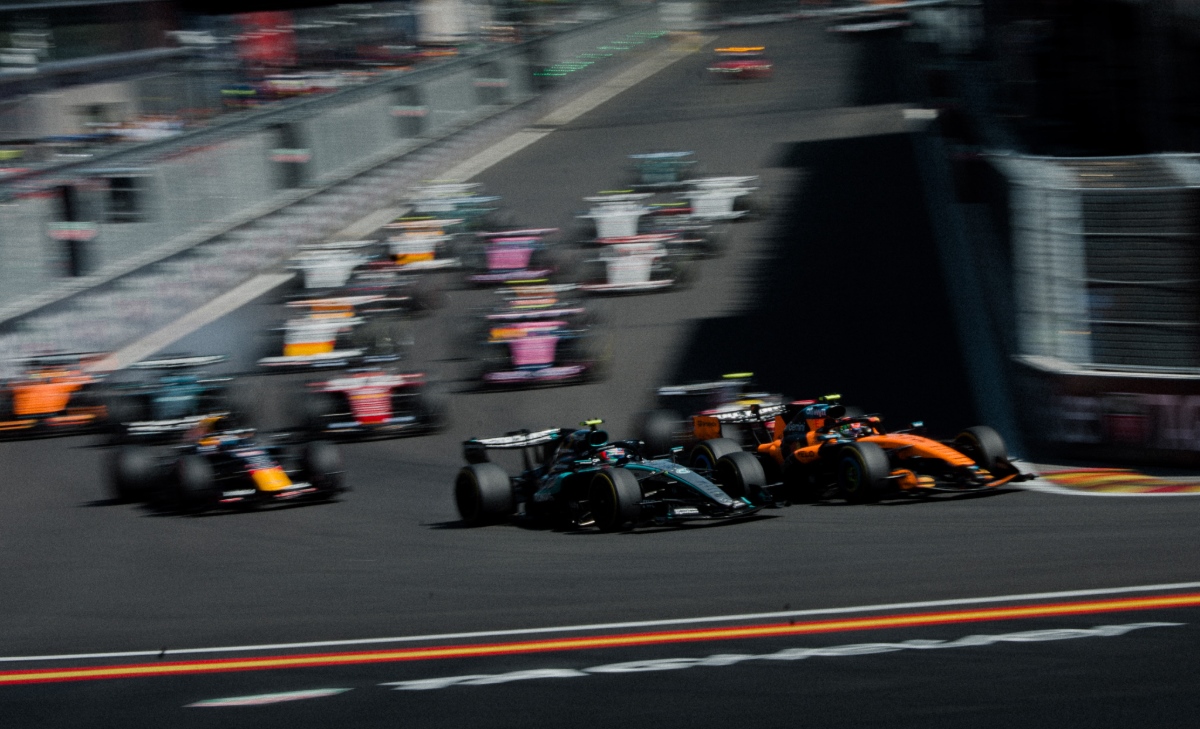
In support of his position, Jarno also drew a comparison with Formula 2: "Look at F2, that was beautiful." For Dromo, it is an illustrative comparison rather than causal proof: above all, it serves as a reminder that the same geometry can produce different races with different cars and energy profiles.
The underlying track is the same, but Dromo stresses that the as-built version does not fully match its design intention and that, in addition, the cars and energy management are different. "Why must we immediately start by saying: ‘The track needs to be changed’? First, let us separate the effects and understand what we are actually correcting."
Zaffelli then explained that he and his team had repeatedly modified the project to keep pace with regulations that continued to evolve: "We found ourselves working continuously with the FIA and F1, with projects that kept changing as we tried to adapt to what the regulations appeared to be heading towards."
A particularly complex situation for those tasked with designing infrastructure intended to remain in place for years.
The Monumental itself is an example of how Dromo had already adapted the project to the evolution of the cars and the anticipated loads. "The decisive step was from 35% to 24% banking: with the characteristics emerging for the 2026 single-seaters, we had identified a prolonged high-g section, in the region of 4.5 seconds, and reduced the inclination precisely to keep the loads under control."
Dromo is not claiming that the Madring is untouchable. The point it makes is more nuanced: before deciding which corners to change, it is necessary to understand how much of what we saw in the first edition genuinely depended on the circuit.
The asphalt, camber and some geometries are said to already differ from the original project: for Dromo, this comes first and is already enough to explain why the configuration that was built cannot be seen as a pure test of the original design intention. Added to this is an entirely new generation of single-seaters, with energy management that affected an exceptionally long part of the lap in Madrid.
Changing the track again would mean acting on a target that, according to Dromo, has already shifted several times. "If we continue like this, we only distort the result and, by doing so, the problem is no longer the theatre, but the company of actors."
A phrase that sums up the Italian designers’ position, with one clarification: according to Dromo, the stage had already been altered from the design; the behaviour of the cars in the race added a second layer. Before rewriting the Madring once more, it is necessary to understand which of the two effects is being corrected.
We thank Jarno Zaffelli and Studio Dromo for their courtesy and availability during the interview. Partial reproduction of this exclusive content is permitted provided the author (Giuseppe Cianci) and Formula1.it are credited, with a link to the original content.
Photos: Madring