 By:
By: The Madring’s Formula 1 debut has left more than a few questions in its wake. Madrid’s new circuit, technically fascinating and spectacular in some of its solutions, produced a race with just four overtakes and inevitably became the focus of criticism.
In the first part of our exclusive interview with Jarno Zaffelli, we traced the origins of the project and, above all, what happened in 2025, when the Italian company ended its supervisory role on the circuit. The designers claimed authorship of the layout, while arguing that several elements were subsequently changed: "Is the track as we designed it? Absolutely yes. If you look at it from above, it is ours. But the result was modified."
The story also involves IFEMA and the subsequent continuation of the project by Tilke, as well as a delicate contractual matter recounted by Dromo in the first part of our exclusive, which we invite you to read in order to reconstruct the full story.
But establishing who designed the Madring circuit is only the first step. To truly understand what happened, it is necessary to delve into the more technical side of the matter and analyse what changed between the original project and the track that was actually built.
According to the Italian company, some later interventions profoundly altered the way the track behaves.
It does not necessarily take an extra hundred metres of straight or a completely different corner. In Formula 1, a change in camber, a moved kerb, a different run-off area or another type of asphalt can be enough to alter the way a driver tackles a sequence.
This is at the heart of the second part of the lengthy exclusive interview given to Formula1.it. It is also a point cited in the Cologne judges’ reasoning: FIA, Formula 1 and urban-planning constraints set objectives and limits, but did not dictate a single geometry. Several solutions remained possible and, according to the Court, Dromo’s choices were creative in nature.
Turn 5, the main planned overtaking point

Photo: studiodromo.it
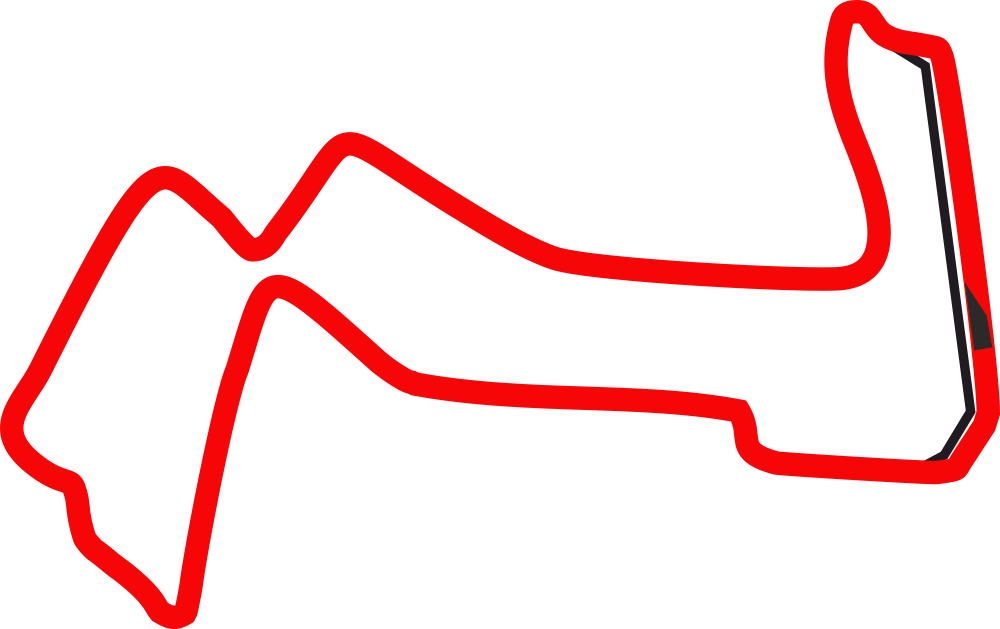
Zaffelli began with an important point: from the earliest simulations, it was clear where the main overtaking opportunity would be concentrated. "We had created a layout which, from the outset, had one particularly clear overtaking point: Turn 5."
However, this would not have been a "free choice" for the Italian company. "If it were up to me, I would gladly make a track with four or five overtaking points," Jarno added. The real issue was the constraints of the site. In particular, the presence of the M11 motorway prevented the run-off area from being extended further.
The original configuration of the sequence would also have been different from that seen during the race weekend. "Turn 5 was meant to be tighter and carry less speed; on the inside of Turn 6 we had planned gravel as a deterrent and the kerb reference point was further over. It was not a detail: it was intended to make the braking more angular and shape the behaviour of the T5-T6 pair."
"If you watch the first onboard video we released on our website, the one with the red asphalt, which attracted a great deal of criticism from everyone because our driver oversteered through the chicane, although that was intentional, you can clearly see that the corner had a gravel run-off area and the kerb was two metres further to the right."
"This would therefore have led drivers to brake for longer and in a more angular way, precisely because we knew the corner had to turn right, also because on the left we had the grandstands and the motorway interchange, which we could not touch. But the point was not simply to brake late: T5 and T6 were conceived as a sequence. Whoever defended or braked very late into Turn 5 could gain the first apex, but would be geometrically compromised in the switchback at Turn 6; whoever sacrificed Turn 5 could instead set up the crossover and attempt the counterattack. The gravel on the inside of Turn 6 prevented drivers from widening the line through Turn 5 and then straightening the second part as well."
"We actually produced 16 main variants of the concept alone, and the configuration built differs from our idea at some decisive points. We also assessed many alternatives there, including going straight into the tunnel, which was not approved."
Turn 11 changes the Monumental
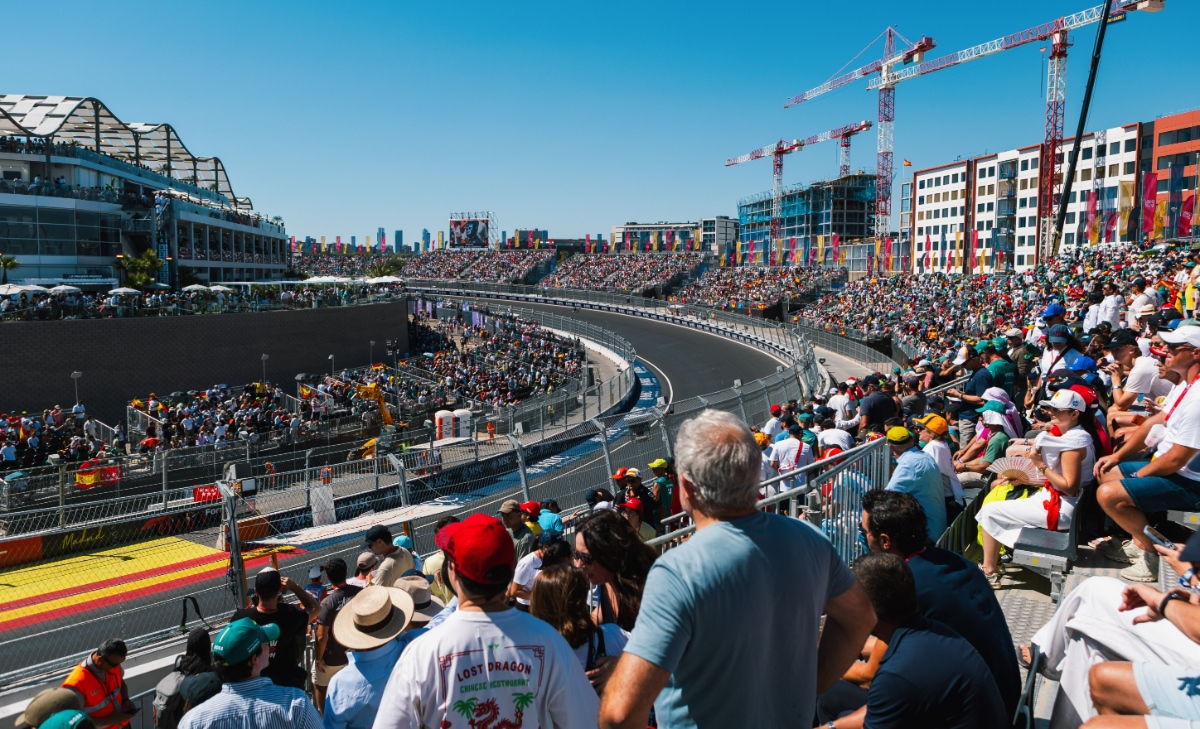
Even more interesting is what would have happened in the sequence leading to the Monumental. The spectacular banked corner, which immediately became the symbol of the Madring, was not changed. "They did not touch the Monumental; it is identical to our designs."
What changed, however, was the way the single-seaters arrive at the corner. In Dromo’s project, Turn 11, which leads into the Monumental, had been designed with entirely adverse camber. In the configuration that was built, it instead became on-camber. "Going from a deliberately off-camber corner to an on-camber corner changes the available grip and, above all, the dynamics with which the driver arrives at the Monumental. It is different from what we wanted."

The original idea was precise: to put the driver under pressure before the Monumental, creating consequences in the following corners too. "If I design a track with little grip, with Turn 11 leading into the Monumental and being difficult because it is off-camber, I make it possible for drivers to make a mistake on entry to the Monumental and, when they arrive at Turn 13, to contest the overtake."
The role of the asphalt
Then there is the issue of the asphalt. Dromo specialises precisely in the study and construction of circuit surfaces, and argues that the final result differed from the original intentions in this respect too.
"If I have to design a track, I first need to understand how the car works, how the tyre works and the level of stress I need to have."
The Madring was meant to have specific characteristics, also in light of its limited use during the year. According to Dromo, however, the treatment carried out before the Grand Prix changed the level of grip compared with the baseline on which the project had been developed.
"They water-blasted the whole track, removing the bitumen on top." At the Monumental, however, the work was reportedly carried out by hand, because the steep banking made it problematic to use the vehicle normally employed, which even risked overturning.
To show how every single detail had been considered, the Italian then offered a further detail concerning the Monumental: "The corner is inclined towards the south and, like a solar panel facing in that direction, it can have different thermal behaviour from the rest of the asphalt. It is one of the variables we had considered in the project."
A difference in temperature and grip can affect tyre behaviour, but Dromo does not attribute graining to a single factor: surface, geometry, temperatures and car management must be considered together.
"During the development stages, we studied more aggressive solutions, but the decisive shift was from 35% to 24% banking: with the characteristics that were emerging for the 2026 single-seaters, we had identified a prolonged high-g section, of around 4.5 seconds, and preferred to reduce the inclination."
On this very subject, Dromo said it had worked continuously on the loads transmitted to the tyres and chassis, adapting the project to the evolution of the 2026 single-seaters.
A track is not simply the line that appears on Google Maps. It is the combination of geometry, gradients, camber, surface, grip, tyres and the characteristics of the cars that must race on it. For this reason, according to Dromo, simply saying that the Madring seen in 2026 is the one designed by the Italian company tells only part of the story. The shape remained almost the same. The dynamics, according to those who conceived that track, did not.
We thank Jarno Zaffelli and Studio Dromo for their courtesy and availability during the interview. Partial reproduction of this exclusive content is permitted provided the author (Giuseppe Cianci) and Formula1.it are credited, with a link to the original content.
Photo: Madring